WASHINGTON — U.S. defense officials and federal law enforcement agencies have launched a probe into a series of mysterious freezer failures that spoiled substantial food supplies across military bases in August, treating the incidents as a suspected cyberattack.
The investigation, led by a dedicated U.S. Cyber Command unit alongside the U.S. Army Criminal Investigation Division (CID), is exploring whether unauthorized actors remotely manipulated internet-connected refrigeration systems at military commissaries across the country.
Remote Tampering and Defrost Overrides
The suspect disruptions hit at least six military base commissaries—on-base grocery outlets serving active-duty personnel and their families.
Investigators noted that the failures involved abnormal operational overrides rather than standard mechanical breakdowns. In multiple instances, refrigeration systems were remotely switched into heavy defrost or heating cycles overnight.
Incident Profile: Military Base Freezer Malfunctions
+-------------------------------------------------------------------------+
| TIMELINE: Late August 2026                                              |
| AFFECTED LOCATIONS: At least 6 U.S. Military Base Commissaries          |
| NATURE OF FAILURE: Temperature settings altered; forced defrost modes   |
| INVESTIGATING AGENCIES: U.S. Cyber Command, Army CID, Federal Partners |
| INTERNATIONAL LIAISON: French Law Enforcement & European Cyber Units    |
+-------------------------------------------------------------------------+
Official posts from affected installations illustrated the extent of the disruption. Officials at Fort Huachuca in Arizona confirmed in late August that local commissary freezers unexpectedly entered a defrost cycle overnight, heating up the units and causing total spoilage of stored inventory.
Parallel European Cyberattack Raises Cross-Border Concerns
U.S. military investigators confirmed they are coordinating closely with French counterparts to analyze potential technical links to a similar cyber incident in Europe.
Earlier this year, a coordinated digital attack targeted commercial refrigeration units across more than 350 supermarkets in France. In those incidents, hackers altered remote industrial control settings, forcing units to overheat and causing tens of millions of euros in food damage and equipment fires.
Comparative Breakdown: U.S. & French Refrigeration Disruptions
+-------------------------------------------------------------------------+
| UNITED STATES MILITARY BASES                                            |
| * Target: Defense Commissary Agency (DeCA) military food stores.        |
| * Vector: Remote alteration of cooling controls into defrost mode.      |
| * Status: Under active investigation by Cyber Command & Army CID.      |
+-------------------------------------------------------------------------+
| FRENCH COMMERCIAL SUPERMARKETS                                          |
| * Target: Over 350 commercial grocery establishments across France.     |
| * Vector: Exploitation of legacy firmware on internet-connected units.  |
| * Impact: Widespread spoilage and local facility electrical fires.      |
+-------------------------------------------------------------------------+
Cybersecurity researchers note that industrial control systems (ICS) managing temperature and environmental parameters often run on legacy firmware or utilize remote management protocols that lack robust multi-factor authentication, leaving them vulnerable to external exploitation.
Interagency Response and Operational Vulnerabilities
In an official response, the Department of Defense stated that a specialized unit within Cyber Command is working alongside interagency partners and federal law enforcement to determine the breach vector and identify potential perpetrators.
“A unit of Cyber Command is working in close coordination with interagency and law enforcement partners regarding the matter,” a Department of Defense spokesperson said, confirming that technical audits of defense logistics systems remain ongoing.
Critical Infrastructure Security Considerations
+-------------------------------------------------------------------------+
| REMOTE ICS VULNERABILITIES                                              |
| * Transition from isolated physical controls to internet-connected      |
|   smart building management exposes auxiliary infrastructure.           |
+-------------------------------------------------------------------------+
| SUPPLY CHAIN & LOGISTICS PROTECTION                                     |
| * Disruption of food cold chains poses immediate readiness and support   |
|   challenges for military installations and civil infrastructure.      |
+-------------------------------------------------------------------------+
| DEFENSE NETWORK ISOLATION                                               |
| * Ongoing audits focus on severing commercial vendor control links from |
|   sensitive defense logistics networks.                                 |
+-------------------------------------------------------------------------+
While defense officials have not named specific suspects or nation-state actors behind the suspected hack, cybersecurity agencies are issuing updated operational guidance to commercial and military logistics providers to patch legacy refrigeration controllers and restrict public internet access to building management systems.
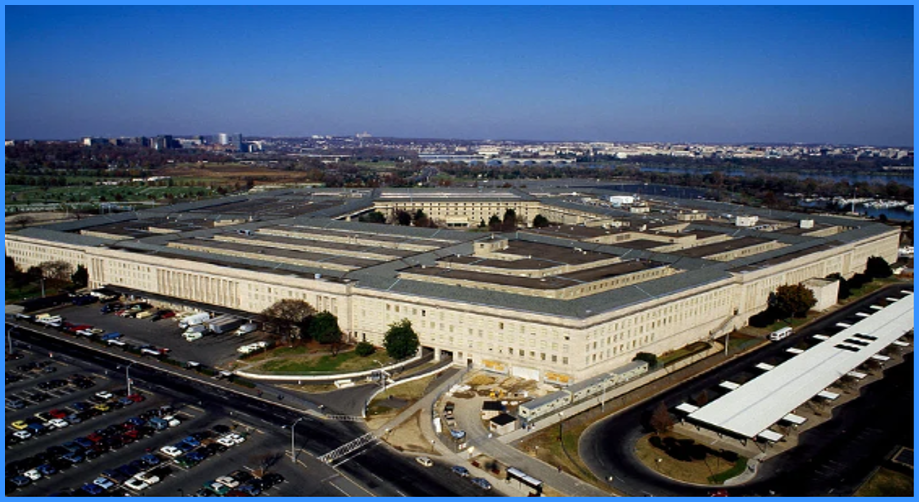
Pentagon-Aerial-view-Image-by-Carol-M.-Highsmiths-on-Rawpixel.