Anyone who has bought medicine online may have wondered whether what arrived in the post was really what they’d paid for. They are not alone. A recent global survey found that around 60% of people fear their medicines could be fake – and the unsettling truth is that they have good reason to. About one in ten medicines sold worldwide is thought to be either counterfeit or substandard.
This is not simply a hazard for people buying weight-loss injections through a dubious Instagram link. It can just as easily catch out a traveller picking up antibiotics abroad, or anyone drawn to an online pharmacy by the promise of convenience.
Counterfeit medicines are made to resemble the real thing while containing the wrong ingredients, the wrong dose, or – in the worst cases – no active ingredient at all.
Some are simply expired stock, repackaged. Others contain substances that should never enter the body. The packaging is often good enough to fool a pharmacist, let alone a patient: convincing logos, plausible regulatory stamps, boxes that look, at a glance, entirely legitimate. The harm this does ranges from a treatment that simply doesn’t work to outcomes that are fatal.
Britain’s regulatory system is among the more robust in the world, but that has not been enough to keep criminals out. The UK’s Medicines and Healthcare products Regulatory Agency (MHRA) seized nearly £45 million worth of illegal medicines last year alone, stopping close to 20 million fake doses – among them powerful painkillers, sleeping tablets and weight-loss drugs – from reaching the public.
This doesn’t mean online pharmacies should be avoided altogether – hundreds of properly regulated providers operate legally in Britain. But criminals have noticed how much people now prefer buying medicine this way, particularly drugs such as Mounjaro, and have adapted accordingly.
A recent National Pharmacy Association survey found that one in ten online pharmacies had their websites or social media accounts cloned by criminals within the past year: sites and profiles built from stolen video, copied regulator logos and slick branding, virtually indistinguishable from the originals.
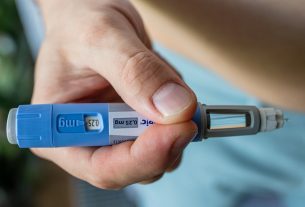
The NPA regularly hears from pharmacies caught out this way. One pharmacy only discovered its site had been cloned after a patient complained about a counterfeit Mounjaro pen – bought for a quarter of the usual price – that didn’t work. Another patient was sent a weight-loss pen labelled for somebody else entirely, with no needle included.
The risks abroad
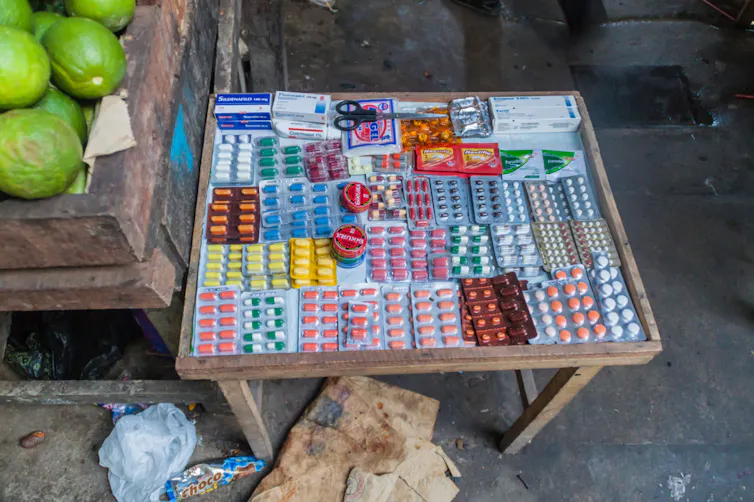
If Britain’s defences are imperfect, the picture elsewhere can be worse. In some countries, antibiotics, painkillers and even emergency medicines can be bought over the counter at a market stall, with no meaningful regulation and packaging that may be actively misleading.
Falling ill on holiday and needing treatment is precisely the moment this becomes dangerous. Counterfeit antibiotics are a particular problem in parts of Asia, Africa and South America, often containing too little active ingredient to clear an infection, which not only fails the patient but feeds the wider crisis of antibiotic resistance.
Read more:
Antibiotic resistance is a growing problem, but solutions do exist – expert Q&A
Even pharmacies abroad that look entirely legitimate may not be bound by anything like the UK’s rules. When in doubt, a travel insurer or hotel can usually point towards a reputable provider.
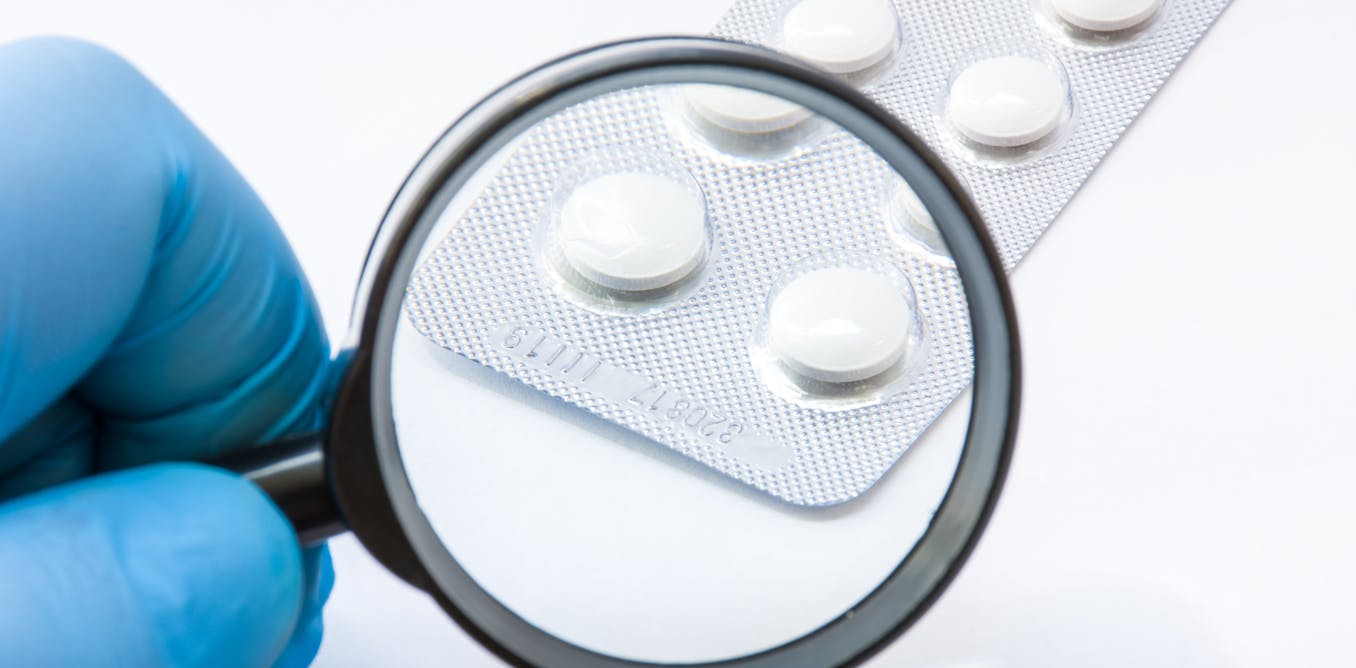
Spotting a fake is not always straightforward, but there are signs worth knowing. A price that looks too good to be true generally is (counterfeiters compete on discount). Packaging is often the next giveaway: spelling errors, blurred print, a box that feels flimsy or damaged. Genuine medicines carry batch numbers, expiry dates and a patient information leaflet; counterfeits often skip these details, or arrive looking subtly different from the version a patient is used to.
Matyas Rehak/Shutterstock.com
Claims of miraculous results are another warning sign, as is the absence of any consultation. A properly regulated online pharmacy will always ask about symptoms, allergies and medical history before dispensing anything on prescription.
Anyone who suspects they have been sold a fake should not take it. The safest course is to contact the pharmacy directly, or report the concern through the MHRA’s Yellow Card scheme – a system used to report suspected side-effects and defective medicines or medical devices.
Beyond that, the precautions are fairly simple. Stick to pharmacies registered with the General Pharmaceutical Council, and check a website’s address and contact details before ordering – scammers often rely on a slightly misspelled domain or an extra character, banking on nobody looking closely.
Many counterfeit weight-loss drugs are advertised and sold on social media, so these platforms are worth treating with particular suspicion. Abroad, the safest option is to buy only from an established pharmacy, never a market stall or street vendor. And if a tablet or pen looks slightly wrong, a pharmacist can usually check the batch number and confirm whether it is genuine.
The NPA has called for tighter safeguards, including a dedicated pharmacy domain to help patients identify legitimate providers at a glance. Until then, much of the responsibility still falls on consumers.

Dipa Kamdar does not work for, consult, own shares in or receive funding from any company or organisation that would benefit from this article, and has disclosed no relevant affiliations beyond their academic appointment.