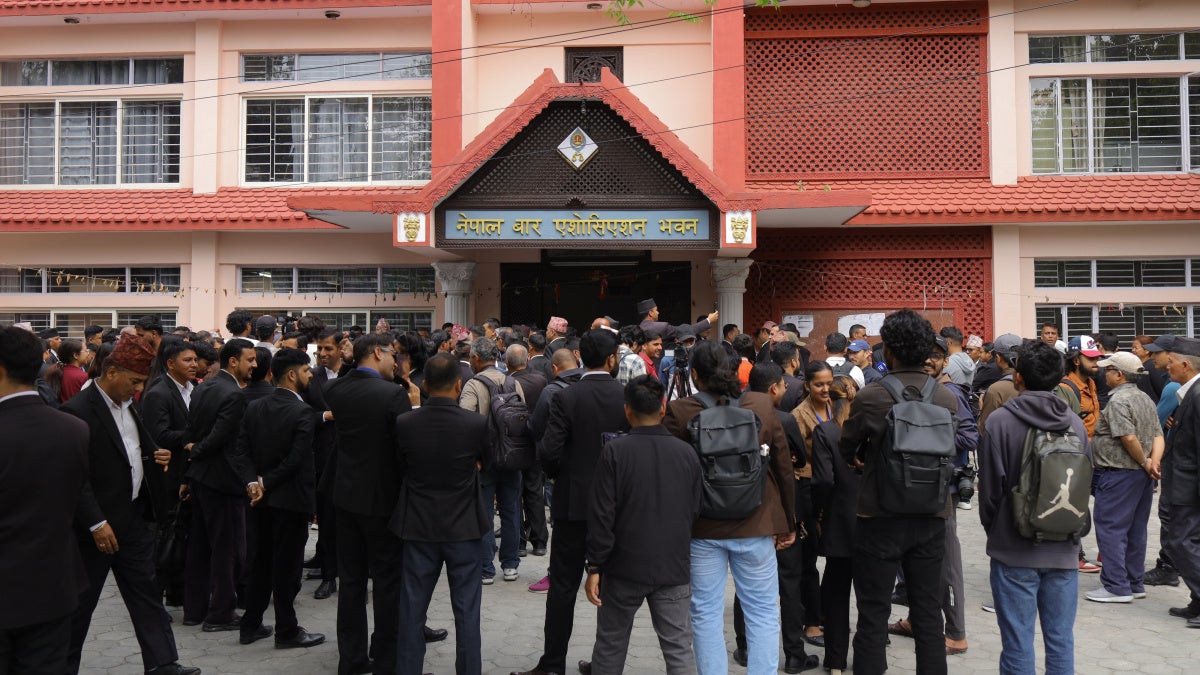
(Geneva) – Recent actions by the government of Nepal that threaten the independence of the country’s judiciary are a source of serious concern, Amnesty International, Human Rights Watch, and the International Commission of Jurists (ICJ) said today.
In particular, political pressure has reportedly been applied to alter the composition of the Supreme Court through the forced resignation or impeachment of sitting justices. In May 2026, the government improperly amended the Constitutional Council Act through an executive ordinance, rather than through parliamentary legislation, as required under Nepal’s Constitution and rule of law principles.
The organizations are concerned about the consequences of amendments to the Constitutional Council Act, which altered the quorum and voting requirements of the Constitutional Council, the body responsible for recommending appointments to key constitutional offices, including the chief justice. Given that political office holders already constitute a majority of the council’s membership, the amendments further increase the risk of undue political influence over judicial appointments and undermine international standards on judicial independence and the rule of law.
“The independence of the judiciary is a cornerstone of the rule of law and an essential safeguard for the protection of human rights,” said Ian Seiderman, senior legal and policy director of the ICJ. “Any reform of Nepal’s justice system should strengthen—not weaken—the independence, impartiality, and integrity of the courts.”
These concerns have been compounded by the recent appointment of Dr. Manoj Kumar Sharma as chief justice. His appointment departed from Nepal’s long-standing practice of appointing the senior-most serving justice, even though three more senior judges remain in office. The Parliamentary Hearing Committee nevertheless endorsed his appointment despite complaints having been submitted concerning the nomination and without any meaningful public examination of those complaints.
The organizations have received credible reports that the three more senior Supreme Court justices, Sapana Pradhan Malla, Kumar Regmi, and Hari Phuyal have been subjected to political pressure to resign and threatened with impeachment if they refuse. The organizations are unaware of any publicly stated allegations that would satisfy the constitutional grounds for impeachment under Nepal’s Constitution.
Under Nepal’s Constitution, the initiation of impeachment proceedings results in the suspension of the judge concerned pending parliament’s determination about the charges. The suspension of three senior Supreme Court justices would significantly affect the composition and functioning of the court at a time when it is considering a number of highly consequential constitutional cases involving challenges to government decisions and executive action.
The use or threatened use of impeachment against judges without clear constitutional justification risks creating the appearance that constitutional procedures are being used to influence the composition of the court and, potentially, the outcome of pending litigation, the groups said. Nepal has previously attempted to use impeachment proceedings against judges in circumstances that undermine judicial independence and the rule of law.
“Public confidence in the judiciary depends not only on the competence and integrity of judges but also on the transparency, fairness, and independence of judicial appointments,” said Meenakshi Ganguly, deputy Asia director at Human Rights Watch. “Appointments or removals that appear susceptible to political influence undermine confidence in the administration of justice and weaken the rule of law.”
Under international standards, judges must be able to be free from improper influence, pressure, threats, or interference and removals must be based on objective criteria and protected against political influence.
While judicial reform may be necessary to strengthen the administration of justice in Nepal, any reform process should reinforce, rather than diminish, judicial independence, transparency, accountability, and the rule of law, the groups said.
“The objective of judicial reform should be to build stronger, more independent institutions that enjoy public confidence, not institutions that are more vulnerable to political pressure,” said Isabelle Lassee, acting regional director for South Asia at Amnesty International. “Reforms should be firmly grounded in internationally recognized principles of judicial independence, separations of powers, transparency, and accountability. Reforms that depart from these principles risk weakening the very institutions they are intended to strengthen.”
The Nepal government should:
- Respect and protect the independence and integrity of the judiciary by refraining from exerting pressure on judges to resign or from initiating impeachment proceedings, except on clearly established constitutional grounds and in accordance with the rule of law and due process guarantees.
- Ensure that appointments to judicial office, including the office of chief justice, are conducted through transparent, objective, and merit-based procedures capable of safeguarding judicial independence.
- Review the amendments to the Constitutional Council Act through an open parliamentary process and ensure that the legal framework governing judicial appointments adequately protects the judiciary from political domination and undue influence.
- Ensure that any future reforms affecting the judiciary strengthen judicial independence, transparency, accountability, and public confidence in the administration of justice, consistent with Nepal’s Constitution and the rule of law, including international human rights standards.