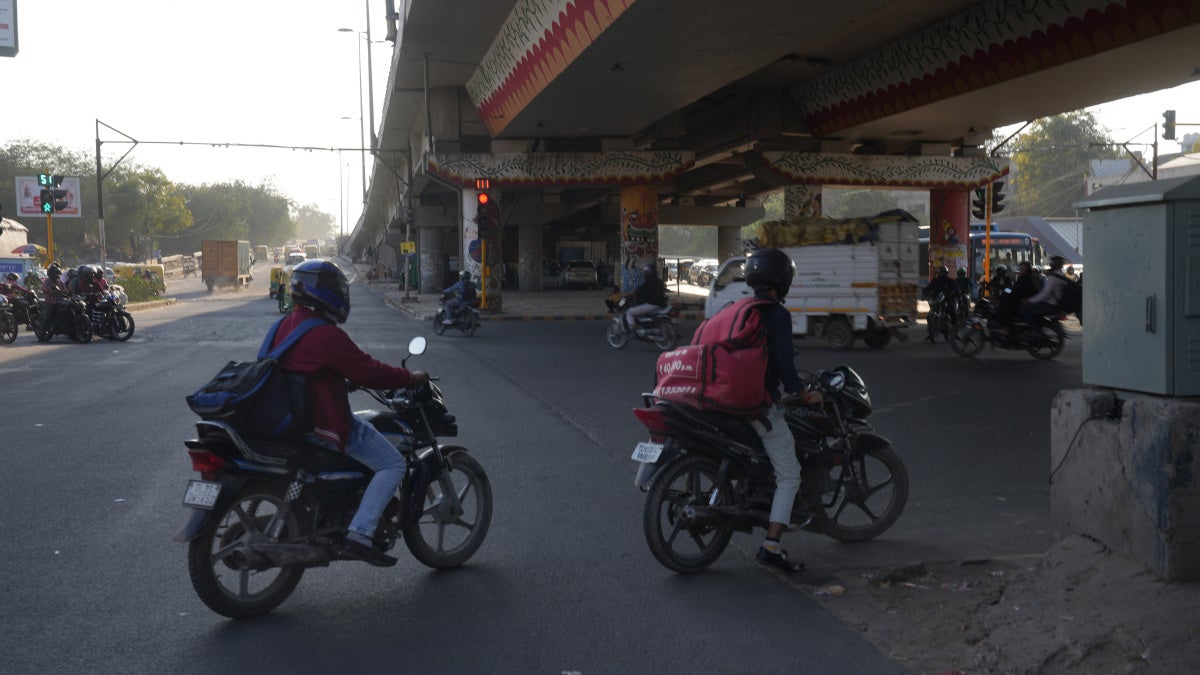
(New York) – Gig workers around the world experience long hours, unpredictable and declining pay, and serious safety risks, Human Rights Watch said in a report released today. Governments negotiating a landmark treaty under the International Labour Organization (ILO) on platform work in June 2026 should adopt strong, binding standards to ensure fair pay, safe working conditions, and access to social security for gig workers worldwide.
The multimedia report, “Algorithms of Exploitation: Rights Abuses in the Gig Economy and the Global Fight for Change,” documents the experiences of platform workers across nine countries, including India, Kenya, Kuwait, Lebanon, Mexico, Pakistan, Saudi Arabia, the UAE, and the United Kingdom. Human Rights Watch found that workers across all countries studied face low and unstable earnings, unsafe working conditions, and little or no protection when they are injured or unable to work.
“Platform companies have built a business model that sidesteps labor protections and shifts risks and costs onto the workers,” said Lena Simet, senior economic justice advisor at Human Rights Watch. “The ILO negotiations are the first global effort to get governments to course correct and ensure that using this model does not come at the expense of workers’ rights.”
Human Rights Watch interviewed drivers and delivery workers in India, Kenya, Lebanon, Mexico, Pakistan, and the UK as well as migrant returnees from Bangladesh and Nepal who previously worked for companies in Saudi Arabia, the UAE, and Kuwait to show examples of the human impact of unregulated work in the platform economy.
The ILO estimates that platform work nearly doubled between 2016 and 2021, while the World Bank estimates that up to 435 million people worldwide earn income through these labor platforms. Yet labor protections have not kept pace.
The convention under negotiation should address existing gaps in protection by including key guarantees for all platform workers, regardless of employment status, Human Rights Watch said. Because platform companies routinely classify workers as independent contractors or self-employed, this in many countries excludes them from minimum wage, social security, and occupational safety guarantees.
Workers described long hours, unpredictable and declining pay, and serious safety risks, often without social security or support if an injury or illness left them unable to work.
Apraham Orfalian, a driver in Beirut, said his earnings have declined steadily since 2015, leaving him unable to cover everyday expenses or contribute to social security. After his car and phone were stolen in a violent robbery while he was working for Uber, he was left without income and said he received no support from the company.
Agnes Mwongera, a driver in Nairobi, said she had been assaulted by a passenger and received no response when she reported the attack to her company.
Graeme Franes, a courier who used a bicycle to deliver food in Scotland, UK, said he was unable to work for six months after an attack left him with a broken arm. “I had to rely on friends and family,” he said. “That was a really tough time.”
By classifying gig workers as independent contractors, companies in many countries are able to avoid obligations for minimum wages, occupational safety, and social security. At the same time, they exercise significant control over workers through algorithmic systems that determine pay, assign tasks, and can suspend workers often without transparency or effective recourse.
Human Rights Watch previously found that after expenses, many platform workers in the United States earn well below a living wage and the statutory minimum wage. Workers in other countries reported similar dynamics, with earnings often insufficient to meet everyday expenses. This exploitative model allows companies to capture a growing share of revenue while shifting costs onto workers, contributing to widening inequality in labor markets.
Human Rights Watch urges governments to adopt strong standards that:
- Establish a presumption of employment for workers when companies exercise control over them, to prevent misclassification;
- Require fair pay, including compensation for all working time, and earnings that meet at least minimum wage or living wage standards;
- Guarantee access to social security for all workers, including in cases of injury, illness, unemployment, and older age;
- Mandate algorithmic transparency from platform companies, including information for workers on how their pay is calculated, how tasks and jobs are priced and assigned, and how incentive programs work;
- Ensure accountability for platform companies, including accessible ways for workers to challenge automated decisions, including decisions to deactivate their accounts;
- Extend occupational health and safety protections to all platform workers and require the companies to adopt safeguards against extreme heat and other dangerous working conditions; and
- Guarantee workers’ rights to organize and bargain collectively without retaliation.
Human Rights Watch has contributed to the ILO process through submissions outlining rights-aligned approaches to regulating platform work, including proposals developed jointly with civil society organizations.
“The decisions governments make now will shape the future of work for millions of people,” Simet said. “They should ensure that platform work is governed by fair pay, safety, and social security, not exploitation.”