There is not yet much research on the effects of heatwaves on bees. What little there is focuses on super extremes of weather that would kill an adult bee.
However, my new research with colleagues shows that UK populations of solitary bees may be much more sensitive than previously thought to the kinds of extreme weather we are now seeing regularly.
To find out what happens to bees during hot weather, my team recreated the three-day UK heatwave of July 2022. We subjected a group of developing larvae of red mason bees to three days where temperatures peaked daily at 40°C.
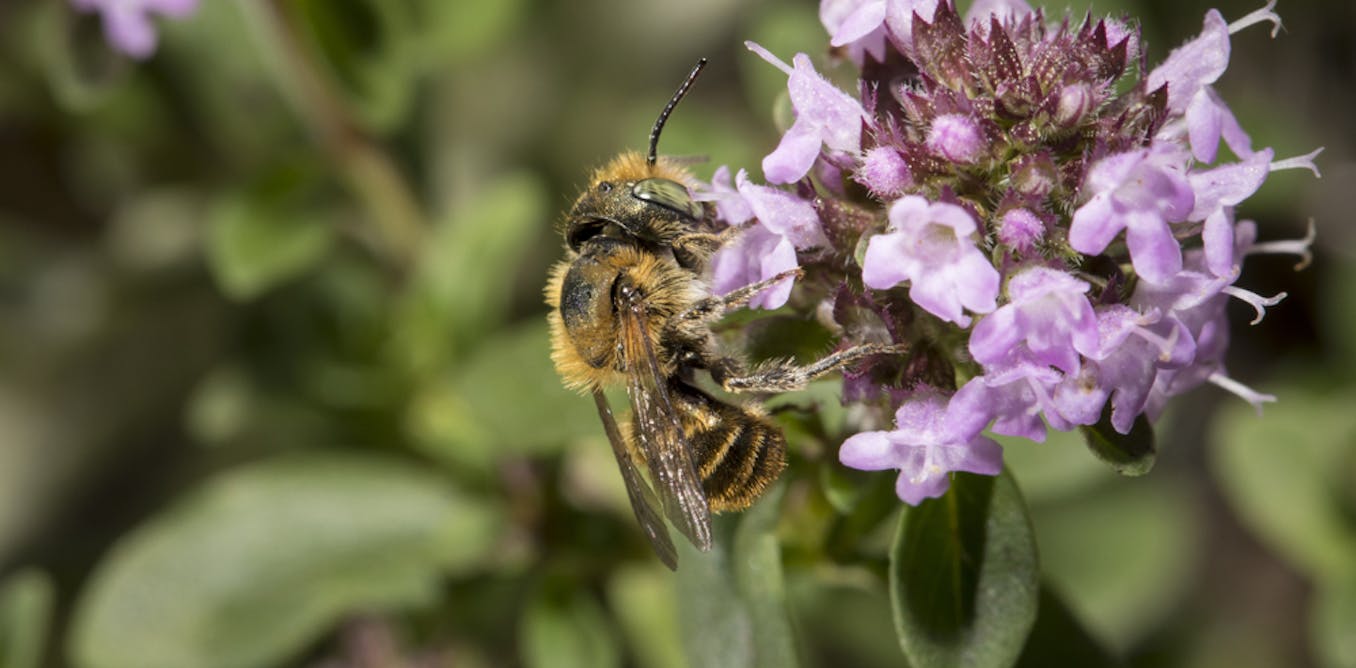
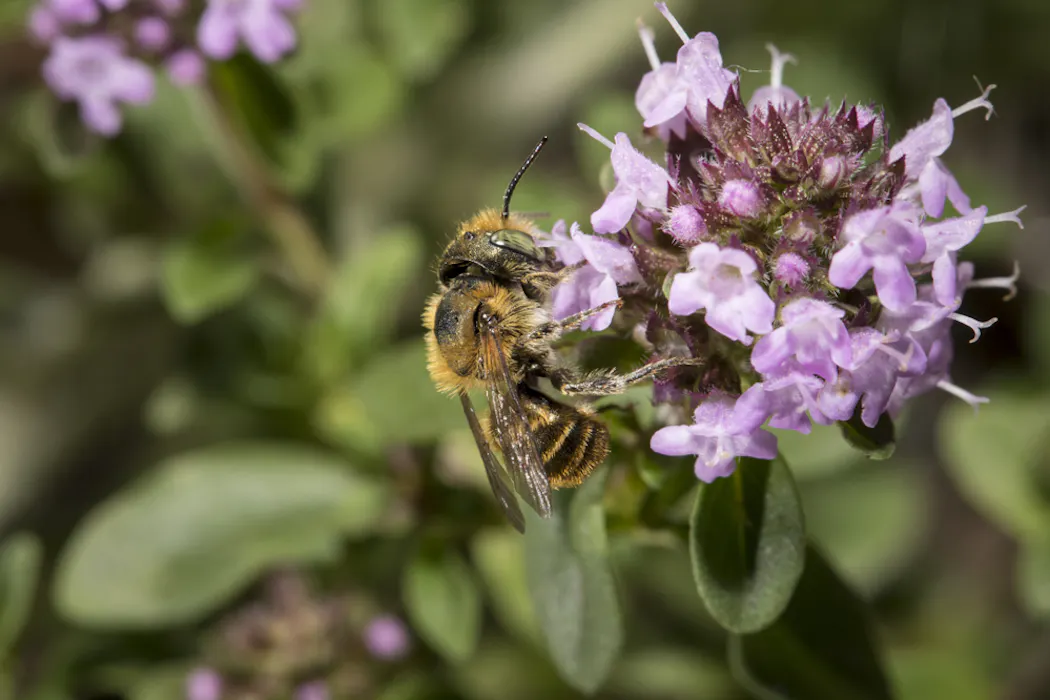
Red mason bees are common solitary bees found in UK gardens, and are important pollinators of apples and other fruits. At the same time, a control group experienced normal July temperatures for Hull, where the study was conducted, peaking daily at about 25°C.
After that, we treated both groups identically and allowed them to spin their cocoons and hibernate as normal. Nine months later, all the bees emerged fine, so it appeared initially that the heatwave had had no effect.
But this was before we dissected the bees to look at their reproductive health.
Staggeringly, in males from the heatwave group, sperm activity had dropped by half compared with the control group, and sperm counts by one third. In females, there was a 15% reduction in both the size and the number of developing eggs.
The heatwave had wrecked their fertility, especially in males.
Reduction of sperm motility in bees during heatwave

Jamie Smith/Journal of Thermal Biology, CC BY
These numbers are shocking because they suggest solitary bee populations are much more sensitive to weather extremes than we thought, and that this should be factored into calculations of the broader effects of climate change. While bees did not die outright, their fertility was severely affected.
This means that a heatwave one year could lead to a drastic drop in the number of bees the following year, and therefore less efficient pollination for key crops like apples, cherries and oilseed rape.
This would leave commercial fruit growers even more reliant on temporarily renting honeybee hives, commonly called “hire-a-hive” schemes, to combat pollination deficits. This is at a time when research increasingly shows that wild bees, whose services come for free, are better pollinators than honeybees.
What else happens in heatwaves?
In honeybees and bumblebees, living together as a group is the key to withstanding weather extremes. With their social hives, honeybees can flexibly respond to periods of heavy rainfall and strong winds by rapidly reallocating the tasks that worker bees perform – switching from nest maintenance to foraging, for example.
Honeybees and bumblebees are also able to respond to temperature changes. They maintain their nests within strict temperature limits, with some workers switching to becoming living radiators when temperatures drop, buzzing their wing muscles to produce heat that keeps the brood at the ideal growing temperature.
Bumblebee nests begin with a single queen hibernating over winter and then working alone to build up her brood. New research is revealing secrets of their resilience: for example, hibernating bumblebee queens can survive underwater for up to a week when their nest is flooded.
However, honeybees and bumblebees are not most bees.
Read more:
Queen bumblebees can breathe underwater — for days. We discovered how
Unlike honeybees and bumblebees, most bees are solitary, which means they don’t have social nestmates to help them when times get tough – they work entirely on their own. Nests of these solitary bees are at the mercy of the elements, so solitary bees are much more vulnerable to climate change than social bees.

James Gilbert, CC BY
Of course, heatwaves are not the only threats to bees. They have an array of other nightmares to cope with, including pesticides, diseases, nutritional stress and loss of habitat.
The priority now is to investigate how bees affected by heatwaves also cope with these other problems. Our lab heads up a government-funded study looking at how climate change affects the nutritional needs of growing wild bees, and how parent bees respond to these needs.
Excitingly, we are beginning to see patterns indicating that growing bees require different balances of nutrients when they are reared at different temperatures. We are now testing whether bee mothers are sensitive to these requirements, and can adjust the pollen they gather to compensate.
Extreme hot weather is becoming more prevalent, even in cooler countries. These studies show that severe weather, while not necessarily killing bees outright, has the ability to seriously damage the bee population – with long-term consequences for pollination as well as the human food chain.

James Gilbert currently receives funding from UKRI (BBSRC) and the study mentioned in this article, on which James is a coauthor, was funded by UKRI (NERC).