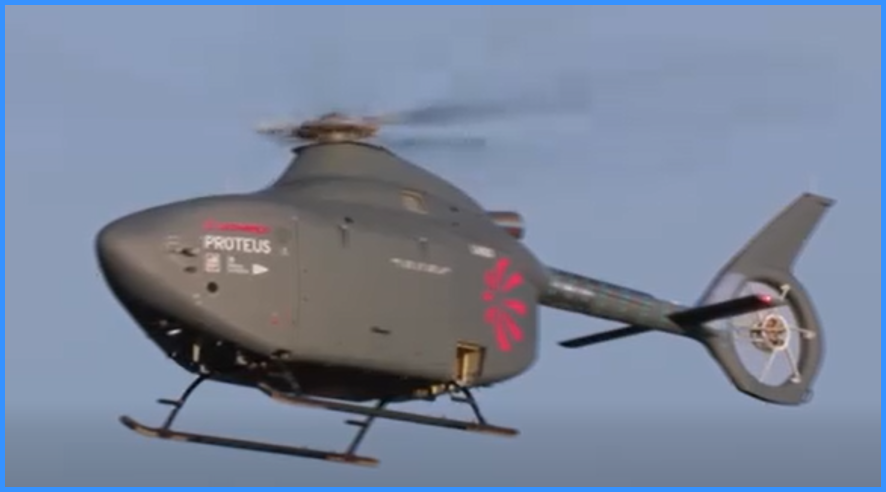
YEOVIL, UK — In a landmark moment for naval aviation, the Royal Navy’s first full-sized autonomous helicopter, Proteus, has successfully completed its maiden flight. This technological milestone marks a fundamental shift in the UK’s anti-submarine warfare (ASW) strategy, introducing a pilotless “eye in the sky” designed to monitor underwater threats in increasingly contested waters.
The flight took place at the Leonardo facility in Yeovil, Somerset, where the 3-tonne uncrewed aircraft demonstrated its ability to take off, hover, and execute precise maneuvers under remote guidance. Named after the Greek sea god of versatile knowledge, Proteus represents the vanguard of the Peregrine program, aimed at integrating high-end robotics into frontline naval operations.
Engineering the Future: What Makes Proteus Unique?
Proteus is more than just a drone; it is a sophisticated sensor platform capable of operating in high-risk environments where crewed aircraft would be vulnerable.
- Anti-Submarine Warfare (ASW): The aircraft is specifically designed to deploy sonobuoys and track modern, ultra-quiet submarines.
- Payload Capacity: With its significant size, it can carry heavy surveillance equipment, radar, and potentially, defensive weaponry.
- Operational Endurance: By removing the human pilot, the platform can remain on station for longer durations, providing a persistent “protective umbrella” for carrier strike groups.
- Risk Mitigation: It is engineered to perform hazardous missions—such as mine detection and maritime surveillance—without risking personnel.
Geopolitical Context: Securing the North Atlantic
The deployment of Proteus comes at a time of heightened tensions in the North Atlantic. With increased Russian submarine activity reported near critical undersea infrastructure—including internet cables and energy pipelines—the Royal Navy is prioritizing rapid response capabilities.
Proteus is intended to work in tandem with the AgustaWestland AW101 Merlin helicopters, acting as a force multiplier. While the Merlin remains the primary heavy-lift hunter, Proteus can act as a “wingman,” extending the surveillance range of a frigate or destroyer.
| Feature | Specification |
| Weight | Approx. 3 Tonnes |
| Primary Role | Anti-Submarine Warfare & Surveillance |
| Manufacturer | Leonardo (UK) |
| Operational Base | Royal Navy Type 26 and Type 31 Frigates |
The Path to Frontline Service
Following the success of its maiden flight, Proteus will undergo a rigorous series of sea trials. These tests will evaluate its ability to land on the moving decks of frigates in heavy North Atlantic swells and integrate its data feed directly into the Navy’s combat systems.
“This is a massive step forward for our future fleet,” a Ministry of Defence spokesperson stated. “By embracing autonomous technology, we are ensuring the Royal Navy stays ahead of the curve in underwater defense.”