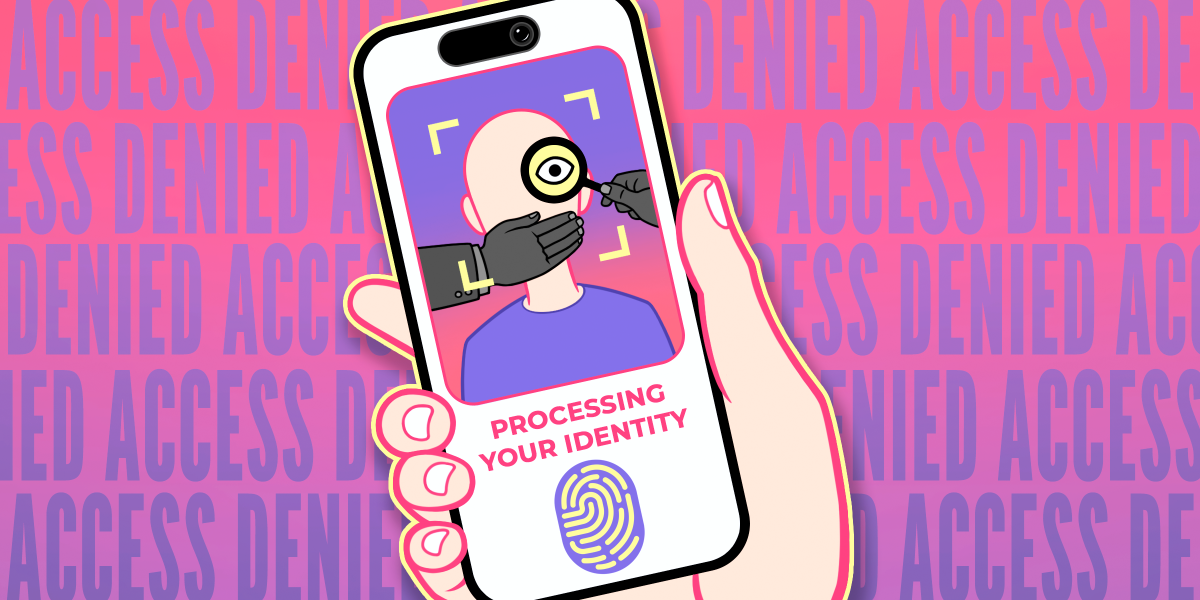
Congress Narrowed the GUARD Act, But Serious Problems Remain

Following criticism, lawmakers have narrowed the GUARD Act, a bill aimed at restricting minors’ access to certain AI systems. The earlier version could have applied broadly to nearly every AI-powered chatbot or search tool. The amended bill focuses more narrowly on so-called “AI companions”—conversational systems designed to simulate emotional or interpersonal interactions with users.  That […]

Continue Reading

The GUARD Act Isn’t Targeting Dangerous AI—It’s Blocking Everyday Internet Use

Lawmakers in Congress are moving quickly on the GUARD Act, an age-gating bill restricting minors’ access to a wide range of online tools, with a key vote expected this week. The proposal is framed as a response to alarming cases involving “AI companions” and vulnerable young users. But the text of the bill goes much […]

Continue Reading

The Internet Still Works: SmugMug Powers Online Photography

SmugMug is a family-owned photo hosting and e-commerce platform that helps professional photographers run their businesses online. Founded in 2002, the company provides tools for photographers to show their work, deliver client galleries, sell prints, and manage payments.  In 2018, SmugMug purchased Flickr, the long-running photo-sharing community, which added tens of millions of active hobbyist […]

Continue Reading

The Internet Still Works: Reddit Empowers Community Moderation

Section 230 helps make it possible for online communities to host user speech: from restaurant reviews, to fan fiction, to collaborative encyclopedias. But recent debates about the law often overlook how it works in practice. To mark its 30th anniversary, EFF is interviewing leaders of online platforms about how they handle complaints, moderate content, and […]

Continue Reading

Fighting to Keep Bad Patents in Check: 2025 in Review

A functioning patent system depends on one basic principle: bad patents must be challengeable. In 2025, that principle was repeatedly tested—by Congress, by the U.S. Patent and Trademark Office (USPTO), and by a small number of large patent owners determined to weaken public challenges.  Two damaging bills, PERA and PREVAIL, were reintroduced in Congress. At […]

Continue Reading

Congress Wants To Hand Your Parenting to Big Tech

Lawmakers in Washington are once again focusing on kids, screens, and mental health. But according to Congress, Big Tech is somehow both the problem and the solution. The Senate Commerce Committee held a hearing today on “examining the effect of technology on America’s youth.” Witnesses warned about “addictive” online content, mental health, and kids spending […]

Continue Reading

EFF Condemns FBI Search of Washington Post Reporter’s Home

Government invasion of a reporter’s home, and seizure of journalistic materials, is exactly the kind of abuse of power the First Amendment is designed to prevent. It represents the most extreme form of press intimidation.  Yet, that’s what happened on Wednesday morning to Washington Post reporter Hannah Natanson, when the FBI searched her Virginia home […]

Continue Reading

Search Engines, AI, And The Long Fight Over Fair Use

We’re taking part in Copyright Week, a series of actions and discussions supporting key principles that should guide copyright policy. Every day this week, various groups are taking on different elements of copyright law and policy, and addressing what’s at stake, and what we need to do to make sure that copyright promotes creativity and […]

Continue Reading

Thousands Tell the Patent Office: Don’t Hide Bad Patents From Review

A massive wave of public comments just told the U.S. Patent and Trademark Office (USPTO): don’t shut the public out of patent review. EFF submitted its own formal comment opposing the USPTO’s proposed rules, and more than 4,000 supporters added their voices—an extraordinary response for a technical, fast-moving rulemaking. We comprised more than one-third of […]

Continue Reading

EFF Tells Patent Office: Don’t Cut the Public Out of Patent Review

EFF has submitted its formal comment to the U.S. Patent and Trademark Office (USPTO) opposing a set of proposed rules that would sharply restrict the public’s ability to challenge wrongly granted patents. These rules would make inter partes review (IPR)—the main tool Congress created to fix improperly granted patents—unavailable in most of the situations where […]

Continue Reading