“The experiences of the desperate parents I met this past week can illustrate this better than I could,” UNICEF Communication Specialist, Salim Oweis told journalists attending the bi-weekly humanitarian briefing at the UN in Geneva.
Among them is Hind who hasn’t slept ever since her daughter Masa, 4, was bitten by a rat during the night.
They are sheltering in a building “where sewage water leaks through the ceilings, and rodents crawl through the cracks in the building and climb the exposed pipes.”
Agony and defeat
Another mother, Amani, is caring for her daughter Lemar, 7, who has lesions and sores on her head, back and legs from a bacterial infection.
“Amani tries to clean her wounds each day with the little, hard-to-get, clean water she has, as her daughter screams in agony,” he said.
Meanwhile, Abdel Aleem and his family have layered sandbags around the outside of their tent to ward off rats who “simply chew through it” as “stopping them is futile.”
Both he and his eight-month-old son Ahmad, as well his pregnant sister-in-law, were already bitten in recent weeks.
Parents feel helpless
“The common thread running through every one of these conversations is the sheer heartbreak of parents who no longer feel able to do the thing most innate to them – protect their children’s health and safety,” said Mr. Olweis.
The situation is easy to understand just by looking at the conditions in Gaza, he added, which was already among the most densely populated places in the world.
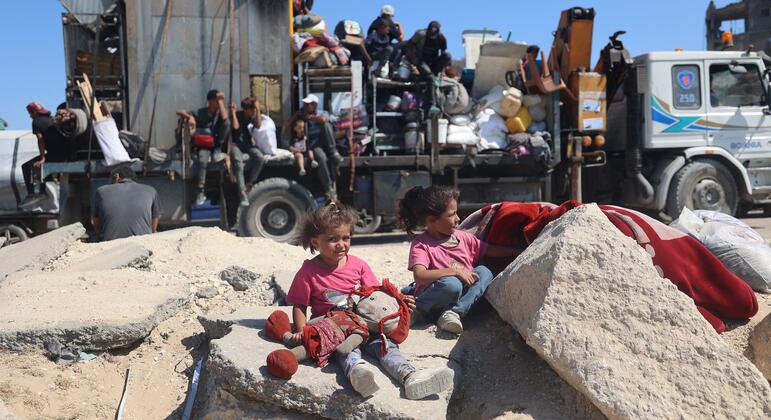
“Now, people have been crammed into around 40 per cent of the space left to them – sheltering among broken buildings, rubble and mounting solid waste,” he said.
“Families across Gaza do not have enough clean water, they are forced to choose between drinking, washing and cooking with what little they have.”
Obstacles and restrictions
UNICEF is working to reach up to 1.5 million people a month with clean water but continues to face significant obstacles.
Last month, two UNICEF-contracted truck drivers were killed while trying to collect water at Al Mansoura filling point. The water filling station – which more than a quarter of million people rely on – is now inaccessible.
At the same time, critical items needed to sustain water systems and repair damaged water infrastructure – such as oil, water treatment chemicals and spare parts – are not being allowed into Gaza at the scale needed.
Furthermore, solid waste is piling up by the day, alongside rubble, and both need to be cleared away.
Disease, diarrhea and infections
“The effects of this are now widely apparent: children with respiratory infections, acute watery diarrhoea, and more than half of all households reporting skin diseases,” said Mr. Olweis.
“Fleas, lice, and scabies are commonplace. Increasing numbers of children are requiring hospitalization. All without a single fully functioning hospital across Gaza.”
Moreover, even though humanitarians have managed to reverse famine conditions, “the number of malnourished and vulnerable children remain extremely serious.”
He warned that “without enough clean water and fuel to cook proper meals, even children who recover with treatment will quickly fall back in a cycle of malnutrition – the effects of which can last a lifetime.”
An ‘entirely unconscionable’ situation
Mr. Olweis stressed that “no parent should be in a position where they cannot provide their child with the basic needs to keep them healthy.”
They also should not have to watch their children suffer pain from lesions or weakness due to preventable diarrhoea.
“That this is happening should be – to everyone – entirely unconscionable,” he said. “Access to water, adequate nutritious food, and healthcare should not be conditional for any child, anywhere.”
To break the cycle of suffering in Gaza, UNICEF calls for unfettered access for humanitarian operations, lifting restrictions on items needed to repair and sustain water and sanitation systems, and for international humanitarian law to be upheld.