(Washington, DC) – The prominent anti-corruption lawyer Ruth López remains in pretrial detention in El Salvador with her case under judicial seal one year after her arrest, Human Rights Watch said today. Salvadoran authorities should guarantee López a prompt, open, and fair trial, lift the judicial secrecy on her case file, and allow her regular contact with her family and lawyers.
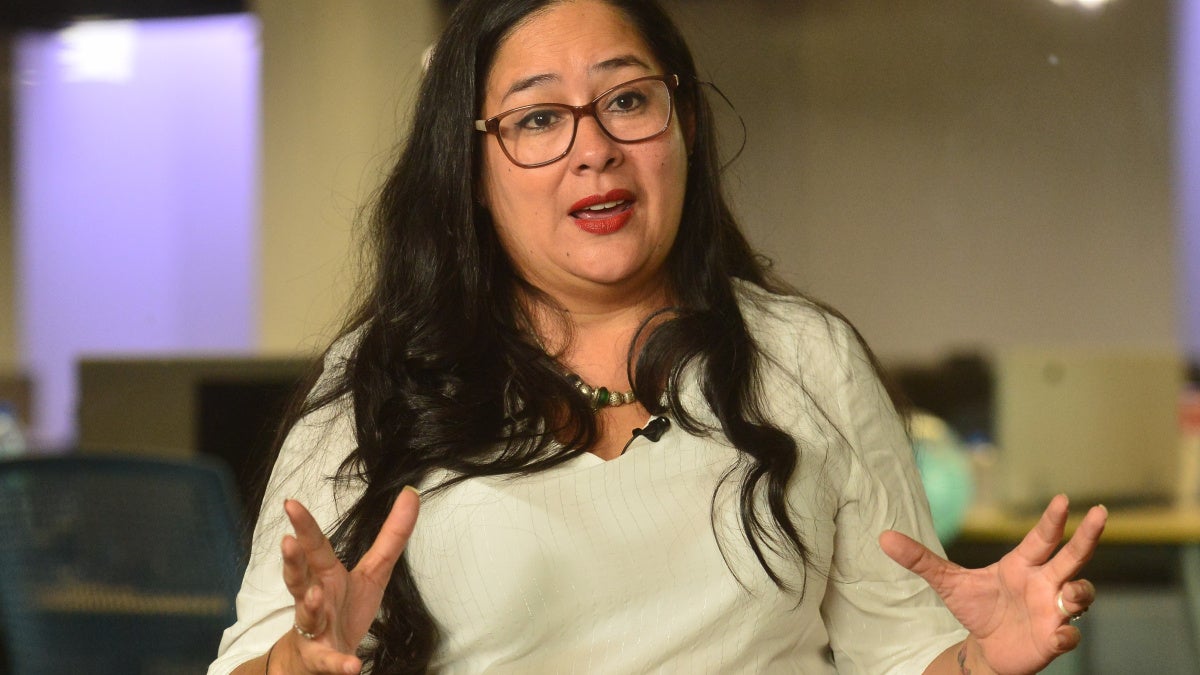
López, 48, heads the Anti-Corruption Unit at Cristosal, one of Central America’s leading human rights organizations. She has investigated alleged corruption by senior officials in the administration of Salvadoran President Nayib Bukele and denounced serious human rights violations under the country’s state of emergency. López’s detention marked the start of an escalating crackdown on government critics, including human rights defenders and journalists.
“Ruth López spent years warning that President Bukele was dismantling the institutions that protect Salvadorans from abuse of power,” said Juanita Goebertus, Americas director at Human Rights Watch. “Her own case is sadly the clearest evidence that she was right. The authorities should lift the secrecy on her case, present any credible evidence in an open court, and allow López meaningful access to her lawyers.”
Police arrested López on May 18, 2025, at her home in San Salvador. López was initially charged with embezzlement in connection with her work, over a decade ago, as an adviser to a former Supreme Electoral Tribunal magistrate, Eugenio Chicas. Approximately 15 days after her arrest, prosecutors changed the charge to illicit enrichment.
At a hearing on June 4, 2025, a judge sent her to pretrial detention. She was subsequently transferred to La Granja de Izalco prison, where she remains. In December, the judge overseeing the case extended her pretrial detention for an additional six months. Her current pretrial detention order is set to expire in June 2026.
The evidence against López has not been presented in open court. The judge has not publicly articulated a reason to keep her case under judicial seal.
Through her work at Cristosal, López investigated the alleged misuse of public funds—including irregularities in pandemic-era public contracting—and filed legal challenges against the May 2021 summary removal of the attorney general and the five magistrates of the Constitutional Chamber. She also helped lead the citizen campaign against the December 2024 repeal of El Salvador’s metal mining ban and, in early 2025, filed habeas corpus petitions on behalf of Venezuelans transferred from United States custody to El Salvador’s Terrorism Confinement Center (Centro de Confinamiento del Terrorismo, CECOT).
López’s arrest was followed by sweeping measures targeting government critics, Human Rights Watch found.
On May 20, 2025, two days after López was detained, the Legislative Assembly, controlled by President Bukele’s party, passed a “foreign agents law.” The law claims to promote “transparency,” but in practice provides the government expansive authority to control, stigmatize, and sanction human rights groups and independent media outlets that receive international support.
Since the law came into force, the Association of Journalists of El Salvador and at least three other civil society organizations have closed their Salvadoran offices, citing the requirements imposed by the law.
On June 7, 2025, police arrested Enrique Anaya, one of the country’s most prominent constitutional lawyers and a vocal government critic, on alleged money laundering charges. A few days before his arrest, Anaya had publicly condemned López’s detention. He remains in pretrial detention, and his case file is also under seal.
As a consequence of this escalation, many government critics have gone into exile. Between May and September 2025, at least 140 human rights defenders and journalists left the country. Cristosal announced in July 2025 that it was suspending its operations in El Salvador and relocating to Guatemala and Honduras. They said they had to choose between “exile and prison.”
The use of indefinite pretrial detention against López and other government critics reflects a broader pattern in El Salvador, where successive legal changes adopted since 2022 have effectively dismantled due process guarantees, including limits on pretrial detention, and allowed for mass hearings of hundreds of defendants at a time. Most of these measures were adopted under the state of emergency in force since March 2022, which has been used to detain more than 91,000 people. Human Rights Watch has documented widespread human rights violations during the state of emergency, including mass arbitrary detention, torture, enforced disappearances, and inhumane conditions in detention.
Judicial independence in El Salvador has been severely compromised since May 2021, when the Legislative Assembly summarily removed the five magistrates of the Constitutional Chamber and the attorney general, replacing them with allies of the executive.
On September 22, 2025, the Inter-American Commission on Human Rights said that López and Anaya faced serious and urgent risks to their life, integrity, and health, and urged El Salvador to guarantee adequate prison conditions, including regular contact with family and lawyers. Salvadoran authorities have not publicly reported any steps to implement these measures.
Foreign governments and international human rights bodies, including the United Nations Human Rights Council, should substantially step up their public scrutiny of El Salvador’s human rights record, Human Rights Watch said. They should publicly press El Salvador to grant López, Anaya and other critics who have been detained a prompt, open, and fair trial, lift the judicial secrecy on their cases, and guarantee them regular contact with their families and lawyers.
Under its Democratic Charter, the Organization of American States (OAS) has a mandate to discuss and take action against “unconstitutional alteration of the constitutional regime that seriously impairs the democratic order.” Yet its Permanent Council has for years abdicated its responsibility to discuss the situation in El Salvador.
“With its crackdown against human rights defenders and journalists, El Salvador is joining the ranks of authoritarian governments like Venezuela, Nicaragua, and Cuba,” Goebertus said. “Latin American and European governments should take the country’s authoritarian drift seriously and urgently step up their response.”