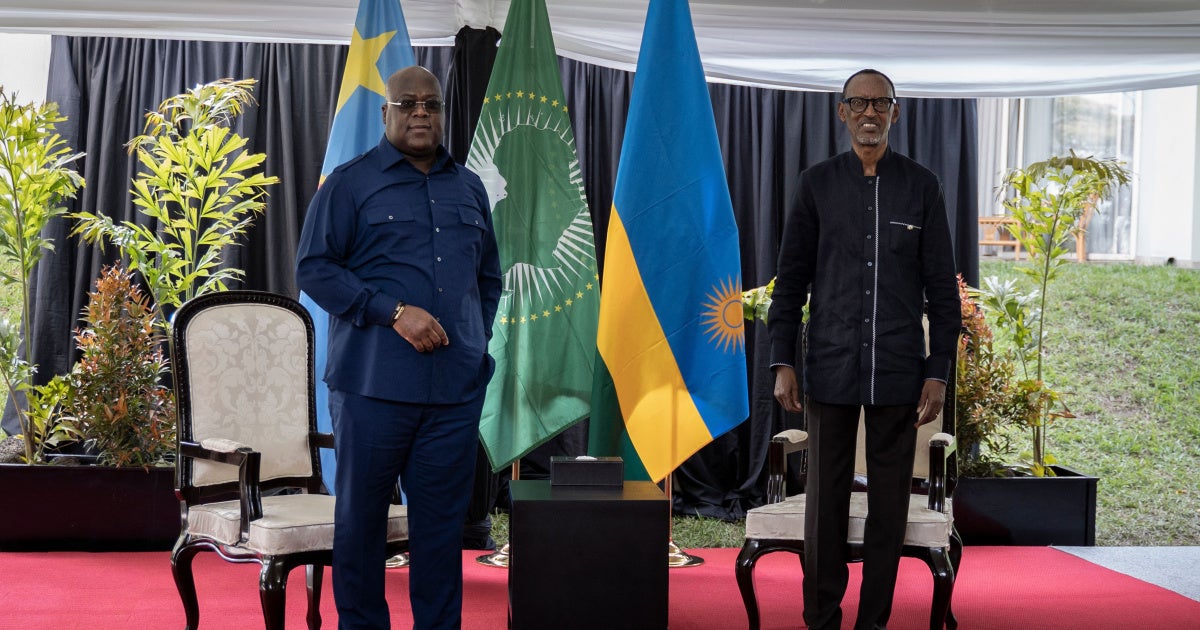
The accord signed today by Democratic Republic of Congo President Félix Tshisekedi and Rwanda President Paul Kagame at the White House in Washington, DC, is being heralded as a breakthrough for regional cooperation over confrontation.
If implemented with transparency and meaningful participation, it could help stabilize eastern Congo and create the foundations for a durable peace.
But optimism should not be mistaken for results. US President Donald Trump has repeatedly—and incorrectly—claimed that peace has been established in eastern Congo. An initial framework signed in June did nothing to stem atrocities in the region. Human Rights Watch documented a string of massacres by the Rwandan-backed M23 armed group in Rutshuru before the ink was dry: clear evidence that signatures alone do not protect civilians.
While the accord and its economic framework call for some peacekeeping measures, such as the removal of Rwandan troops from Congo, their broad commitments are short on enforceable mechanisms.
Neither this deal nor any other proposed agreements confront a central issue: impunity for abuses drives conflict. Commanders implicated in massacres, forced displacement, and unlawful recruitment still operate freely. Key military and government officials implicated in supporting abusive proxy forces face little scrutiny. Without accountability, new economic or security arrangements will place little restraint on those acting unlawfully.
The European Union and other partners in the region should stay engaged and press both Congo and Rwanda to take essential steps, like bringing to justice those responsible for serious crimes and immediately ending support for abusive armed groups.
There is little reason to believe that the M23, which occupies much of North and South Kivu, will carry out the accord’s economic arrangements. But if the agreement is to bring tangible benefits for local communities, greater investment and mining revenue will be needed to create jobs, strengthen local infrastructure, and improve everyday livelihoods. And that will require confronting demobilization, protection of civilians, ending support for abusive armed groups, and, above all, accountability.
This accord promises opportunities. But unless governments in the region finally choose justice over expediency, it will be just more empty promises on paper.