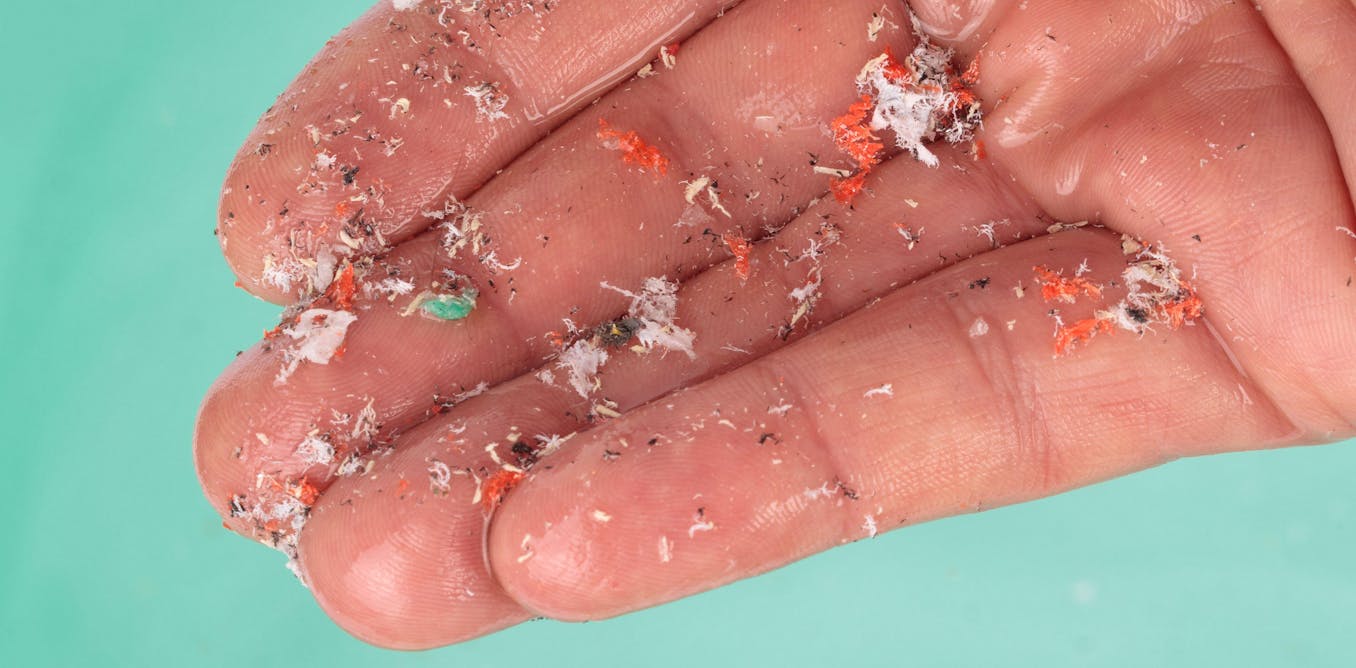
Microplastics are a big environmental issue. They’ve been found in oceans, drinking water, seafood, the air we breathe, and increasingly throughout the human body, from the placenta to the brain.
A new study by researchers in Italy, published in the European Heart Journal, adds another organ to that growing list: the heart’s own blood supply. But while the discovery of microplastics in coronary blood is concerning, the most intriguing finding may not be the plastics themselves. It is how they may be getting there.
Researchers found that people who smoke were six times more likely to have detectable micro- and nanoplastics in the blood supplying their hearts than non-smokers. Even more notable, every smoker who was also exposed to higher levels of air pollution had plastics detected in their blood, compared with just 12.5% of people who neither smoked nor experienced high pollution exposure. That is a remarkable difference, even in a small population.
Rather than simply confirming another harmful consequence of smoking, these findings raise an intriguing possibility: cigarettes may also act as an efficient delivery system for microscopic plastic particles. For decades we’ve understood why smoking damages the heart and blood vessels. Tobacco smoke contains thousands of chemicals that trigger inflammation, damage blood vessels, promote clotting and accelerate the build-up of fat inside arteries.
Sophon Nawit/Shutterstock.com
The new research suggests another mechanism could be operating alongside these well-established risks. Cigarette smoke contains enormous quantities of fine particles that penetrate deep into the lungs. The researchers propose that inhaled micro- and nanoplastics may hitch a ride with these particles, crossing the delicate air sacs of the lung, called alveoli, and entering the bloodstream far more readily than previously thought. Air pollution may facilitate a similar process.
This doesn’t necessarily mean the detected particles originated from the cigarette itself, although most cigarette filters are made from the plastic cellulose acetate and may contribute. Rather, smokers inhale air that already contains microscopic plastic particles from synthetic clothing fibres, tyre wear, degraded packaging and countless other environmental sources. Smoking may simply make it easier for these particles to cross from the lungs into the circulation.
The researchers studied 61 patients undergoing a heart test called coronary angiography. They compared three groups: people who had experienced a heart attack, patients with stable coronary artery disease and people with normal coronary arteries.
Micro- and nanoplastics were detected in 84% of patients who had suffered a heart attack compared with 40% of those with chronic coronary disease and 32% of those with normal coronary arteries. Heart attack patients also carried a greater variety of plastic polymers, with polyethylene, commonly used in packaging, being the most frequently detected.
Importantly, the researchers also observed higher levels of inflammatory markers in patients with detectable plastics. Since inflammation plays a central role in destabilising fatty blockages in the heart and triggering heart attacks, this biological link deserves further investigation.
Why this isn’t proof yet
This study, however, does not prove that microplastics cause heart attacks. The study was based on a small number of participants and was observational. That means researchers identified associations but cannot determine whether one factor caused another.
People who smoke often experience greater exposure to environmental pollution and may differ in many other lifestyle factors that influence cardiovascular risk. Patients treated for acute heart attacks receive intravenous fluids and medical devices that themselves may introduce tiny plastic particles into blood samples.
That caution matters. Microplastics have become a topic that attracts considerable public attention, and it is tempting to assume every new discovery represents proof of harm. Science rarely works that way. Instead, each study contributes another piece to a much larger puzzle.
Whether or not microplastics ultimately prove to play a direct role in heart disease, this study reinforces a broader message that has become increasingly difficult to ignore. Our heart health is shaped not only by our genes and personal lifestyle choices but also by the environments we live in.
Air pollution is already recognised as a major contributor to cardiovascular disease worldwide. Smoking remains one of the largest preventable causes of premature death. If both exposures also increase the movement of environmental plastics into the bloodstream, they may represent overlapping rather than separate risks.
This idea fits with a growing understanding of the exposome; the sum of environmental exposures we accumulate throughout life. Rather than considering tobacco smoke, air pollution and plastic pollution independently, researchers are beginning to examine how these exposures interact.
The findings should not distract from the established reasons to stop smoking. Cigarette smoking already dramatically increases the risk of heart attack, stroke, cancer and chronic lung disease.
But if future research confirms that smoking also acts as a gateway through which microscopic plastics enter the bloodstream, it would add yet another mechanism by which tobacco harms health.
The statistic likely to resonate most with readers is also the simplest: in this study, every participant who both smoked and had high air pollution exposure had detectable plastics in their blood, compared with only one in eight people exposed to neither.
This small study doesn’t prove plastics caused heart disease, but it does remind us that smoking is more than a source of toxic chemicals. It may also be helping transport another modern pollutant to places in the body we never expected to find it.

David C. Gaze does not work for, consult, own shares in or receive funding from any company or organisation that would benefit from this article, and has disclosed no relevant affiliations beyond their academic appointment.