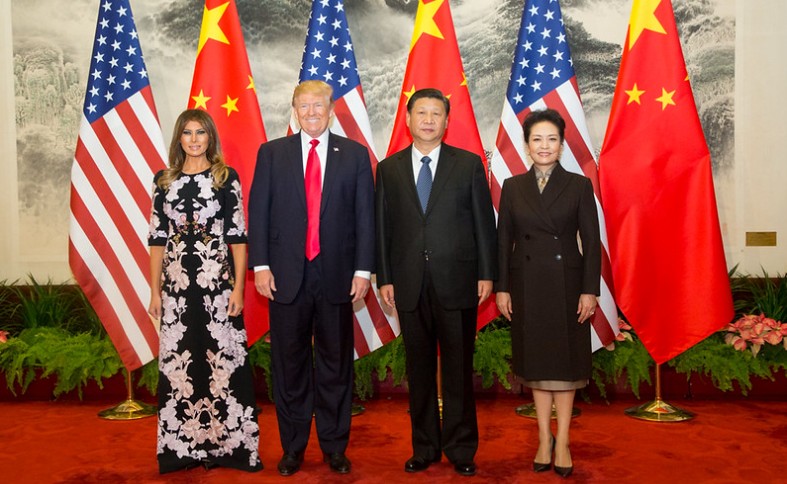
As Chinese President Xi Jinping prepares for his high-stakes visit to the United States, global expectations are uniquely high. The meeting comes at a critical juncture in modern diplomacy: a moment when the world’s two largest economies must decide whether their relationship will continue down a path of systemic confrontation or pivot toward structured, pragmatic collaboration.
While geopolitical competition remains a defining reality, the stakes facing both nations—and the broader global economy—demand a departure from zero-sum rhetoric. To establish a durable framework for stability, the upcoming discussions must move beyond broad diplomatic generalities and focus on concrete, high-stakes areas where shared guardrails are urgently required: maritime security in the Strait of Hormuz, artificial intelligence, global market equity, sustainable manufacturing quality, and a renewed commitment to human rights and the rule of law.
Key Priorities for Bilateral Dialogue
                           PILLARS OF US-CHINA DIALOGUE
                                         │
        ┌────────────────────────────────┼────────────────────────────────┐
        ▼                                ▼                                ▼
Regional & Energy Stability     AI & Tech Safety         Economic Equity & Law
• Strait of Hormuz Transit      • AI Frontier Safety     • Regional Price Parity
• Unbiased De-escalation        • Autonomous Systems     • Durable Quality Standards
• Diplomatic Energy Corridors   • Cyber Safety Protocols • Human Rights & Rule of Law
1. Maritime Security and the Strait of Hormuz: Unbiased Neutrality and De-escalation
A central issue dominating foreign policy and global trade—yet frequently trapped in ideological divides—is the stability of the Persian Gulf and the Strait of Hormuz. As a vital chokepoint through which a significant portion of the world’s petroleum and liquefied natural gas flows, any escalation or naval disruption immediately triggers global inflationary shocks and supply chain fragility.
- A Neutral, Multi-Lateral Imperative: Rather than framing the Middle East as a venue for proxy competition, Washington and Beijing must approach the Iran and Strait of Hormuz security paradigm with diplomatic balance. Both superpowers share a core interest in guaranteeing unimpeded freedom of navigation and protecting commercial shipping corridors.
- Addressing Underlying Root Causes: A lasting solution requires moving beyond reactive military postures or unilateral sanctions. Through joint mediation and transparent dialogue, the US and China can leverage their respective diplomatic channels—Washington’s regional security partnerships and Beijing’s economic ties—to encourage de-escalation, mutual security guarantees, and structural agreements that address the underlying regional grievances.
- Insulating Energy Corridors from Bilateral Rivalry: Treating energy security as a shared global public good ensures that critical maritime routes remain insulated from broader US-China trade friction, offering a stable foundation for the wider international economy.
2. Establishing Workable Guardrails on Artificial Intelligence
Artificial intelligence has rapidly evolved from a competitive technological sector into a core component of global security and strategic stability. Without explicit, bilateral agreements on safety standards and deployment limits, unchecked AI development presents profound risks.
- Frontier Model Governance: Both nations must establish clear protocols regarding the alignment, evaluation, and red-teaming of high-capacity frontier AI models to prevent unintended safety failures or cyber exploitation.
- Autonomous Military Systems: A critical priority for the summit should be the formalization of binding constraints on autonomous weapons systems, ensuring that human oversight remains mandatory in critical command-and-control decisions.
- Data Integrity and Standards: Establishing transparent baselines for algorithmic safety and synthetic media governance can mitigate cross-border disinformation and build foundational trust between regulatory bodies in Washington and Beijing.
3. Addressing Regional Price Disparities and Market Stability
The global economy faces growing distortion due to severe regional price disparities and structural market imbalances. Unchecked dumping of heavily subsidized goods destabilizes local manufacturing bases worldwide, giving rise to reactive trade barriers that ultimately harm consumers and slow global economic growth.
- Preventing Unfair Pricing Shocks: Bilateral trade talks must address systemic subsidies and predatory pricing strategies that artificially depress global market values, threatening the viability of industries in developing and developed nations alike.
- Economic Guardrails over Trade Wars: Rather than relying on unilateral, escalating tariffs that exacerbate global inflation, both powers need to establish transparent, enforceable mechanisms to handle trade grievances and maintain predictable supply chain dynamics.
4. Transitioning from “Fast Products” to Sustainable Quality Assurance
A major friction point in global trade revolves around production philosophy. The historical focus on high-volume, low-cost, and short-lifespan manufacturing has created a cycle of rapid consumption and discard—often referred to as the “fast product” economy.
| Manufacturing Challenge | Global Impact | Required Collaborative Standard |
| Short Product Lifespans | Accelerates e-waste and increases global landfill burdens. | Minimum durability, repairability, and lifecycle standards. |
| Rapid Turnaround Over Safety | Heightens risk of sub-standard components entering vital supply chains. | Standardized quality assurance inspections and certification transparency. |
| Environmental Externalities | Drives industrial pollution and intensive resource depletion worldwide. | Joint commitments to circular economy principles and emissions reduction in manufacturing. |
By incentivizing higher production quality, durability, and strict environmental compliance over cheap, disposable manufacturing, both nations can lead a transition toward a more sustainable global trade model that reduces industrial waste and protects environmental resources.
5. Re-anchoring the Relationship in Human Rights and the Rule of Law
A sustainable bilateral relationship cannot ignore fundamental rights or the erosion of legal norms. Crucially, a meaningful dialogue on these principles requires a high standard of accountability on both sides.
                      ACCOUNTABILITY & RULE OF LAW
                                   │
        ┌──────────────────────────┴──────────────────────────┐
        ▼                                                     ▼
Human Rights Integrity                                 Rule of Law & Norms
• Protection of Minority Rights                       • Domestic Judicial Due Process
• Freedom of Expression & Assembly                    • Adherence to International Law
• Labour & Workplace Safeguards                       • Fair Legal Recourse for Businesses
- Addressing Systemic Concerns: The US must maintain a clear, non-negotiable stance regarding human rights, minority protections, and civic freedoms, insisting that economic engagement cannot come at the expense of fundamental human dignity.
- Mutual Adherence to International Norms: Both nations must respect legal frameworks at home and abroad. A stable international order requires that both Washington and Beijing uphold international law, maintain due process within their legal systems, and respect established norms regarding trade, maritime security, and state sovereignty.
The Path Ahead: A Framework for Responsible Competition
President Xi Jinping’s visit to the United States represents an essential opportunity to redefine how the world’s leading powers manage their differences. A relationship built entirely on confrontation is volatile, unpredictable, and economically dangerous.
By focusing on diplomatic stability in vital sea lanes like the Strait of Hormuz, enforceable guardrails for emerging technologies, equitable market pricing, sustainable production standards, and an unyielding commitment to human rights and the rule of law, the United States and China can establish a framework of responsible competition—one that protects global stability while serving the long-term interests of both nations.
President Donald Trump 2017 China Visit picture withChinese President Xi Jinping by U.S. Mission to China, Public Domain Mark