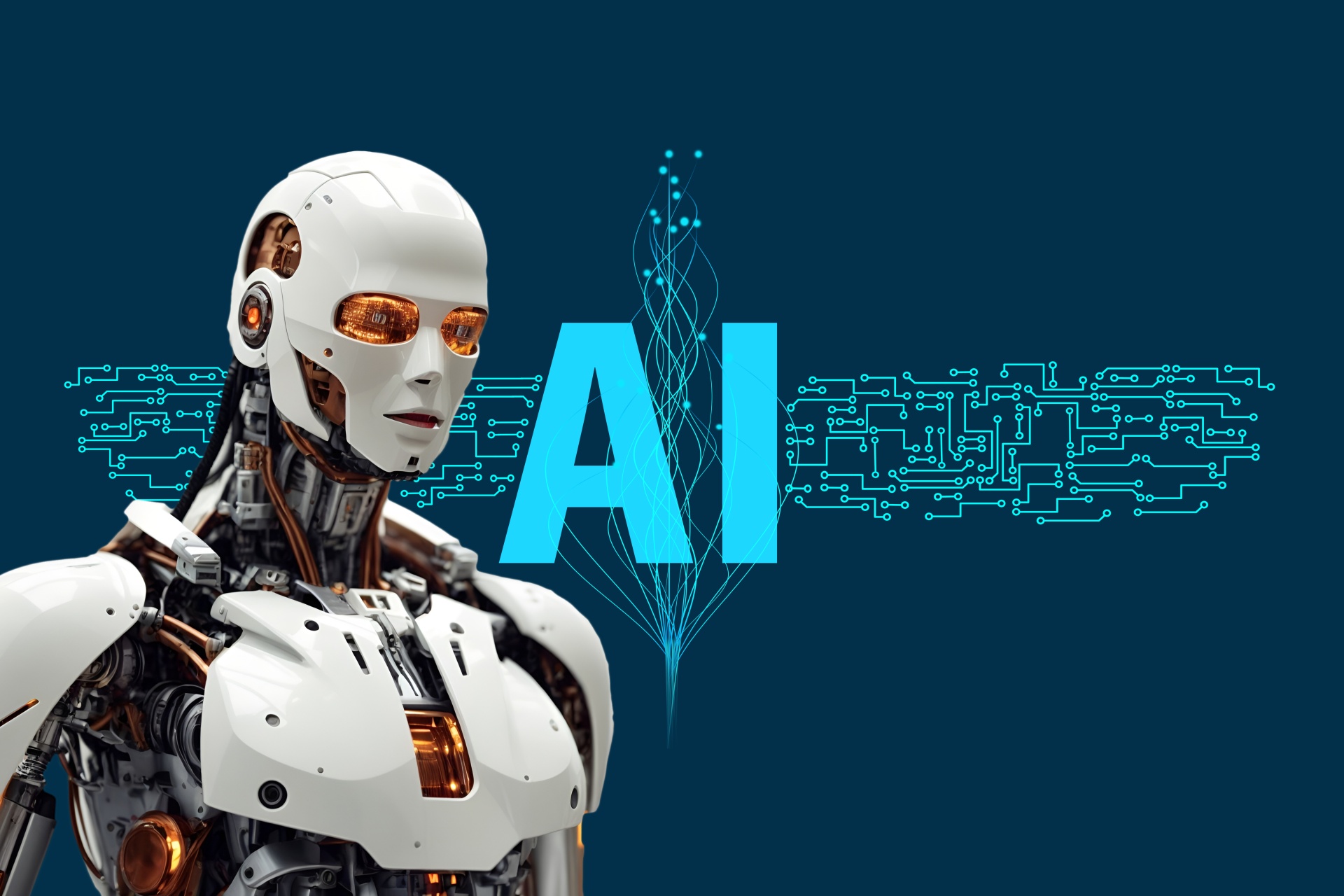
In modern technical discourse, the terms Artificial Intelligence (AI), Robotics, and Autonomous Systems are frequently hurled about as interchangeable buzzwords. While they routinely intersect in cutting-edge engineering projects, they represent fundamentally distinct technological domains.
Understanding the precise boundaries, unique capabilities, and profound synergies between these three pillars is essential for grasping how digital and physical systems are reshaping the global economy.
Defining the Boundaries: AI, Robotics, and Autonomous Systems
To understand why these technologies overlap, we must first examine what each individual discipline uniquely contributes to the technological landscape.
Core Boundaries of the Tech Trinity
+-------------------------------------------------------------------------+
| ARTIFICIAL INTELLIGENCE (THE "BRAIN")                                   |
| * The software capability to process data, recognize patterns, learn    |
|   from experience, and execute complex cognitive reasoning tasks.       |
|                                                                         |
| ROBOTICS (THE "BODY")                                                   |
| * The physical engineering domain involving mechanical structures,      |
|   actuators, sensors, and hardware designed to execute physical work.   |
|                                                                         |
| AUTONOMOUS SYSTEMS (THE "CONTROL SYSTEM")                               |
| * The overarching architecture of rules, feedback loops, and algorithms |
|   that allow a system to operate independently toward a goal.           |
+-------------------------------------------------------------------------+
- Artificial Intelligence: AI is purely cognitive. It lives in data centers, servers, and microchips. It encompasses machine learning models, neural networks, large language models, and analytical engines designed to ingest vast quantities of data, spot anomalies, predict outcomes, and generate text, code, or strategies. AI does not inherently possess a physical form or mechanical agency.
- Robotics: Robotics is fundamentally physical. A traditional industrial robotic arm welding a car chassis on a factory floor is a marvel of mechanical engineering and closed-loop control, yet it may possess zero “intelligence” in the AI sense. It executes hardcoded loops or repetitive sequences with speed and precision, unable to adapt if a component is misaligned.
- Autonomous Systems: Autonomy is a behavioral capability. A system is autonomous if it can pursue long-term goals under changing conditions without continuous human intervention. An autonomous software routine (like a self-healing cloud server network) or an uncrewed drone can exhibit autonomy using basic rule-based logic trees without utilizing advanced AI machine learning models.
Why They Overlap and Are Used Interchangeably
The widespread tendency to blur these lines stems from convergence. For decades, AI stayed in computers, robotics stayed on factory floors, and autonomy was restricted to rigid military scripts.
Today, rapid hardware miniaturization and algorithmic breakthroughs have welded them together. When an industrial robot is fitted with 3D machine vision and neural network processors, it ceases to be a blind, repetitive machine and transforms into an adaptive, intelligent asset. Because modern applications blend all three simultaneously—the brain (AI), the body (robotics), and the self-governing control (autonomy)—observers naturally lump them into a single conceptual category.
Capabilities in Converged Systems: 2+ Tech Synergies
When two or more of these technologies converge, they unlock operational capabilities that far exceed the sum of their parts.
Synergistic Convergence in Modern Applications
+-------------------------------------------------------------------------+
| EMBODIED AI (AI + Robotics)                                             |
| * AI models provide cognitive reasoning directly to physical robotic    |
|   bodies, enabling human-like dexterity, spatial reasoning, and real-   |
|   time physical adaptation to unstructured environments.  |
|                                                                         |
| AUTONOMOUS MOBILE ROBOTS - AMRs (Robotics + Autonomy + AI)              |
| * Mobile chassis equipped with LiDAR and sensor fusion navigate dynamic |
|   warehouses, dynamically recalculating paths around human workers      |
|   without pre-laid magnetic floor tracks.                 |
|                                                                         |
| AGENTIC DECISION PLATFORMS (AI + Autonomy)                              |
| * Multi-agent software frameworks orchestrate enterprise logistics,     |
|   adjusting global supply chain orders in real time based on live       |
|   market feeds and weather disruptions.                   |
+-------------------------------------------------------------------------+
The Data Fuel: Processing Big Information to Drive Action
Underpinning the success of all converged systems is a simple economic and computational truth: their ability is entirely a function of their access to massive volumes of data, and their capacity to rapidly sift, structure, and utilize that information.
An AI model without data is inert; a robot without perceptual data is blind. Modern systems ingest petabytes of historical logs, sensor feeds, and transactional streams, converting raw unstructured noise into structured, actionable frameworks within milliseconds.
Suggesting Ingenious Ways to Leverage Available Information
By harnessing these data processing pipelines intelligently, organizations can unlock innovative utility across sectors:
- Predictive Urban Metabolism: Integrating municipal utility, traffic, and weather data into autonomous micro-grid systems to rebalance city-wide energy loads dynamically before demand spikes occur.
- Autonomous Bio-Logistics: Using real-time genetic sequencing databases combined with AI agent networks to formulate, test, and autonomously pilot custom pharmaceutical compounds via robotic laboratory assayers.
- Resilient Supply Chain Self-Healing: Deploying autonomous agent networks that continuously monitor global shipping logs, geopolitical alerts, and supplier financial health to reroute cargo autonomously weeks before a bottleneck manifests.
Conclusion: The Dual-Edged Sword of Human Invention
Ultimately, the convergence of Artificial Intelligence, Robotics, and Autonomous Systems marks one of the most profound chapters in human technological history. They make vast quantities of information actionable, render complex physical tasks easier, and unlock efficiencies previously thought impossible.
However, like all powerful human inventions—from splitting the atom to the advent of the internet—these technologies are inherently neutral. They can be leveraged positively to accelerate human advancement, cure diseases, optimize resource distribution, and liberate humanity from tedious toil; or they can be exploited negatively in the automated destruction of the same. The defining challenge of our era lies in steering these cognitive and physical architectures toward constructive global stewardship while erecting unbreakable guardrails against malicious weaponization.
AI and Robotics Picture by publicdomainpictures.net