STOCKHOLM — A wave of coordinated cyberattacks targeting industrial refrigeration systems swept across seven European nations on November 2, 2026, forcing grocery chains, independent butchers, and hypermarkets to discard massive quantities of spoiled food. With attacks escalating across the continent, cybersecurity authorities and retail associations are issuing urgent advisories instructing unaffected stores to fortify their networks and put in place critical operational safeguards immediately to prevent similar breaches.
The incidents follow an initial attack in France in mid-October 2026 that disrupted hundreds of supermarkets. The second wave struck grocery retailers across Sweden, Ireland, Belgium, Luxembourg, the Netherlands, Finland, and Estonia, manipulating Operational Technology (OT) and Building Management Systems (BMS) used to remotely monitor and adjust store cooling equipment.
Technical Prevention Checklist: Mandatory Safeguards for Unaffected Stores
To prevent further operational disruption, financial loss, and massive inventory destruction, national cybersecurity agencies—including France’s CERT-FR and Finland’s National Cyber Security Centre—have outlined an immediate, non-negotiable action plan for all grocery, cold-storage, and logistics operators:
Urgent Safeguard Framework for Unaffected Retailers & Storage Facilities
+-------------------------------------------------------------------------+
| 1. IMMEDIATE AUDIT & DISCONNECT EXTERNAL EXPOSURE                       |
|    Perform an immediate port scan and audit to identify exposed OT      |
|    cooling control panels, XWEB controllers, and HVAC management        |
|    interfaces. Immediately disconnect all unauthenticated web portals   |
|    from the public internet.                                            |
|                                                                         |
| 2. ENFORCE ENCRYPTED VPN & MULTI-FACTOR AUTHENTICATION (MFA)            |
|    Isolate refrigeration systems on dedicated, segmented VLANs.         |
|    Mandate multi-factor authentication (MFA) over an encrypted VPN for  |
|    any offsite technicians or third-party maintenance contractors.       |
|                                                                         |
| 3. HARDEN CREDENTIALS & DECOUPLE PHYSICAL OVERRIDES                      |
|    Change all factory-default credentials and administrative passwords. |
|    Configure physical high-temperature override limits directly on the  |
|    hardware unit so software commands cannot exceed safe thresholds.     |
|                                                                         |
| 4. ESTABLISH OUT-OF-BAND INDEPENDENT ALARM MONITORING                   |
|    Decouple thermal sensors from the primary network so that secondary  |
|    temperature alerts route through independent, uncompromised SMS or   |
|    cellular monitoring channels when anomalies occur.                   |
+-------------------------------------------------------------------------+
Anatomy of the Incident: How Industrial Controllers Were Compromised
Cybersecurity researchers found that threat actors exploited unpatched vulnerabilities and exposed remote-access interfaces on legacy refrigeration controllers.
Mechanics of the Refrigeration Cyber Incident
+-------------------------------------------------------------------------+
| TARGETED INFRASTRUCTURE: Industrial OT / IoT cooling control units      |
| EXPLOITATION METHOD: Unauthorized access via exposed web management     |
|                      control panels on the public internet.             |
| ATTACK COMMANDS: Override automated temperature thresholds; force      |
|                  continuous manual defrost cycles.                      |
| OPERATIONAL IMPACT: Evaporator heat coils remain continuously active,   |
|                     raising freezer units up to 50°C–55°C.              |
+-------------------------------------------------------------------------+
Rather than deploying ransomware or encrypting corporate databases, the attackers accessed open-facing web management portals for store cooling networks. Once inside, they overrode baseline safety protocols, disabled low/high-temperature alarms, and forced cooling evaporators into continuous manual defrost modes.
The forced defrost cycles caused internal heating elements—designed to clear ice accumulation for brief intervals—to run indefinitely, heating freezer units up to 50°C to 55°C overnight and causing rapid food spoilage.
Summary of Impacted European Retailers
The coordinated disruptions affected both major multinational grocery operators and local independent retailers.
Summary of Confirmed Impacted Chains Across Europe
+-------------------------------------------------------------------------+
| SWEDEN (ICA & Coop): Multiple outlets hit; ICA store in Sjöbo reported  |
|                      freezers breached at 2 AM and raised to 50°C.      |
| BELGIUM & LUXEMBOURG (Delhaize, Carrefour, Colruyt, IKEA):             |
|   ~40 Delhaize locations, 15 Carrefour stores, and an IKEA location in  |
|   Mons suffered sudden cooling unit failures and food loss.             |
| IRELAND (SuperValu): 13 stores reported targeted cooling system failure; |
|                      chilled and frozen goods removed from shelves.     |
| NETHERLANDS, FINLAND & ESTONIA: At least 17 local shops in Netherlands; |
|                      Selver chain in Estonia targeted.                 |
+-------------------------------------------------------------------------+
An independent butcher in Belgium reported losing over €15,000 worth of meat inventory after discovering store fridges remotely set to 18°C overnight. In Stockholm and Sjöbo, Sweden, employees arrived to find entire freezer aisles destroyed after temperatures spiked to 50°C.
Two-Sided Perspectives on Supply Chain Security
The attacks have ignited an intense industry debate between cybersecurity experts urging rapid system isolation and store managers managing operational realities.
Perspectives on Industrial System Vulnerabilities
+-------------------------------------------------------------------------+
| CYBERSECURITY ANALYSTS & REGULATORS                                     |
| * Point to systemic negligence in exposing legacy OT controllers directly|
|   to the public internet without basic authentication or firewalls.     |
| * Advocate for strict, mandatory cyber resilience standards under the   |
|   EU NIS2 Directive for food production and distribution networks.      |
+-------------------------------------------------------------------------+
| RETAIL EXECUTIVES & REFRIGERATION CONTRACTORS                           |
| * Emphasize that 24/7 remote monitoring is essential to detect mechanical|
|   failures early and preserve food safety.                              |
| * Note that hardware lifespans for refrigeration systems often exceed   |
|   software support windows, making rapid retrofits expensive.           |
+-------------------------------------------------------------------------+
Cybersecurity and Regulatory Assessment
Security researchers emphasize that connecting operational technology—such as HVAC units, smart fridges, and building controls—directly to the open internet without network isolation creates critical vulnerabilities. European intelligence agencies continue to investigate whether the coordinated disruptions represent financial extortion attempts or state-sponsored hybrid campaigns aimed at disrupting critical food supply infrastructure.
Industry Operational Realities
Conversely, retail operations managers note that remote access is standard practice for modern energy management and maintenance. Offsite technicians rely on remote connections to adjust settings, run diagnostic checks, and respond to equipment alerts. Retail representatives stress that retrofitting legacy cooling hardware across thousands of retail branches requires substantial capital investment and time.
Operational Outlook
Law enforcement agencies and cyber incident response teams across Europe are continuing to assist affected chains in auditing control logs and restoring secure operations. Store managers and IT security leads across unaffected regions are strongly advised to execute immediate security audits on all connected building management systems to lock down exposed interfaces against potential follow-up intrusions.
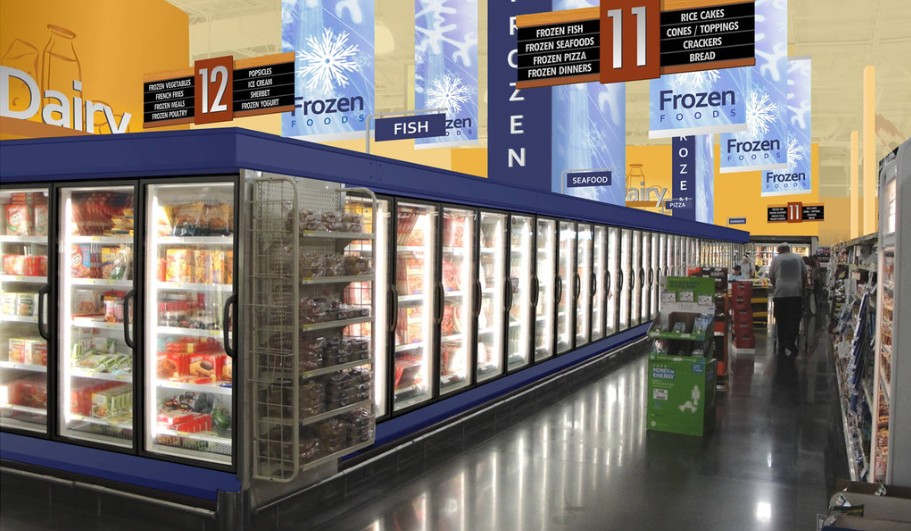
Supermarkets grocery and frozen food section Flickr picture by I-5 Design & Manufacture