The Youth AI Privacy Act’s Privacy Paradox

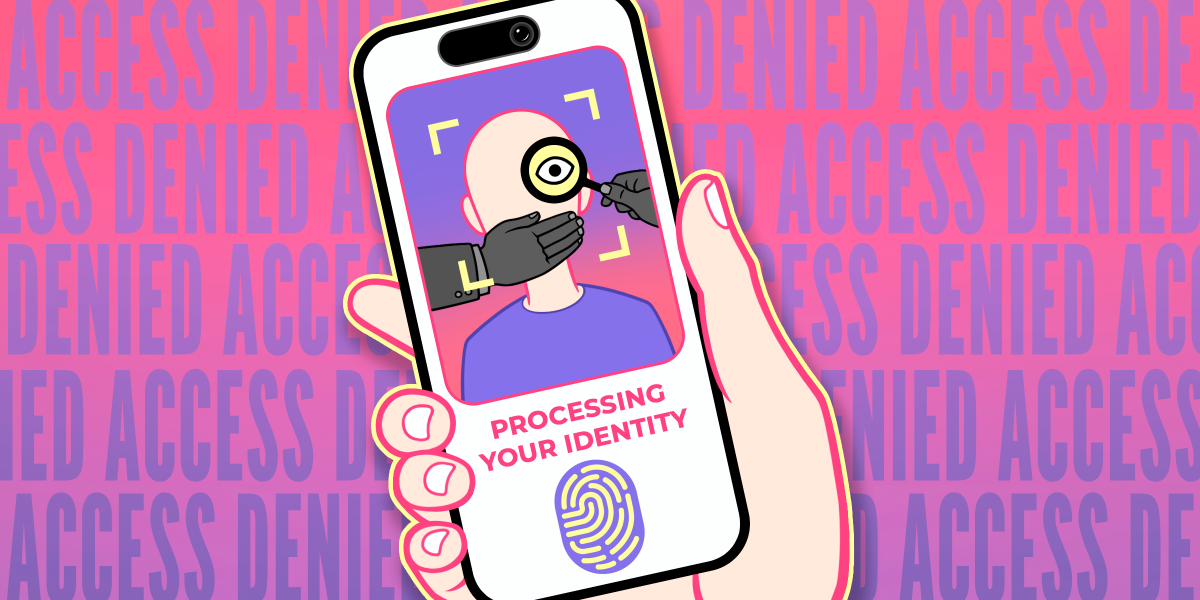
Update: The Senate Commerce Committee voted to advance this bill on August 5, 2026. EFF continues to oppose the bill, which still needs approval from the full Senate.  The Senate Commerce Committee is poised to consider the Youth AI Privacy Act, a bill that would require AI companies to create kids-only privacy rules and implement so-called “safe design features,” […]

Continue Reading


EFF Joins Call for FTC to Drop Its Disastrous AI Policy Proposal

The Federal Trade Commission (FTC) in July issued a proposed policy statement “concerning the suppression of accuracy in artificial intelligence systems.” We urge the FTC to withdraw this misguided proposal and instead focus on its core strengths and mission to protect consumers.  The new proposed policy builds on, and directly references, the Trump administration’s  “Preventing Woke […]

Continue Reading

EFF Joins 18 Civil Rights Organizations Calling on Governor Hochul to Reject the Stealth Crawler Prohibition Act

EFF joined a group of 18 civil society organizations to send a letter encouraging New York Governor Kathy Hochul to veto Senate Bill 9934A, the New York Stealth Crawler Prohibition Act. The letter states: While framed as a measure to protect local journalism, this legislation harms free expression and establishes a dangerous precedent by effectively deanonymizing […]

Continue Reading

The Senate Should Reject KOSA’s Privacy Risks

Update: The Senate Commerce Committee voted to advance this bill on August 5, 2026. EFF continues to oppose the bill, which still needs approval from the full Senate.  The Senate Commerce Committee is once again considering legislation that would dramatically expand age verification, and undermine privacy for everyone. Alongside the SCREEN Act, the CHATBOT Act, and the Youth AI […]

Continue Reading

Technology’s Power in the Hands of the People

In the scorching heat of every Las Vegas summer, EFF joins thousands of hackers, makers, policy analysts, and activists for the world’s largest computer security gathering. If you’re there during this summer security week, be sure to say hello to us at BSides Las Vegas, Black Hat Briefings, and DEF CON 34. While tech companies […]

Continue Reading

Mobile Ad Software Encourages Location Data Sharing, EFF Report Finds

SAN FRANCISCO – Some software development kits (SDKs) provided by advertising companies to help developers monetize their apps are automatically feeding users’ location data into systems that location data brokers use to track people, an Electronic Frontier Foundation (EFF) report found.  EFF began investigating the location-sharing practices of various advertising SDKs to better understand the […]

Continue Reading

Appeals Court Agrees with EFF that Building a Web Browser Doesn’t Violate the CFAA

The Ninth Circuit Court of Appeals has endorsed a commonsense technical interpretation of the Computer Fraud and Abuse Act (CFAA), a law not usually given to such interpretation. Amazon had sued Perplexity AI to try to shut down its Comet browser, claiming the browser’s optional agentic AI “Assistant” that can browse websites like Amazon for […]

Continue Reading

Tomorrow’s U.S. Senate Vote: Four Internet Bills, One Wrong Direction

The Senate Commerce Committee will vote this week on several censorious and privacy invasive bills: KOSA, the SCREEN Act, Youth AI Privacy Act, and CHATBOT Act. While we appreciate that the Committee is taking the time to look at these bills separately, it’s still impossible to ignore the message Congress is sending to the world: […]

Continue Reading

Meta Must Stop Silencing Reproductive Health Information

Access to accurate information about reproductive and maternal health can be critical. But on Meta’s platforms, simply talking about prescription medication, abortion care, or one’s own medical experiences can be enough to trigger content removals and account restrictions. That’s why EFF recently submitted a public comment to the Meta Oversight Board in its consideration of […]

Continue Reading

Dismiss Church’s Trademark Lawsuit Against “Mormon Stories” Podcast, EFF Urges Court

Imagine if McDonald’s could use trademark law to control how you use the term “fast food.” Or if the Canadian government could stop you from using the word “Canada” in the title of a book about the country and its people. That wouldn’t just be absurd; it would be an unacceptable obstacle to criticism of […]

Continue Reading