
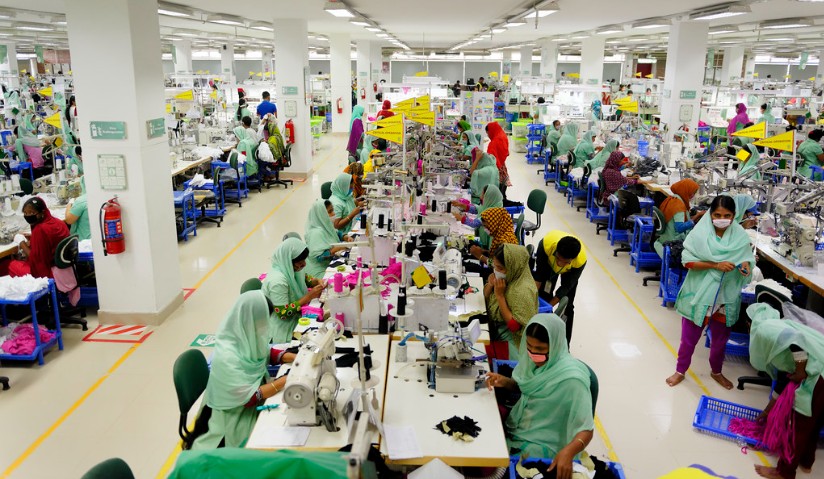
DHAKA, Bangladesh — Garment workers across major industrial belts surrounding Dhaka have escalated strikes and street demonstrations, demanding a substantial increase to the monthly minimum wage as severe cost-of-living pressures continue to strain household budgets.
The wave of labor unrest, which intensified through October and early November 2026, has forced approximately 30 ready-made garment (RMG) factories on the outskirts of the capital to temporarily shut down operations and declare holidays to preserve safety.
Escalating Protests & Factory Disruptions in Dhaka Industrial Hubs
The demonstrations trace back to August, with labor groups arguing that the current statutory minimum monthly wage of BDT 12,500 (approx. USD 100), established in November 2023, has been severely eroded by persistent double-digit inflation, rising food prices, and increased transport costs.
Dhaka Industrial Belt & Wage Crisis Summary
+-------------------------------------------------------------------------+
| CURRENT MINIMUM WAGE: BDT 12,500 (~USD 100 per month)                   |
| INITIAL IMPLEMENTATION DATE: November 2023                              |
| RECENT PROTEST EXPANSION: October – Early November 2026                 |
| OPERATIONAL IMPACT: ~30 Garment factories shut down/declared holidays   |
| CORE LABOR DEMANDS: BDT 30,000 to BDT 37,125 (~USD 245 to USD 300)     |
+-------------------------------------------------------------------------+
Protesting workers blocked major arterial roads and highways connecting industrial zones such as Ashulia, Gazipur, and Mirpur, clashing intermittently with law enforcement and prompting factory owners to suspend manufacturing schedules to prevent physical damage to facilities.
Competing Labor Union Wage Proposals
To address the escalating crisis, competing labor federations and international trade union affiliates have presented revised wage benchmark proposals to the government and industry representatives.
Key Wage Proposals Submitted by Labor Coalitions
+-------------------------------------------------------------------------+
| COALITION OF 35 LABOR FEDERATIONS:                                      |
| * Proposed Minimum Wage: BDT 37,125 (~USD 300 / month)                  |
| * Core Rationale: Complete coverage of living costs, nutritional needs, |
|   and healthcare for a four-person household.                           |
+-------------------------------------------------------------------------+
| INDUSTRIALL BANGLADESH COUNCIL (IBC):                                   |
| * Proposed Minimum Wage: BDT 32,000 (~USD 260 / month)                  |
| * Core Rationale: Offsets inflation spikes and recent public sector     |
|   wage adjustments that increased living expenditures.                   |
+-------------------------------------------------------------------------+
Labor leaders emphasize that foreign apparel brands purchasing from Bangladeshi suppliers must share financial responsibility by increasing FOB (Free on Board) purchase prices to accommodate higher wage structures without forcing local factory bankruptcies.
Formation of Minimum Wage Board & Brand Responsibility
In response to widespread industrial disruption, the Bangladeshi government announced the formation of a new Minimum Wage Board tasked with evaluating economic conditions and drafting revised pay scales for the RMG sector.
Key Stakeholder Roles in Minimum Wage Review
+-------------------------------------------------------------------------+
| BANGLADESHI GOVERNMENT: Formed new Minimum Wage Board to review scale.  |
| TRADE UNIONS: Demand genuine worker representation on the Wage Board.   |
| GLOBAL BRANDS & RETAILERS: Urged by unions to adjust sourcing pricing   |
|                          to absorb fair wage adjustments.               |
| FACTORY OWNERS (BGMEA): Cite narrow profit margins and international    |
|                         buyer price squeezes.                           |
+-------------------------------------------------------------------------+
Union representatives maintain that previous wage revisions failed to incorporate transparent labor representation and urged the newly formed board to base its framework on real-world living wage metrics rather than minimal survival levels.
Two-Sided Perspectives on Bangladesh Garment Wage Structure
The standoff highlights an ongoing dispute between labor organizers advocating for basic human dignity and factory owners navigating global competitive pressure.
Perspectives on Garment Sector Minimum Wage Hike
+-------------------------------------------------------------------------+
| LABOR UNIONS & WORKER ADVOCATES                                         |
| * Argue that BDT 12,500 is insufficient for basic nutrition and rent.   |
| * Insist global fashion brands must pay suppliers fair prices to        |
|   guarantee a living wage without squeezing factory margins.            |
+-------------------------------------------------------------------------+
| FACTORY OWNERS & APPAREL EXPORTERS (BGMEA)                              |
| * Warn that drastic, sudden wage increases without buyer price hikes    |
|   risk forcing factory closures and mass layoffs.                       |
| * Highlight intense global competition from lower-cost apparel centers  |
|   across Southeast Asia and Africa.                                     |
+-------------------------------------------------------------------------+
Labor Unions Focus on Survival and Brand Accountability
Trade union leaders argue that Bangladesh’s readymade garment sector—the world’s second-largest apparel exporter—generates billions in global retail profits while relying on underpaid labor. Advocates contend that international retail giants must adjust procurement practices to ensure workers can afford basic shelter, health care, and nutrition.
Manufacturers Stress Operational Costs and Export Competitiveness
Conversely, representatives from the Bangladesh Garment Manufacturers and Exporters Association (BGMEA) emphasize that factory owners operate under tight profit margins set by international buyers. Exporters warn that uncoordinated wage increases without matching price commitments from international brands could destabilize the sector and cause orders to shift to competing manufacturing hubs in Vietnam, Cambodia, or Ethiopia.
Operational Outlook
As the newly established Minimum Wage Board prepares to initiate formal consultations with factory owners, trade union representatives, and government officials, police and security forces remain deployed across industrial zones around Dhaka to prevent further violence and manage ongoing strikes.
Bangladesh Garment Workers Flickr Picture by International Labour Organization









