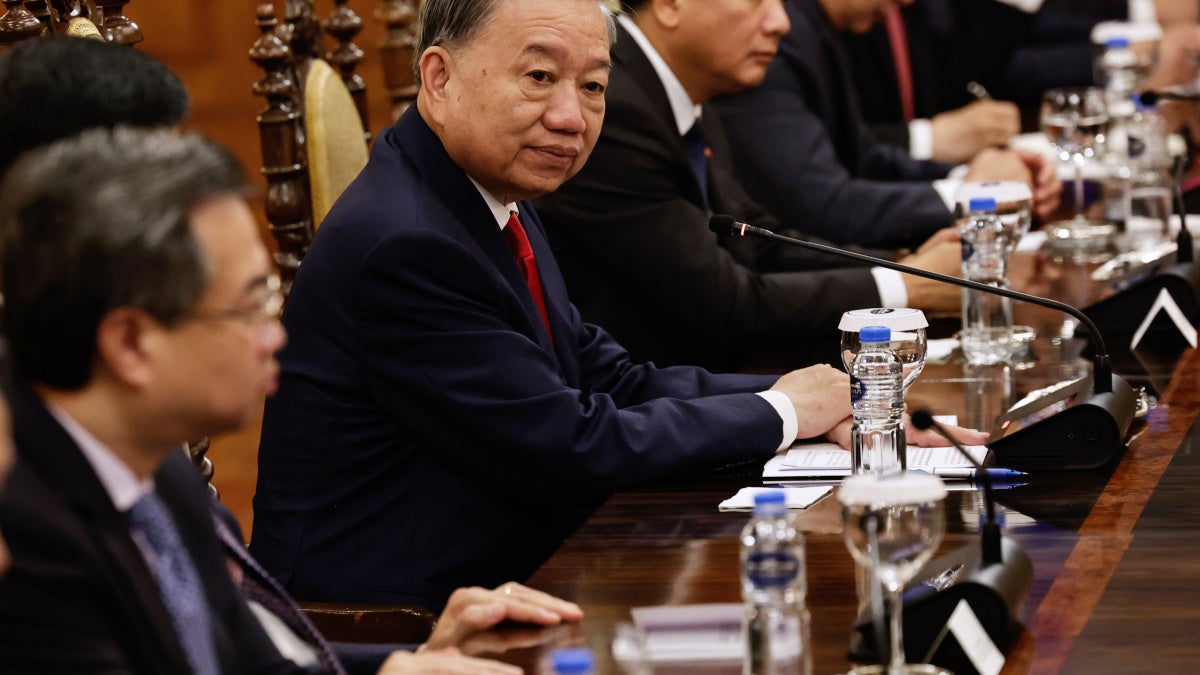
As Australian Prime Minister Anthony Albanese meets with To Lam, Vietnam’s president and general secretary of the Communist Party, in Canberra this week, he shouldn’t forget that he is dealing with one of the region’s most repressive leaders.
While minister of Vietnam’s notorious Ministry of Public Security from 2016 to 2024, To Lam oversaw a far-reaching crackdown that decimated the country’s budding civil society. Authorities imprisoned dozens of prominent independent journalists, bloggers, and activists, including Pham Doan Trang, Pham Chi Dung, Nguyen Tuong Thuy, Nguyen Lan Thang, and Can Thi Theu. The crackdown also targeted environmentalists and lawyers, many of whom now live in exile for fear of persecution.
Since To Lam ascended to Vietnam’s highest political office as Communist Party general secretary in 2024, the country’s poor human rights record has worsened. The authorities have expanded the scope and use of draconian laws that criminalize free speech. People now risk up to seven years in prison simply for raising complaints about government policies or local officials.
Vietnamese authorities have also deepened transnational repression—committing abusive acts abroad—in Thailand and elsewhere. Since December, the courts have tried at least five independent journalists and Indigenous rights activists in exile, including Doan Bao Chau, Nguyen Van Dai, Le Trung Khoa, Dinh Yum, and Siu Di. All have been convicted and sentenced in absentia on politically motivated charges to between 7 and 17 years in prison.
In June and July, police arrested five people for their roles in publishing a book about Ho Chi Minh that provoked the authorities. The government has also issued a new decree targeting lawyers and is revising laws to further curb freedom of expression.
The annual human rights dialogue between Australia and Vietnam should not be the only forum for rights concerns, which should inform all engagements between the two countries. In March 2024, Australia and Vietnam agreed to a Comprehensive Strategic Partnership to expand cooperation across defense, economics, education, energy, and digital innovation. Australia should leverage this partnership to press the Vietnamese government to release people imprisoned for exercising their rights and to end its crackdown on free expression.