Briefing the Security Council, Georgette Gagnon, Deputy Special Representative of the Secretary-General for Afghanistan, and Tom Fletcher, the UN Emergency Relief Coordinator, said nearly half the population will need protection and humanitarian assistance in 2026.
Women and girls remain “systematically excluded” from almost all aspects of public life, Ms. Gagnon said, as the ban on secondary and higher education for girls has now entered its fourth year, depriving the country of future doctors, teachers and leaders.
“Media freedom is increasingly restricted. Journalists face intimidation, detention and censorship, reducing the space for public debate and public participation,” she added.
Afghans – both women and men – also face daily intrusions under the de facto authorities’ law on the “propagation of virtue and prevention of vice,” she added, describing a pattern of systematic interference in private life.
Humanitarian needs surging
At the same time, humanitarian needs are surging. Mr. Fletcher said that nearly 22 million people will need assistance next year, with Afghanistan now ranking among the world’s largest humanitarian crises.
“For the first time in four years, the number of people facing hunger has gone up,” he warned. Some 17.4 million Afghans are now food insecure, while massive funding cuts have left the response “stretched to breaking point.”
More than 300 nutrition delivery points have closed, leaving 1.1 million children without lifesaving nutrition, while 1.7 million face the risk of death without treatment. The health system is also buckling: 422 health facilities were closed in 2025, cutting three million people off from lifesaving care.
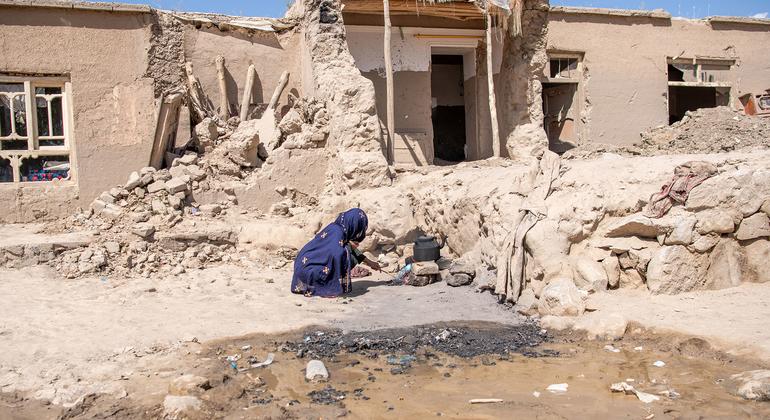
The year 2025 has seen a marked increase in refugee returnees to Afghanistan. Pictured here, a scene at the Islam Qala border crossing between Afghanistan and Iran.
Refugees returning to hardship
Adding to the strain, Afghanistan has seen record refugee returns, with over 2.6 million Afghans returning in 2025 alone, bringing the two-year total to more than four million. Most arrive with few possessions and are absorbed into already impoverished communities.
“Women and children made up 60 per cent of all returns this year,” Mr. Fletcher noted – returning to a country where women are barred from education, work and, in some cases, healthcare.
Economic pressures are worsening despite modest growth. While GDP is expected to rise by 4.5 per cent, per capita income will fall by about four per cent due to population growth, according to World Bank figures cited by Ms. Gagnon.
Rural livelihoods have also been devastated by the third year of the opium cultivation ban. Although welcomed internationally, UN agencies report a 48 per cent drop in rural incomes, with more support needed for alternative livelihoods.
Aid delivery crippled
While security conditions appear calmer than in past decades, tensions with Pakistan are rising amid cross-border exchanges linked to militant activity. At the same time, the closure of key border posts for two months has hurt trade and civilian life on both sides.
Meanwhile, women’s participation in humanitarian work remains under direct assault. Since September, female national UN staff have been barred from accessing UN premises nationwide, a restriction Mr. Fletcher called “unacceptable” and warned was crippling aid delivery.
“There can be no effective humanitarian response without women,” he said. “Afghanistan needs them.”
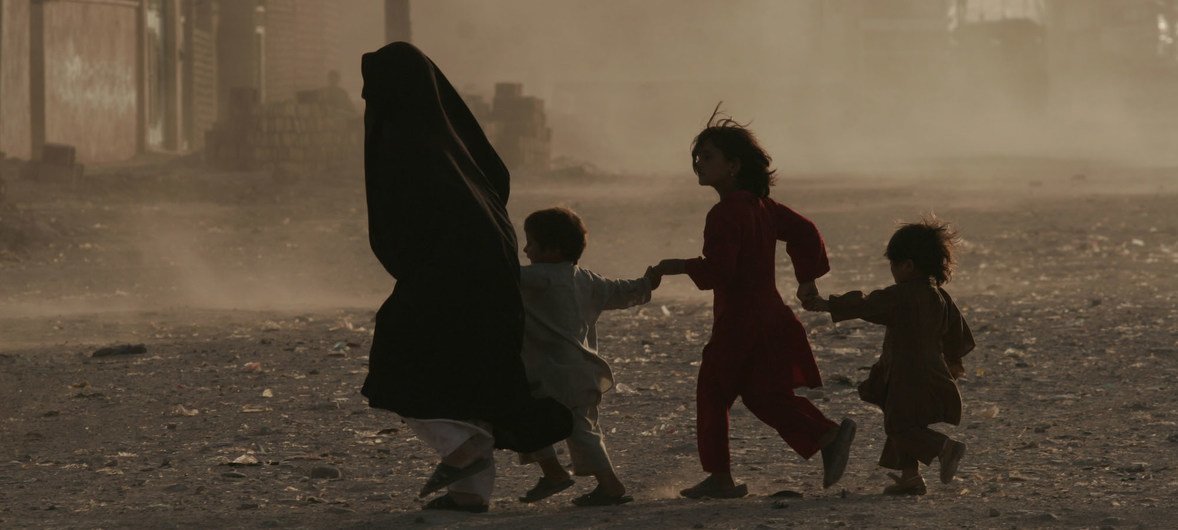
A family runs across a dusty street in Herat, Afghanistan.
Rights increasingly out of reach
The UN Assistance Mission in Afghanistan (UNAMA) also warned that rights in the country remain “out of reach for too many,” especially for women and girls. Involuntary returns are also placing journalists, former officials and civil society figures at heightened risk of reprisals.
“Human rights are not optional. They are the everyday essentials that sustain life,” Ms. Gagnon said in a separate UNAMA statement. “For Afghanistan, ensuring women and girls can learn, work, and participate fully is indispensable to recovery.”
Call for international support
Despite severe constraints, the UN continues to deliver aid. More than $40 million in emergency funding has been released in recent months to respond to earthquakes, drought and mass returns.
But Mr. Fletcher warned that underfunding is now costing lives.
“As we look to 2026, we risk a further contraction of lifesaving help at a time when food insecurity, health needs a strain on basic services and protection risks are all rising,” he said.
He stressed that without urgent attention of and support from the international community, the crisis would only worsen.