Food assistance is one of the most effective tools for fighting poverty in America. New federal rules are testing that reputation.
The Supplemental Nutrition Assistance Program, better known as SNAP, helps low-income people afford groceries. The program’s benefits reach far beyond the grocery bill, with research linking the program to better outcomes for K-12 students and improved overall health among participants.
However, new federal policy changes are making the program harder for many families to use, and participation is shrinking.
In Pennsylvania’s Allegheny County, the number of people who get SNAP benefits has decreased by about 12% since 2025. SNAP enrollment rates vary widely across the Greater Pittsburgh metropolitan area – from 31% of residents in Fayette County to just 13% in Butler County.
In Allegheny County, where Pittsburgh is located, approximately 17,000 people have already lost their benefits. That’s the second-highest total of any county in Pennsylvania. Roughly 162,000 Allegheny County residents receive SNAP, or about 14% of the county’s population.
Across the country, states like Arizona and Florida are seeing similar effects from these SNAP changes. The specifics vary by state, but the underlying pressures on food assistance are shared nationwide.
As a food economist and clinical dietition working in western Pennsylvania, I have seen how SNAP policy changes affect real people firsthand. Many of my patients are having more trouble making ends meet over the past few years, especially as grocery prices have risen roughly 25% in nominal terms since 2022 – a jump that has outpaced wage growth for many low-income households.
New SNAP work requirements
In November 2025, Pennsylvania began implementing the federal government’s expanded work requirements. The rules previously applied to adults ages 18 to 54 without a disability or dependent children, but they now reach up to age 64. Under these rules, these adults must work, volunteer or take part in education or training programs for at least 20 hours a week to keep receiving SNAP benefits.
Certain groups are especially likely to be affected by this rule change, including early retirees, first-time moms, children and people with disabilities who haven’t applied or been approved for disability benefits.
Anadolu/Anadolu Collection via Getty Images
Stricter and more expansive work requirements increase SNAP benefit denials and reduce the number of people who get benefits, including among women who may become pregnant.
The new work requirements could also worsen food insecurity, which occurs when people cannot obtain enough safe and nutritionally adequate food for an active and healthy life.
Up to 5.4 million people nationwide could lose some or all of their SNAP benefits under the expanded work requirements, including 1.5 million children.
In Allegheny County, 43% of food-insecure children were likely ineligible for SNAP and similar benefits in 2025 because their household incomes exceeded 185% of the federal poverty line – US$61,050 for a family of four in 2026.
Stricter rules for SNAP retailers
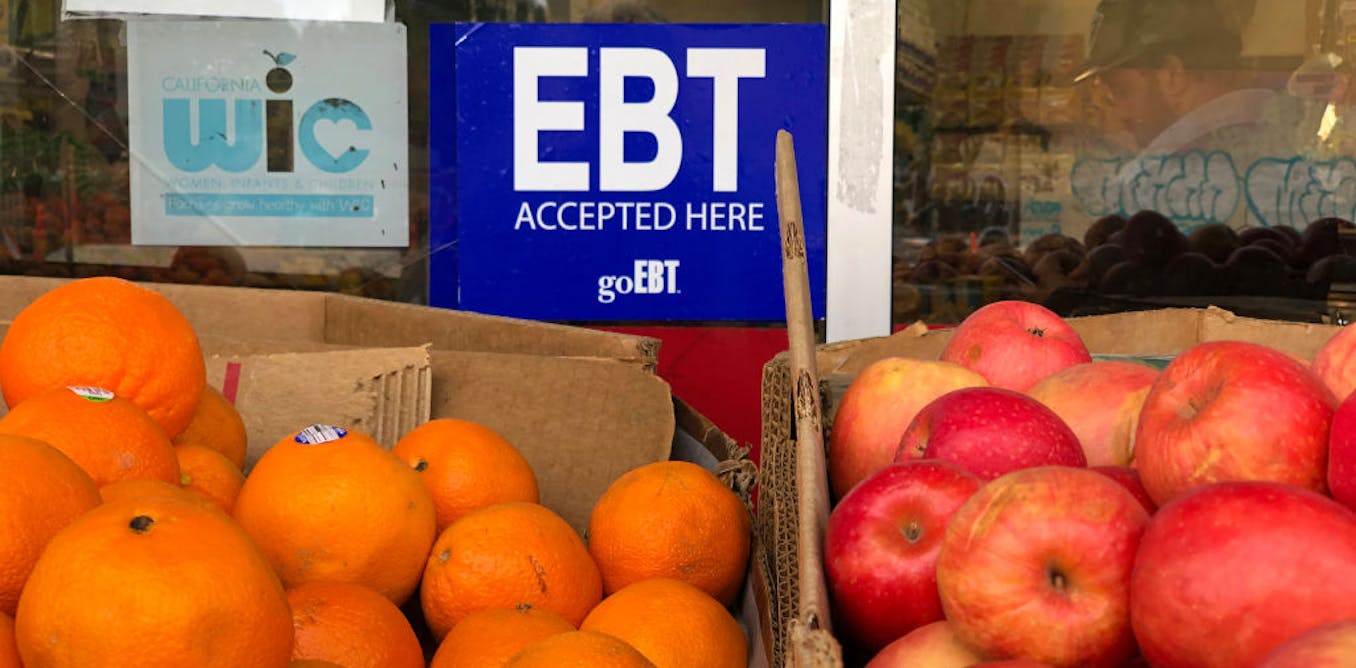
Supermarkets and other stores that sell food must be certified to accept SNAP benefits for payment. Beyond helping individual households, SNAP spending boosts local economies, as those benefits get spent at grocery stores and other retailers.
Retailers that sell food are now required to offer seven varieties of foods in each of four staple food categories: grains, vegetables and fruits, dairy, and protein. Stores could meet the new requirements for grains, for example, by offering corn tortillas, whole wheat bread, white bread, brown rice, white rice, oats and infant cereal for sale.

Jeff Greenberg/Universal Images Group via Getty Images
In the 12th and 17th congressional districts that make up Allegheny County, 10.4% and 8.7% of people, respectively, live in areas where it is difficult to get healthy foods. According to data from the Institute for Local Self-Reliance, there are 191 grocery stores in these districts, about 28% of which are either small chains or independent stores that may have a harder time complying with the new requirements.
Between 2017 and 2023, the number of SNAP-authorized stores in Allegheny County increased by 13%, but this trend could reverse under the new rules.
While the stated goal of the new rules is to increase the availability of healthier foods, simply requiring stores to stock them doesn’t mean that customers will eat a better diet. Whether these new retailer policies ultimately improve diets is an open question.
Additional restrictions on purchases
Some states are placing additional restrictions on what people can buy with benefits. Purchasing hot prepared foods, alcohol, vitamins or diapers with SNAP benefits was already prohibited, but 23 states are now restricting the use of benefits to buy sugar-sweetened beverages and some other items that contribute to nutritionally inadequate diets.
While Pennsylvania has not adopted those additional restrictions, some of its neighboring states, such as Ohio and West Virginia, have.

Tony Dejak/AP
SNAP helps people pay for groceries, but the benefit amount is typically less than what a household would spend on food. SNAP covers some of what a family would’ve spent on groceries anyway, leaving that money for other needs – rent, diapers, utility bills and the like. As a result, research shows the program doesn’t significantly change what or how much people eat, on average.
In my view, as food insecurity remains high in Allegheny County, policies that make it harder for local residents to get SNAP benefits risk weakening one of the nation’s most effective economic support programs.
Read more of our stories about Pittsburgh and Pennsylvania.