– Advertisement –
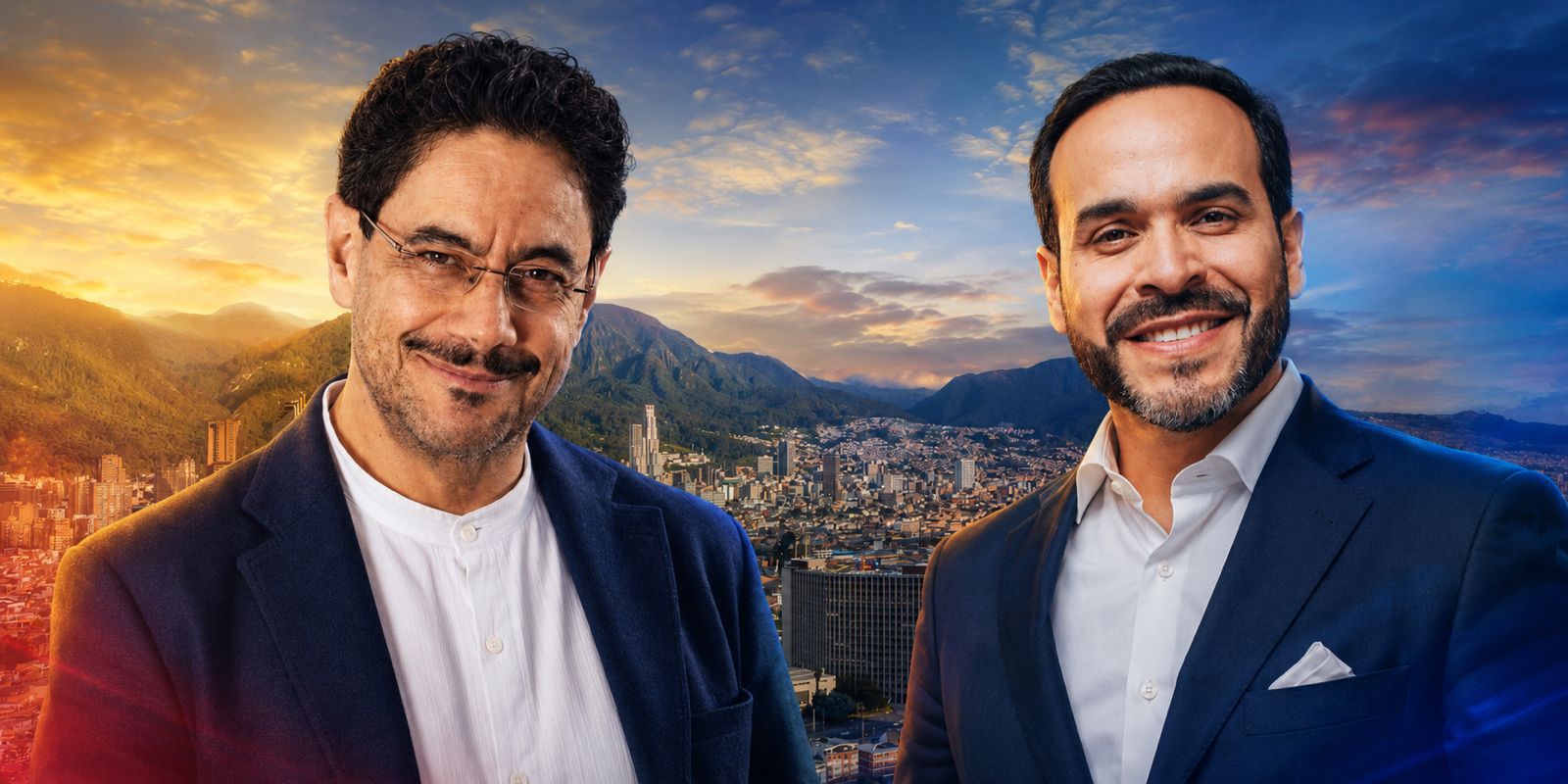
Colombia is facing a defining political choice. Right-wing populist presidential candidate Abelardo de la Espriella emerged as the frontrunner in the first round of voting. He promises more military force, closer ties with the United States, mega-prisons, and the expansion of oil, gas, and fracking projects. Critics, however, warn of setbacks for human rights, environmental protection, and democratic achievements. Donald Trump’s public endorsement has added further explosiveness to the election.
Colombia Faces a Defining Choice
Juana Ibáñez, who has joined forces with other artists from Cali to take part in demonstrations, describes the mood in the country as “bittersweet.” On the one hand, she is deeply worried about the possibility of a De la Espriella victory in the run-off election. At the same time, she says, she is witnessing an extraordinary wave of social mobilization.
“Even in a climate marked by fear and polarization, many Colombians are choosing to build community rather than sink into despair,” she says.
A Right-Wing Outsider Suddenly Becomes the Favorite
But who is Abelardo de la Espriella? He is a man who spent the past few years living in Miami and Florence and has now suddenly reappeared in Colombia as a presidential candidate. He calls himself “the Tiger” and is celebrated by his supporters for his determined and uncompromising demeanor, which resembles that of Donald Trump and Nayib Bukele. The Bogotá-born criminal defense lawyer founded the movement “Defensores de la Patria” — Defenders of the Fatherland — in July 2025 and secured his independent candidacy through a petition drive. Less than a year later, he is celebrating his first-round victory. It now appears that Colombia could be facing the return of a right-wing government — and with it, a departure from the political shift the country had only recently fought so hard to achieve.
Petro’s Promise of Peace Has Not Ended the Violence
It was Gustavo Petro who made history in 2022 with the “Historic Pact” alliance, becoming Colombia’s first left-wing president since the country’s independence. His central government project was “Paz Total” — Total Peace. Petro promised to negotiate with all of the country’s armed groups in order to strengthen internal security and contain the decades-long conflict. These groups continue to shape the situation in Colombia in significant ways: by controlling illegal economic sectors, destabilizing state structures, and repressing the civilian population, they contribute substantially to the country’s ongoing violence. While Petro’s negotiations showed some initial success, the initiative has not managed to curb violence in the country. Instead, the annual report by the International Committee of the Red Cross (ICRC) shows that the humanitarian situation in Colombia reached its worst level in a decade last year.
Why Colombia’s Security Crisis Strengthens the Right-Wing Candidate
The fact that violence in Colombia increased by 47 percent in the year before the presidential election, according to the Institute for Economics and Peace (IEP), gives the situation additional political significance. The deterioration of the security situation primarily benefits those forces that advocate military toughness rather than negotiations. For Miguel García Sánchez, a political scientist at the Universidad de los Andes in Bogotá and an expert on public opinion and peace processes, the escalation is above all the result of long-term dynamics: After the peace agreement that the Colombian government signed in 2016 with the Fuerzas Armadas Revolucionarias de Colombia — the Revolutionary Armed Forces of Colombia, or FARC — dissident groups and other armed actors used the resulting power vacuum to expand their influence.
The policy of “Paz Total,” García argues, gave some groups additional room to consolidate their territorial control. While many experts therefore attribute the rise in violence to the dynamics of armed groups and the difficulties of the peace negotiations, Petro also sees it as the resistance of established power elites to his reform project. He has repeatedly accused them of blocking political change in Colombia.
De la Espriella Promises Security Through the Military — But Colombia Knows the Consequences
Instead of “Paz Total,” the self-proclaimed “Tiger” is relying on military toughness: fighting rather than negotiating. This is one of his core promises and appeals especially to voters who are disappointed with the results of the peace negotiations so far. His program includes intensified military operations against armed groups, the resumption of aerial spraying of coca fields, and the construction of mega-prisons modeled on El Salvador. Another central element of his security strategy is a “Plan Colombia 2.0,” through which he wants to revive close cooperation with the United States and expand the fight against armed groups and drug trafficking through technological and military means. But can such a course really create peace — or does it threaten to reignite old conflict dynamics?
Already in the 2000s, Colombia pursued extensive militarization under the U.S.-backed “Plan Colombia.” Under President Álvaro Uribe Vélez in particular, the fight against guerrilla groups became a political priority. The state was able to push back guerrilla groups, but the price was high. Uribe’s time in office was overshadowed by severe human rights violations. In the so-called “false positives” scandal, members of the military murdered thousands of civilians and then presented them as guerrilla fighters killed in combat in order to show results in the fight against insurgents. The scandal remains one of the darkest chapters in Colombia’s recent history and raises the question of what consequences can follow when security is pursued primarily through military violence.

De la Espriella Wants to Expand Oil, Gas and Fracking — But Environmentalists Warn of the Consequences
De la Espriella is also announcing a clear change of course in economic and energy policy. While Petro pushed for a phase-out of fossil fuels, the presidential candidate supports fracking as well as new oil and gas projects in order to promote economic growth and energy security. This could introduce commercial fracking in Colombia for the first time — a project that environmental groups view critically because of possible damage to the country’s biodiverse ecosystems and water reserves. For coffee farmers Catalina Quintero and Willington Rivera from the department of Risaralda, environmental protection is one of the central issues in the election campaign. They report the noticeable effects of climate change on their harvests and are angry about De la Espriella’s plans. Instead of counteracting climate change, Quintero says, he plans to “exploit the green zones.” For many in the coffee-growing region, this is a course that would not mitigate the ecological consequences of climate change, but further intensify them.
Many Fear for Democracy, Human Rights and Social Achievements
Ibáñez’s concerns have also grown. She fears that the country could lose exactly what it fought so hard for — and in many cases, fought for with blood. She is particularly worried about democratic institutions, human rights, and social achievements. When De la Espriella speaks of drastically shrinking the state, abolishing ministries, and dissolving institutions, she sees this not as “a commitment to efficiency, as he calls it, but as a willingness to destroy.” For political scientist García, this development is not an isolated Colombian phenomenon. Rather, he says, the country is part of a regional trend in which right-wing populist actors are gaining increasing influence and rolling back advances in civil rights.
The Right-Wing Camp Rallies Behind De la Espriella
During the campaign itself, the conservative camp has begun to rally behind De la Espriella. Both former president Uribe and his political successor Paloma Valencia have clearly backed his candidacy after Valencia was eliminated in the first round with just under 7 percent of the vote. Observers therefore consider it possible that a large share of her voters will swing toward De la Espriella in the run-off. The fact that Valencia failed in the first round despite many polls suggesting otherwise also points to a shift within the right-wing spectrum: It is no longer the traditional right shaping the campaign, but increasingly more radical political forces. Colombia is thus heading less toward a classic transfer of power than toward a highly polarized decision about the country’s future direction.
Support is also coming from abroad: Donald Trump endorsed the presidential candidate on his platform Truth Social, giving him his “complete and total endorsement.” De la Espriella, Trump wrote, would promote economic growth, create jobs, strengthen trade, and at the same time fight illegal immigration, crime, and drug trafficking. While Trump trusts the conservative candidate to restore “law and order,” he warns against a “radical Marxist left,” referring to the left-wing candidate Cepeda. He stressed that the election result would be decisive for the future relationship between Colombia and the United States. De la Espriella welcomed the support from Washington and announced that he wanted to strengthen bilateral cooperation, saying that Colombia and the United States were “sister nations.”

Closeness to the United States Revives Memories of Old Dependencies
Ibáñez sees things differently. For her, the idea of Colombia and the United States as “sister nations” completely ignores historical power relations. She says it is hardly possible to speak of a relationship on equal footing. Instead, the relationship has for decades been shaped by Washington’s considerable political, economic, and military influence over Latin American countries.
Trump’s Intervention Turns the Run-Off Into a Question of Sovereignty
Trump’s public support has sparked a debate about foreign influence and the threat to national sovereignty. “When one country interferes in the decisions of another country, freedom dies,” Petro wrote on the platform X, calling on the population to vote in complete freedom and not to make themselves “slaves or colonies” of other states. García also believes it is possible that Trump’s public backing could influence political opinion and voting behavior. “In countries like ours, where colonial patterns of thought partly persist, Trump’s support for De la Espriella could be perceived by many as validation from the United States,” he explains.
Trump’s public intervention in Colombia’s domestic politics shortly before the decisive vote is not an isolated case. In other Latin American countries, too, Trump has repeatedly inserted himself into domestic political debates and publicly backed right-wing and conservative candidates — including in Argentina, Chile, Honduras, and Brazil. He has repeatedly suggested that a victory by left-wing candidates could have negative consequences for relations with the United States. For Ibáñez, the support from Washington is therefore part of a larger political project. She sees it as an attempt “to strengthen a network of right-wing governments and political movements across the Americas” and to consolidate a regional bloc aligned with the geopolitical and economic interests of the United States. Colombia’s interests, she argues, matter less.
The only person who could still tame the “Tiger” is Cepeda. But the run-off has long since become more than a duel between two candidates. For many Colombians, the vote on Sunday, June 21, will decide not only who governs the country, but also which social rights, democratic institutions, and forms of sovereignty Colombia will have in the future.
The rights to the content remain with the original publisher.
Post Views: 20
– Advertisement –