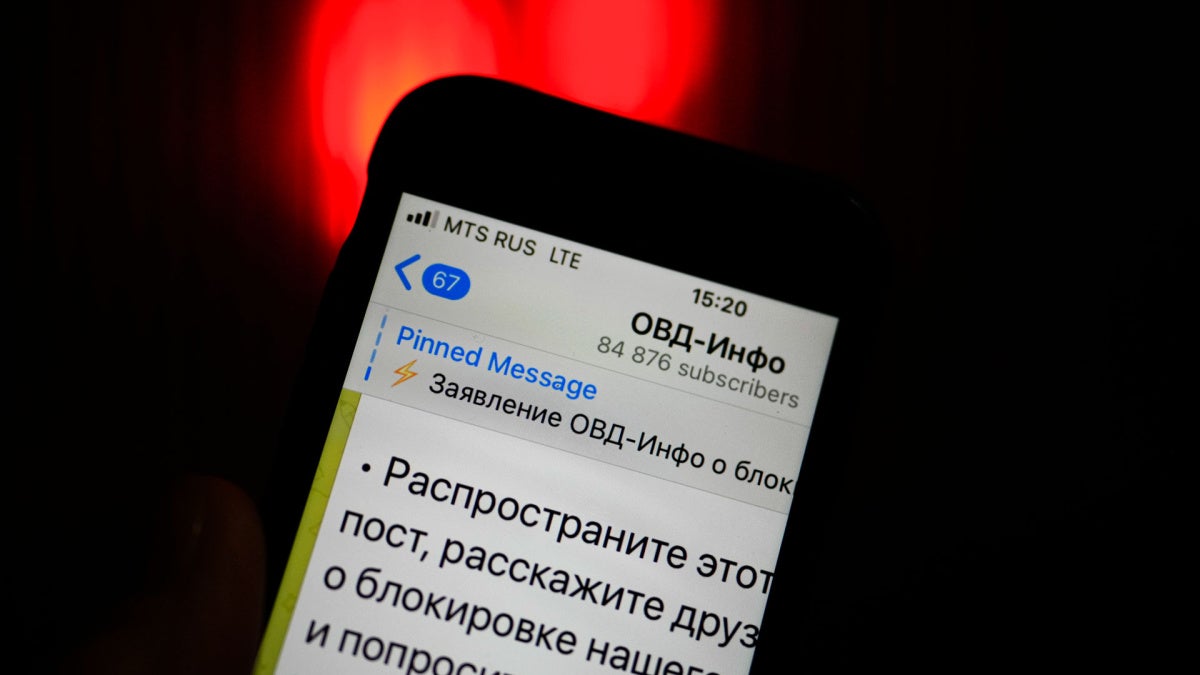
(Berlin, June 5, 2026) – On June 4, 2026, Russian officials included a leading rights group, OVD-Info, along with 35 other Russian organizations, in its list of “extremists,” Human Rights Watch said today. A designation as “extremist” entails being barred from engaging in any activities for the group, under threat of a lengthy prison sentence.
OVD-Info, named after the abbreviation for “police department,” was founded in 2011 in response to a mass crackdown on peaceful public protest. It has since provided legal help in freedom of assembly and expression cases to tens of thousands of people, run a 24/7 hotline for victims to report abuses and seek help, and documented rights abuses. It has helped over 2,300 applicants win cases before the European Court of Human Rights.
“Russian authorities are increasingly targeting human rights groups with sham ‘extremism’ labels,” said Hugh Williamson, Europe and Central Asia director at Human Rights Watch. “The government should cherish the work these groups do, not demonize it.”
OVD-Info said that despite the decision it would continue its work. “By declaring our work ‘extremism,’ they are not outlawing a project, but society’s very ability… to document detentions, help those facing persecution, and call repression by its name,” Daniil Beilinson, OVD-Info’s co-founder, told Human Rights Watch. “The state that rewrites the past cannot tolerate evidence of the present, and so it seeks to ban both at once. But you can’t ban people from knowing it. We will not shut down, and we will not stop our work.”
The June 4 update of the federal terrorist and extremist list was apparently based on the Supreme Court’s April 9 decision to ban “International Public Movement Memorial” and its alleged branches as an “extremist” organization. The sham process concluded in one hearing, behind closed doors, and the case file was classified as “top secret.” The court did not allow Memorial’s attorneys to participate in the proceedings. Before the authorities liquidated the country’s leading human rights organization Memorial Human Rights Centre in 2021, it had been a key partner of OVD-Info, which operates without a legal entity.
The 36 organizations added to the list on June 4 included independent Memorial-affiliated regional groups conducting historical research, and providing education, and legal aid to victims of rights violations, organizations based outside Russia operating under the Memorial brand, Memorial’s political prisoners project, and the Memorial Human Rights Defence Centre. In 2022, Memorial was granted the Nobel Peace Prize for its “outstanding effort to document war crimes, human rights abuses, and the abuse of power.”
Participating in or financing an extremist organization in Russia is punishable by up to 12 years in prison. Symbols of “extremist” organizations are banned and displaying them is punishable with up to 15 days in detention for the first offense and up to 4 years in prison for a repeat offense. The authorities may include individuals suspected of involvement with an extremist organization in the countrywide “list of extremists” and freeze their bank accounts.
“Russian authorities have long stopped respecting the right to peaceful protest as they crack down on all forms of dissent,” Williamson said. “They should stop misusing the ‘extremist’ legislation to decimate civil society and annul these absurd designations.”