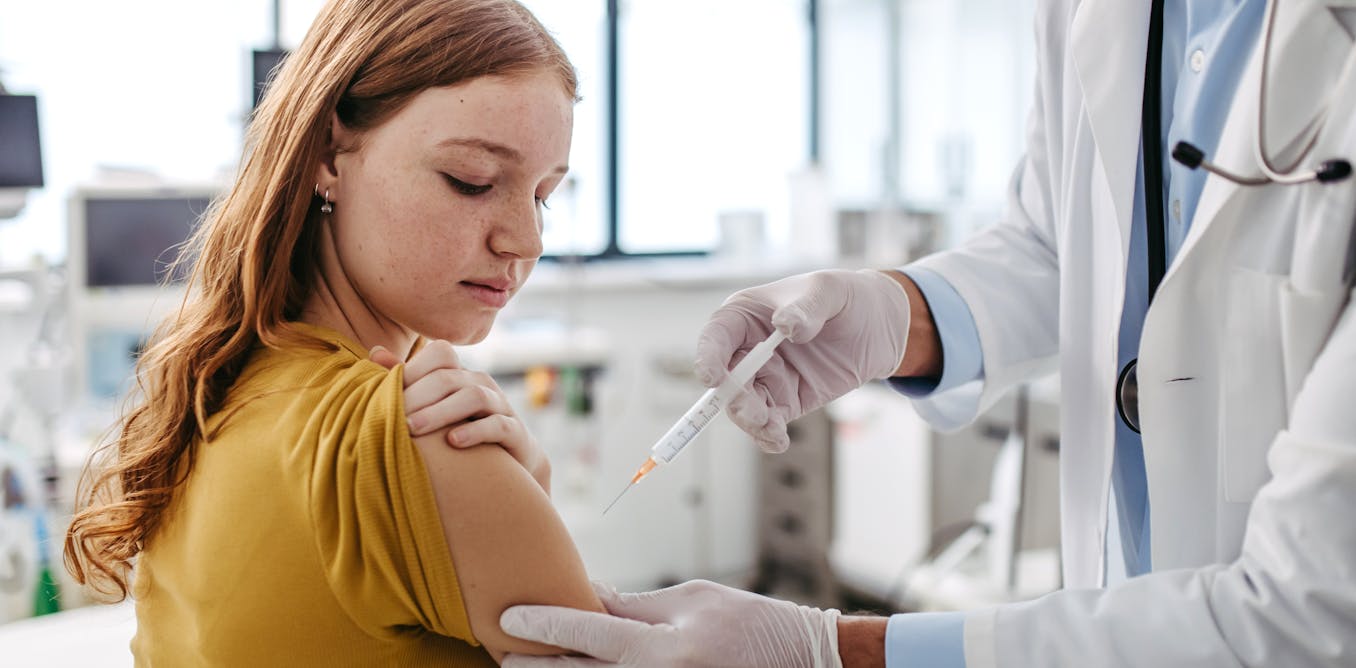
When 12-year-olds receive a letter from the school nurse about the HPV vaccine, their reactions are often mixed. Some students worry about the needle. Others wonder why they need a vaccine for something they have never heard of.
What many of them may not realise is that this routine school vaccination protects against a virus that can cause cancer later in life. For many students, the letter is the first time they encounter a remarkable idea: that a vaccine can help prevent cancer before it even starts.
The evidence for that protection is now becoming clear. In our recent study, we analysed long-term health data from girls and young women followed for nearly two decades and found that the HPV vaccine greatly reduces the risk of cervical cancer.
This matters because cervical cancer remains one of the most common cancers affecting women worldwide, despite being largely preventable. Importantly, the protection does not appear to weaken over time.
Human papillomavirus (HPV) is one of the most common viruses in the world. Most people will get it at some point in their lives, often without knowing it. In many cases, the body clears the virus naturally. But some types of HPV can remain in the body for years and gradually damage cells. Over time, this can lead to cancer.
How the HPV vaccine prevents cancer
HPV causes almost all cervical cancers and can also lead to other cancers in both men and women, including cancers of the throat, anus, penis, vagina and vulva. Because these cancers usually develop slowly, often many years after infection, preventing the virus early is the most effective way to stop them.
That is exactly what the HPV vaccine is designed to do.
To understand how well the vaccine works in real life, we followed 926,362 girls and young women in Sweden over 18 years in a nationwide population study. Some had received the HPV vaccine, while others had not.
Over time, far fewer people who were vaccinated developed cervical cancer compared with those who were not vaccinated. This shows that the vaccine helped protect many people from getting cervical cancer.
We also found that the age at vaccination matters. Girls who received the vaccine before the age of 17 were much less likely to develop cervical cancer later in life. In fact, their risk was about four times lower than girls who had not been vaccinated. People vaccinated later still gained some protection, but the benefit was smaller.
The reason is straightforward. The vaccine prevents HPV infection, but it cannot remove an infection that has already occurred. Vaccinating earlier, ideally before exposure to the virus, allows the immune system to build protection in advance. This is why HPV vaccination is often offered to young teenagers through school vaccination programmes.
Lasting protection
A common question about vaccines is whether their protection fades over time. The results of our study are reassuring.
We followed participants for up to 18 years after vaccination and found no evidence that protection declined over time. Once the vaccine created protection, it continued working year after year. Long-lasting protection means the vaccine can guard against the virus during the years when it matters most.
Many countries now recommend HPV vaccination for both girls and boys, usually in early adolescence. Vaccinating boys protects them from HPV-related cancers and also helps reduce the spread of the virus.
For many adults today, the HPV vaccine did not exist when they were teenagers. Younger generations now have a powerful opportunity: they can prevent certain cancers before they begin.
A future where cancers caused by HPV can largely be prevented may begin with a simple vaccine given in adolescence.

The authors do not work for, consult, own shares in or receive funding from any company or organisation that would benefit from this article, and have disclosed no relevant affiliations beyond their academic appointment.