
An outbreak of invasive bacterial meningitis at the University of Kent has left two people dead and 11 seriously ill in hospital, prompting the UK Health Security Agency to distribute antibiotics to students in the Canterbury area. Here’s what you need to know about the disease and how to protect yourself.
What is meningitis?
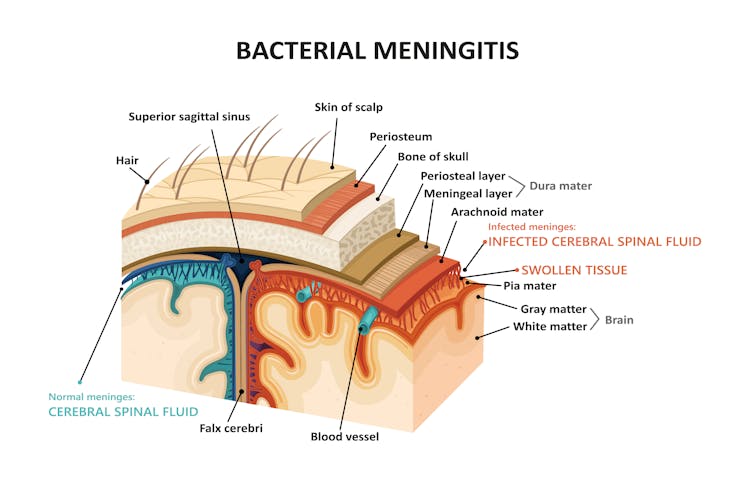
Meningitis is an inflammation of the tissue lining that surrounds your brain and spinal cord (the meninges). Any type of harmful microbe, including viruses, bacteria, fungi and parasites, can invade the meninges and cause an infection. (The current outbreak at the University of Kent is caused by bacteria.) This can be very dangerous since the meninges function as a protective layer around your brain. When it becomes damaged, your brain and spinal cord become at risk too.
What is invasive meningococcal disease, and why is it so dangerous?
The bacteria that cause meningitis are called Neisseria meningitidis, and the disease can quickly spread from person to person if they have close contact. The bacteria invade blood vessels in the meninges, damaging them, and this causes immune cells to enter the meninges and produce molecules that trigger inflammation. When the meninges become inflamed like this, the brain can stop functioning properly, leading to serious illness and brain damage.

Nemes Laszlo/Shutterstock.com
What are the symptoms, and how do I know if it’s meningitis rather than flu or a hangover?
Meningitis can look different in different people. Symptoms typically include a high fever (but with cold hands and feet), vomiting, headache, joint pain, a stiff neck and feeling unusually sleepy. Some people may become confused or distressed by bright lights and sounds. Some people may also develop a rash that won’t disappear when you press a glass against it. Babies may develop an unusual cry.
If you suspect you have meningitis, particularly if your symptoms are not typical when compared to previous hangovers or flu-like illnesses, then go to your nearest hospital or call for help. It’s better to get checked out than wait and see, as meningitis tends to progress very quickly.
Who is most at risk?
Anyone can get meningitis, but the risk is higher for very young babies and older people. Immune-compromised people – such as those undergoing chemotherapy – are also at higher risk for the infections that can cause meningitis. Outbreaks in younger adult populations, like we are seeing at the University of Kent, tend to happen because of the increased exposure and spread of the bacteria that can cause meningitis.
How does the infection spread?
The bacteria that cause meningitis can spread by close contact, such as kissing and sharing drinks, or through coughing and sneezing. Large events that bring lots of people together can therefore be associated with outbreaks of meningitis, because of the increased likelihood that people become exposed to the bacteria. This is one of the reasons why university students can be at increased risk for meningitis, because there is a lot of social mixing in this group.
logika600/Shutterstock.com
Why are healthy students at the University of Kent being given antibiotics?
This is a precautionary measure to ensure that anyone who has been exposed to the bacteria, but perhaps hasn’t developed symptoms yet, is protected. The antibiotics will help kill the bacteria, hopefully before it has a chance to establish an infection or invade the meninges and brain.
Is there a vaccine against meningitis and should I get one?
Several vaccines are available to protect against the most common causes of bacterial meningitis. These are effective and safe medicines that prevent you from getting seriously ill if you do become exposed to meningitis-causing bacteria. The MenB, MMR and pneumococcal vaccines are all recommended for babies in the UK because they protect against bacteria that cause meningitis infections in young children in particular.
How is bacterial meningitis treated, and what happens if it’s caught late?
Antibiotics are the main course of treatment for bacterial meningitis. The earlier these drugs are given, the more likely the infection will be stopped in time before any serious damage occurs.
However, some bacteria can become resistant to antibiotic treatment. When this happens, antibiotics are no longer effective at preventing meningitis. This is why vaccines are very important for protecting yourself against these infections as they can work to protect you even against antibiotic-resistant bacteria.
What should I do if I think I or someone I know has meningitis?
Meningitis symptoms typically come on rapidly. If you suspect meningitis, act quickly. The faster that antibiotic treatment is started, the better the outcome is likely to be.

Rebecca A. Drummond receives funding from the Medical Research Council, the Wellcome Trust and the Lister Institute for Preventative Medicine.