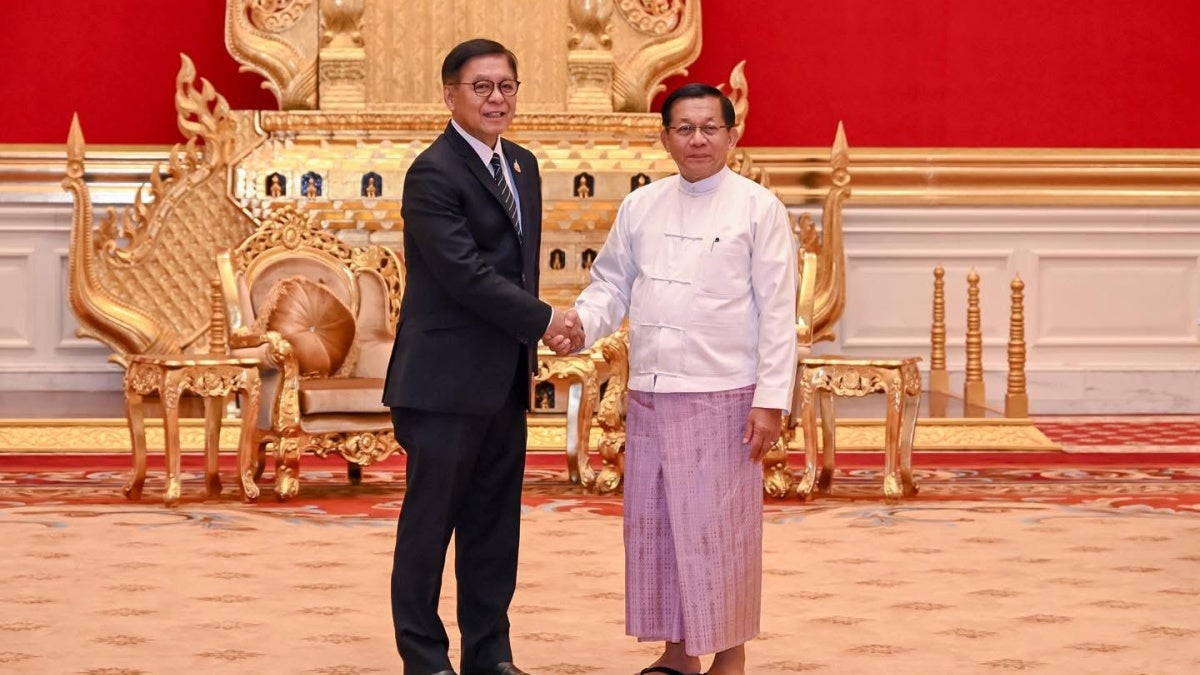
Thai Foreign Minister Sihasak Phuangketkeow visited Naypyidaw, the capital of Myanmar, on Wednesday. Thailand has been acutely affected by the situation in neighboring Myanmar, and is seeking solutions to the influx of refugees, mushrooming transnational crime, and worsening pollution. But it is hard to know what the visit accomplished.
Sihasak, a veteran diplomat, has been a point man for successive Thai governments to engage with Min Aung Hlaing, who led the military coup in Myanmar in 2021 and has headed the ruling junta since. After 15 years as commander-in-chief, overseeing the security forces responsible for widespread war crimes and crimes against humanity, Hlaing installed himself as president earlier this month, following sham elections in December and January.
The Association of Southeast Asian Nations (ASEAN), which Thailand is a member, declined to certify the election results.
The junta organized the elections to ensure the military-backed Union Solidarity and Development Party’s victory and obtain a stamp of legitimacy for the military-controlled state. The junta had banned dozens of political parties and locked up civilian leaders, including former state counsellor Aung San Suu Kyi.
Prior to the elections, the junta did nothing to win over skeptical foreign governments. Thousands of dissidents and junta critics remained in brutal detention. Repression and unlawful attacks in conflict zones, including air strikes on civilians, ramped up ahead of the vote.
Since then, little has changed. On April 17, junta-controlled media reported a Burmese New Year’s amnesty for over 4,000 prisoners, including ousted President Win Myint. However, Political Prisoners Network – Myanmar reported that only about 1,600 people were actually released; of those, only 292 were political prisoners of some 22,000 political prisoners total. The junta has long used prisoner amnesties to ease international pressure and buy credibility, creating a revolving door of releases and convictions.
So long as Myanmar’s junta is unwilling to seriously address human rights concerns, Sihasak’s efforts to develop a closer relationship seem misguided. Thailand and the rest of ASEAN should step up efforts to press the junta to unconditionally release all political prisoners, end the political repression, and cease its unlawful military attacks on civilians.