The economic shockwaves of the Middle East conflict are reaching far beyond the region, from import-reliant Caribbean nations to Island States in the Pacific, where spiking oil prices are having a knock-on effect on the cost of food and other essentials, hitting low-income families particularly hard.
According to UN analysis, the military escalation could push more than 30 million people into poverty worldwide, undoing years of development work.
This makes the creation of the Borrowers’ Platform, a member-state initiative supported by the UN trade agency (UNCTAD), particularly timely.
The problem it’s designed to address has been years in the making, with the cost of paying back debts soaring for developing countries over the last decade.
Least developed countries pay nearly a quarter of their revenue to external creditors, and 54 countries, home to 3.4 billion people, now spend more on debt than on health or education. In 2024, the collective external debt burden of developing nations reached $11.7 trillion.
A ‘breakthrough in global financing’
The Platform, which is open to borrower nations of all sizes across different stages of development and indebtedness, will allow them to share knowledge and amplify their collective voice.
It will also strengthen their ability to respond to debt challenges.
On Wednesday, at an event in Washington DC to launch the group, UN Secretary-General António Guterres – whose Expert Group on Debt proposed the idea for the Platform in 2025 – described the initiative as a “breakthrough in global financing,” comparable to long-established groups for creditor countries, such as the Paris Club, the London Club and the Institute of International Finance.
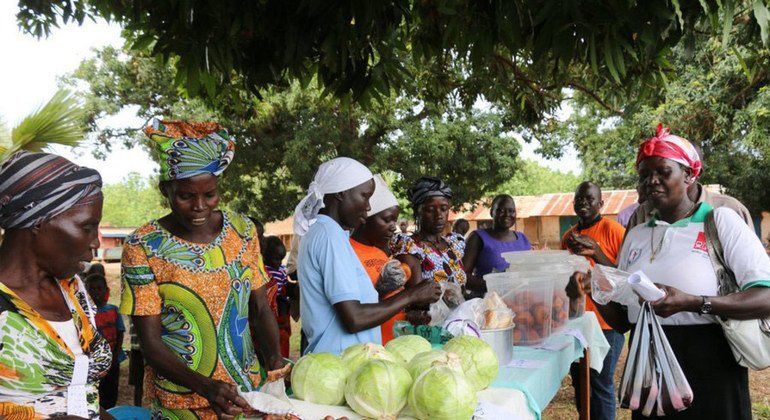
Communities in developing countries are particularly vulnerable to rising food prices and supply disruptions. (file photo)
Mr. Guterres pointed out that borrowers have often been excluded from discussions about their own debt levels, finding themselves paying, on average, interest rates that are more than twice as high as those faced by advanced economies.
This, he said, “leaves developing countries at a distinct disadvantage in accessing the financing they need, which is another clear example of the inequality lurking at the heart of the global financial architecture.”
Intensifying pressures
The UN chief addressed the “intensifying pressures” caused by the war in the Middle East, which is leading to rising raw material costs, slower growth and strained supply chains, on top of higher fuel prices.
The Platform, he said, will help the borrower countries to share specialist knowledge about debt restructuring; give them the tools to engage with their creditors on equal terms; send a clear market signal to creditors – potentially lowering borrowing costs – and put them at the centre of discussions going forward.
“Developing countries are rising economic actors,” argued Mr. Guterres, “and global governance must adapt accordingly.”