Guy Ryder, Under-Secretary-General for Policy, said the broader reform effort is now moving into a new stage. “We are now entering the delivery-focused phase of our work, building on the momentum generated by recent achievements”.
Launched last year, the UN80 Initiative is a system-wide effort to reshape how the United Nations works so that every mandate, dollar and decision delivers greater impact for people and planet.
Under the UN80 Action Plan, it brings together 86 actions to strengthen how the entire system delivers across peace and security, development, human rights and humanitarian assistance, grouped into related ‘work packages’.
Mr Ryder pointed to recent progress, including the General Assembly’s adoption last week of a landmark resolution to strengthen how UN mandates are created, implemented and reviewed, as well as the completion of more than 80 per cent of early milestones across the Action Plan.
A consolidated report set to be published next month, he added, will set out “a clear and comprehensive overview of where we stand on each work package, and the pathways and timelines for their completion.”
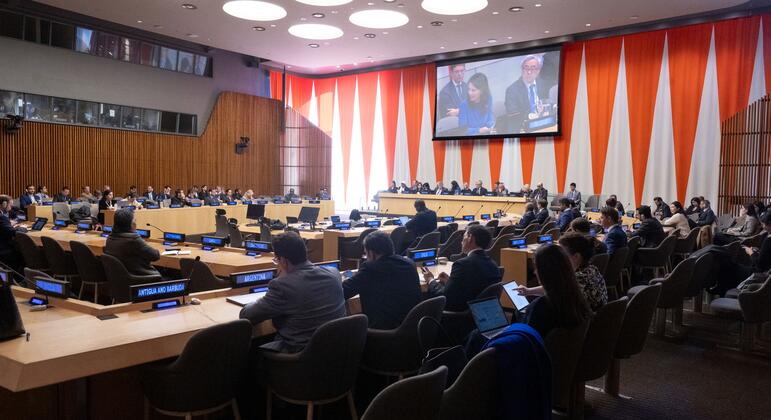
Deputy Secretary-General Amina Mohammed (on screen) addresses the informal meeting of the General Assembly plenary on the UN80 Initiative.
Consolidating expertise on gender equality and reproductive health
One of the most closely watched elements of the briefing was the presentation of an initial assessment of a possible merger between UNFPA and UN Women.
Deputy Secretary-General Amina Mohammed framed the discussion against a rapidly changing global context. “UNFPA and UN Women have demonstrated their ability to deliver results consistently for women and girls and youth over the decades, but the context is evolving and complex,” she said. “So, we know that the status quo is not an option.”
The preliminary findings suggest that a unified institutional framework could bring together the UN Women’s gender expertise and UNFPA’s mandate on sexual and reproductive health and rights into a single platform, with the potential to strengthen coherence, expand reach and improve delivery across more than 150 countries and territories.
Sima Bahous, Executive Director of UN Women, emphasized that the question is not whether the two entities are performing, but whether the current structure is sufficient for the challenges ahead.
“The issue is whether…a different configuration could better equip the UN system to translate globally agreed commitments into more consistent and scalable and impactful results for women, girls and youth,” she said.
For Diene Keita, Executive Director of UNFPA, the assessment pointed to both opportunity and complexity.
“A potential merger of this scale is very complex,” she said, adding that “phased sequencing and explicit operational safeguards would be essential to ensure continuity of delivery.”
Ultimately, officials stressed, the decision rests with Member States.
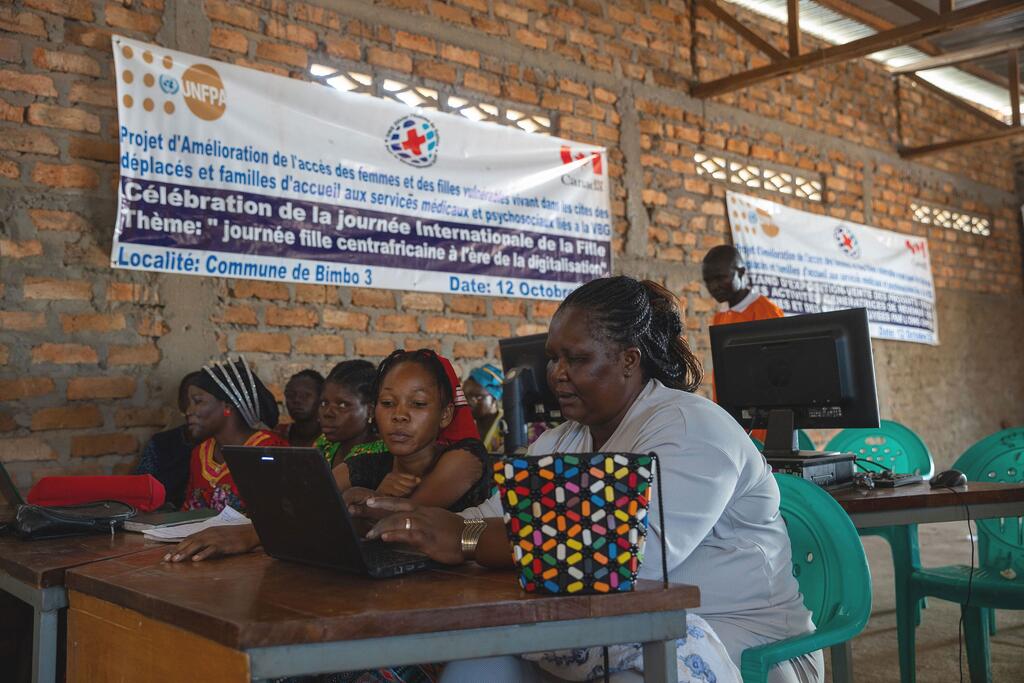
Women and girls attend a digital literacy course, supported by UNFPA, in Bangui, Central African Republic.
Fixing a fragmented digital backbone
If the merger proposal points to structural change, the technology work package focuses on something more operational: how the UN actually functions behind the scenes.
Doreen Bogdan-Martin, Secretary-General of the International Telecommunication Union (ITU), described a system that is both heavily invested in technology and constrained by how it is organized.
“This level of investment underscores both the strategic importance of ICT, but it also underscores the opportunity to optimize how these resources are used,” she said, noting that the UN spends around $2.5 billion annually on digital infrastructure.
The problem, she suggested, is less about tools than about structure.
“The main bottleneck is not technology itself, but it’s actually fragmentation…funding constraints and governance complexity,” she said.
The proposed solution is to scale up shared services, reduce duplication, and build a system-wide platform to accelerate the use of digital and artificial intelligence tools, an effort intended to make the UN more connected, and ultimately more effective.
Building a single entry point for UN data
Meanwhile, under the data work package, the UN is developing a UN Data Commons, a single public platform designed to bring together datasets and official statistics that are currently scattered across agencies.
Li Junhua, Under-Secretary-General for Economic and Social Affairs, said the goal is straightforward.
“Member States need timely, trusted and easy-to-use data,” he said, noting that fragmentation has made it harder to fully use the UN’s vast information resources.
The platform, expected to be operational by September 2026, would offer a single point of access, reducing duplication and making data easier to compare and apply.
Catherine Russell, Executive Director of UNICEF, said the effort is also about building a stronger foundation for how data is organised and shared.
“If we get this program right, Member States and other users will benefit from one place to find trusted data and from a stronger foundation to keep that data reliable, usable and relevant over time,” she said.
Follow progress
Progress under the UN80 Initiative can be tracked through a public dashboard, which provides an overview of actions, timelines and implementation across the system.
The General Assembly continues to hold monthly informal briefings on the Initiative, with the next scheduled for 29 April.