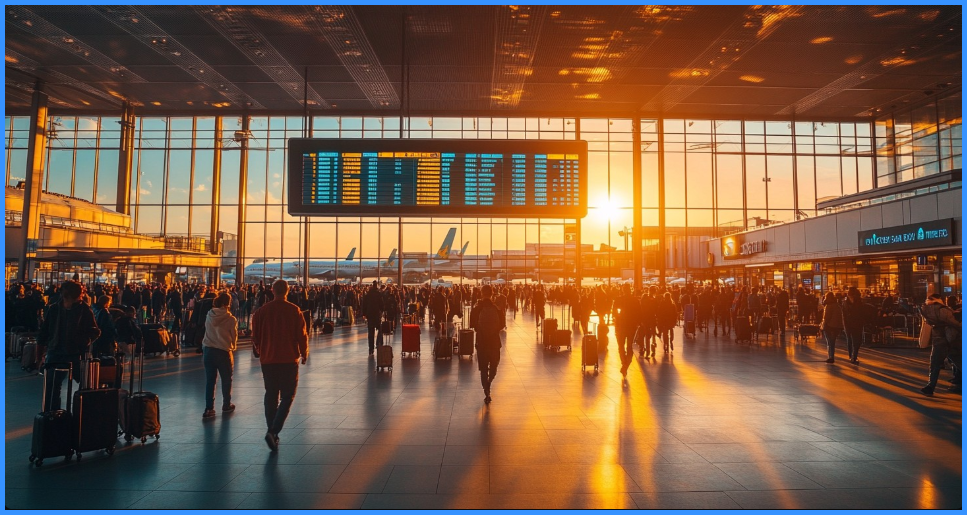
NEW YORK — A multi-front operational crisis has plunged the U.S. aviation network into chaos this Saturday, leaving thousands of travelers stranded as a strengthening Nor’easter collides with a mounting federal staffing shortage. According to live data from FlightRadar24 and industry reports, airlines have already logged 134 cancellations and over 3,700 delays as of Saturday afternoon, February 21, 2026.
The disruptions have hit major hubs—including Atlanta, Chicago, Newark, and Seattle—creating a ripple effect that is destabilizing flight schedules across the continent.
A Confluence of Crisis: Weather and Washington
The “perfect storm” grounding travelers today is driven by three primary factors:
- The Impending Nor’easter: Meteorologists have issued winter storm watches for the entire I-95 corridor. A “rapidly strengthening” low-pressure system is expected to bring blockbuster snowfall to the Mid-Atlantic and Northeast starting Sunday. Airlines like Delta, United, and American have already begun proactive cancellations to prevent aircraft from being trapped in the storm’s path.
- The DHS Shutdown: Travel is being further throttled by a partial government shutdown of the Department of Homeland Security (DHS), now in its second week. While TSA agents are deemed “essential,” they are currently working without pay. Emerging reports of “unscheduled absences” and sick-outs have led to security checkpoint closures and massive queues in Newark and Miami.+2
- Atmospheric Volatility: Beyond the snow, “hazardous outlooks” in the South, including 40 mph wind gusts and lightning in Atlanta (ATL), have forced ground stops. Because Atlanta serves as the primary engine for Delta’s global network, these local storms are triggering delays as far away as Paris and Sydney.
Hardest-Hit Hubs & Airlines
| Airport | Status | Primary Impact |
| Newark (EWR) | Critical | Low ceilings and Nor’easter prep; high cancellation rates. |
| Atlanta (ATL) | Severe | Thunderstorms and ground crew safety halts. |
| Chicago (ORD) | Major | Severe cold and volume-related flow control. |
| Seattle (SEA) | Moderate | Equipment failures and de-icing delays. |
Delta Air Lines has emerged as the most affected carrier, sacrificing short-haul “feeder” flights to Mobile and Tallahassee to preserve slots for international arrivals. Air Canada has also seen significant disruptions for trans-border flights into the Northeast.
Essential Advice for the Stranded Traveler
Aviation experts warn that with a “bomb cyclone” potential for Monday, the situation will likely deteriorate before it improves.
- The 30-Minute Check: Use airline mobile apps to monitor status every half hour.
- Leverage the Waivers: Delta, United, and American have issued Northeast Winter Weather Waivers valid through February 23. If your destination is between DC and Boston, you can likely rebook for next week at no cost.
- The “Incoming” Strategy: Use FlightRadar24 to track your specific tail number. If your incoming aircraft is stuck in a de-icing queue in Albany, your departure is guaranteed to be delayed regardless of local weather.
- Ground Truth: If caught in a TSA bottleneck due to the shutdown, travelers are urged to arrive at least three hours early for domestic flights.
Looking Ahead
The “cascading” nature of today’s delays means that even if weather clears in the South, the lack of available crews and “timed-out” pilots will haunt the system through the remainder of the weekend. For those currently trapped in terminals from Austin to Albany, the message from the FAA is one of patience: the combination of a frozen Northeast and a frozen federal budget has left the nation’s runways with zero operational slack.