The beginning of a new year brings with it an opportunity, coinciding with the recent CES 2026, to take a look at the trends, as well as the new and emerging technologies, which will shape the air transport industry over the next 12 months and beyond. This year, our list features 12 trends that will play a crucial role in improving passenger experiences and enhancing business performance. We explore everything from agentic AI, robotics and automation to biometrics and digital identity, personalisation, immersive technologies, sustainability, and more.
2026 is less about the arrival of entirely new technologies and more about turning existing capabilities into tangible outcomes. It is no longer a question of whether emerging technologies can work in aviation, but how they behave in real-world operations. Across artificial intelligence (AI), automation, robotics, Internet of Things, computer vision, digital identity and autonomous systems, the core capabilities are already proven. The uncertainty has shifted away from technical feasibility – and while the industry is not yet at full-scale, industrialised deployment, the focus is now firmly on operational learning. This means understanding how these technologies perform in live environments, how frontline teams interact with them, how safety, resilience and reliability stand up over time, and how operating models and workflows must evolve to unlock meaningful passenger experience and efficiency gains.
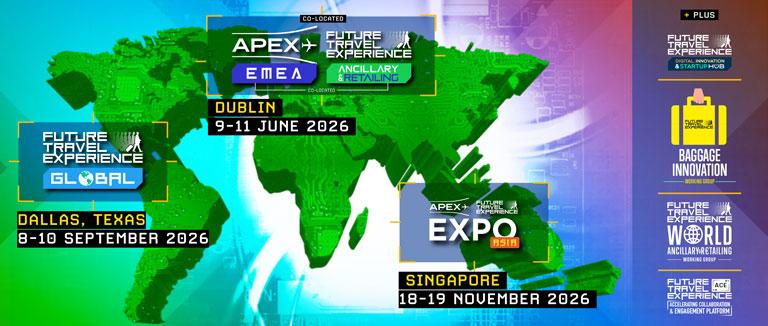
Mark your diary for FTE’s 2026 global event schedule in Dublin, Dallas and Singapore:
See the full FTE events and activities schedule >>
Artificial Intelligence, agentic AI, and data analytics
Artificial Intelligence (AI) once again dominated the conversation at CES 2026, with AI now embedded across almost every new technology solution. For the air transport industry, this signals not novelty, but momentum. AI remains a core theme across Future Travel Experience platforms – from the FTE Digital, Innovation & Startup Hub to the FTE AI Symposium at FTE Global – reflecting its evolution from an emerging capability to an operational imperative. This focus continues into 2026 with the introduction of a dedicated Agentic AI Day at APEX FTE Ancillary & Retailing, exploring how autonomous and goal-driven AI systems are set to reshape commercial strategy across airlines and airports.

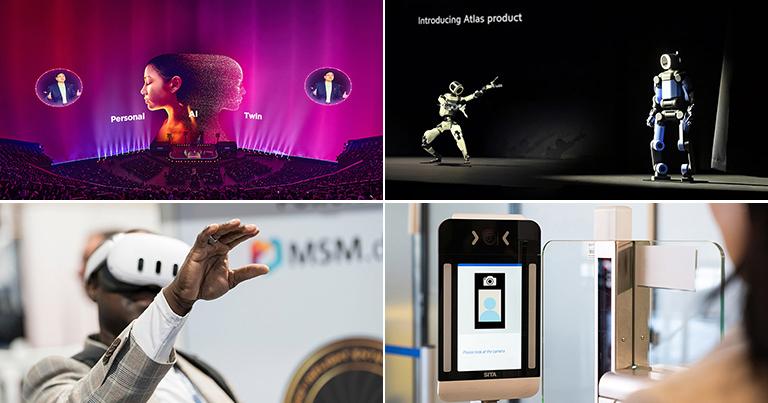
In a compelling keynote at Las Vegas’ Sphere during CES 2026, Lenovo Chairman and CEO Yuanqing Yang unveiled bold innovations shaping the future of Hybrid AI. These included a new personal AI super agent, AI-powered PCs and smartphones, proofs of concept such as agentic-native wearables, and next-generation enterprise AI infrastructure. “For each of us, AI will boost our creativity, sharpen our intuition, and inspire our imagination, because it now draws from our unique language, habits, experiences, and memories,” said Yang. “For a business, the transformation is even more profound: AI is going beyond process management and workflow optimisation. It now empowers organisations to use proprietary data generated from their own operations and apply their own decision logic to become a self-learning, self-reinventing entity.”
This vision closely mirrors the trajectory now unfolding in aviation. AI, generative AI (GenAI) and agentic AI, underpinned by advanced data analytics, are reshaping the industry in profound ways. Together, they are becoming the engines of optimisation, personalisation and continuous improvement. Crucially, the industry is moving decisively from experimentation to execution. The focus is no longer on isolated proofs of concept, but on technologies that can be embedded into everyday operations and deliver consistent, measurable improvements to the passenger experience – reducing friction, improving predictability and enabling more proactive, personalised service across the journey.
This shift is being enabled by data platforms that unify real-time operational signals across historically fragmented airline and airport systems. By connecting these data sources, organisations are creating the foundation for agentic AI-driven automation – systems capable not just of analysing information, but of acting on it. These capabilities allow aviation stakeholders to anticipate disruption, coordinate responses across multiple partners and continuously optimise both operational performance and customer outcomes in live environments.
AI has also evolved well beyond simple chatbots. Agentic AI represents a step-change: systems that move from responding to inputs to taking ownership of outcomes. Progressive airlines and airports are increasingly exploring agentic AI as a collaborative partner for staff – capable of predicting disruptions before they occur, dynamically adjusting operations, and supporting frontline teams in real time. In 2026, this includes applications such as rerouting flights around emerging weather patterns, optimising crew schedules to mitigate fatigue, and identifying maintenance issues early through real-time sensor data – improving reliability while minimising passenger disruption.
Leading organisations are already demonstrating what this looks like in practice. Alaska Airlines’ world-first GenAI-powered flight search tool, Alaska Inspires, shows how AI can enhance the inspiration and planning phase of the journey. At the airport level, Fraport is deploying agentic AI as a core pillar of its Fraport.2030 strategy through the AI@Fraport initiative. Its Intelligent Dispatching Agent (IDA) optimises the complex coordination of aircraft turnaround at Frankfurt Airport, one of Europe’s busiest hubs. United Airlines is piloting agentic AI in mission-critical areas including legacy application modernisation, developer productivity and contextual value engineering, with agents operating in closed feedback loops to continually improve precision and impact. Meanwhile, Metropolitan Washington Airports Authority (MWAA) is advancing agentic AI through MWAA Labs, using its Queue Hub platform to predict, automate and optimise passenger flows, vehicle movements and resource allocation. Aeroporti di Roma has also begun its agentic AI journey with a custom virtual assistant, delivering benefits across both operational efficiency and customer experience.
Across these use cases, the greatest value from agentic AI is emerging in predictive maintenance, enhanced developer productivity and hyper-personalised customer engagement. Together, these capabilities are helping the industry deliver more resilient operations while building trust, loyalty and confidence among passengers.
Read more in Part 1 and Part 2 of our comprehensive focus on agentic AI.
Learn more about agentic AI at APEX FTE Ancillary & Retailing 2026, co-located with APEX FTE EMEA in Dublin on 9-11 June. The event will introduce a dedicated Agentic AI Day, focused on the emerging role of AI agents in travel commerce. The programme will explore a future in which consumer AI agents research options, compare offers and purchase travel on behalf of individuals, while business AI agents deployed by airlines, airports and partners autonomously create, optimise and negotiate commercial offers. Sessions will examine what this shift could mean for pricing, merchandising, data sharing and brand visibility, as well as how organisations may need to adapt their commercial and technology foundations. By focusing on practical implications and early use cases, the Agentic AI Day will help attendees better understand how agent-to-agent commerce may reshape the air transport commercial ecosystem over the coming years.
Register for the co-located APEX FTE EMEA and APEX FTE Ancillary & Retailing 2026 >>
Robotics and automation

We are in the midst of a robotics revolution and a continuing and overriding trend this year and beyond will be the increasing implementation of automation and robotics, which can help to solve some of the air transport industry’s biggest challenges, while reimagining approaches to delivering more personalised customer experiences and enhancing operational efficiencies.
Robotics and automation emerged as one of the most compelling, real‑world themes at CES 2026, signalling a shift from conceptual showcases to technologies with tangible potential for day‑to‑day operations. Across the Las Vegas exhibition floors, the focus was less on gimmicks and more on intelligent machines that perceive, decide and act autonomously – the kind of ‘physical AI’ that augments human teams and delivers reliability, safety and consistency in complex environments. This year, humanoid robots once again drew particular attention, showcasing mobility, dexterity and autonomous task execution that go beyond scripted demos.
For example, the next‑generation Atlas humanoid – unveiled by Hyundai and Boston Dynamics – demonstrated fluid movement, environmental awareness and industrial‑grade autonomy, underlining how robotics is evolving toward purposeful, repeatable capabilities. Similarly, autonomous delivery and mobile robots such as the AA‑2 delivery robot and HL Robotics’ Carrie autonomous mobile robot highlighted how self‑navigating platforms capable of obstacle detection, route planning and energy‑efficient operation are increasingly within reach. For the air transport industry, these developments have clear operational resonance. Today’s airports balance myriad repetitive, safety‑critical and resource‑intensive tasks – from baggage handling and terminal cleaning to ground support and passenger services – that could benefit from autonomous execution. Robotics solutions that can navigate busy terminals, interact safely with staff and travellers, and operate reliably across shifts offer a path to reducing labour strain while enhancing service quality and predictability.
Humanoid platforms also point toward future possibilities for human‑robot collaboration in customer‑facing roles. Robots that can autonomously guide passengers through complex terminals, answer queries, or carry luggage could supplement staff during peak periods and improve consistency of service delivery.
Although widespread commercial adoption remains nascent, CES 2026 made it clear this is no longer a distant dream – these systems are on a trajectory from controlled demonstrations to operational pilots across industries where precision, safety and reliability matter. Elon Musk has said “humanoid robots will be the biggest product in history”, projecting that there will be 10 billion of them by 2040. So, now is the time for our industry to define how to integrate this technology into the workforce and FTE has been leading the charge. The vast potential of this trend was explored in detail in the FTE Robotics & Autonomous Vehicles Symposium at FTE Global 2025.
On the ground, robotics has revolutionised baggage handling, aircraft maintenance, and even passenger services. Airports are leveraging autonomous vehicles and robotic assistants to streamline workflows, reduce errors, and improve overall customer satisfaction. The baggage space is a key area in which Schiphol is exploring robotics and automation to accelerate the journey towards greater operational efficiency. Indeed, Schiphol, a Partner of the FTE Baggage Innovation Working Group (BIWG), is a member of BOOST – a groundbreaking initiative launched by innovation consultancy nlmtd (Unlimited) in partnership with FTE via the BIWG to transform the future of baggage handling through robotics and automation. Each core member of BOOST, which also includes Avinor, Incheon, Brussels Airport, and Heathrow, is working on a unique technical challenge, conducting onsite Proof of Concepts to test robotics and other technologies. Schiphol is investigating the most effective automated loading solutions, including the CoBro – collaborative baggage robots that use vacuum technology to lift and load bags into open carts. Autonomous hot and cold baggage separation and transportation is another area of innovation using Automated Guided Vehicles (AGVs), while autonomous technology is being explored to see whether it can detect Foreign Object Debris (FOD) on the apron. Also, as we reported here, Schiphol, KLM and NEURA Robotics are collaborating on ARC (Autonomous Robot for GPU Connection) – a technology that could redefine how airports operate, making aviation more efficient, sustainable, and future-proof. The ARC project is a Proof of Concept being undertaken as part of the FTE Smart Ramp initiative, which has the ultimate goal that aircraft turnaround can be achieved autonomously and more efficiently.
Cincinnati/Northern Kentucky International Airport (CVG) is among the most progressive in the robotics and automation space. A great example is International Airlines Group (IAG) – parent company of British Airways, Iberia, Aer Lingus, Vueling and LEVEL – and Aurrigo commencing deployment of the Auto-DollyTug autonomous baggage tractor at CVG. Meanwhile, Pittsburgh is known as the ‘Robotics Capital of the World’ and Pittsburgh International Airport (PIT) has done several trials of various autonomous and autonomy-enabling technologies over the past two years, and it was a trend further explored at the FTE World Innovation Summit hosted by PIT in 2025.
Crucially, robotics and automation in aviation do not replace human expertise; they amplify it. By taking on repetitive, physically demanding or highly predictable tasks, robots allow human teams to focus on higher‑value, empathetic interactions – from proactive customer assistance to rapid disruption recovery – contributing to smoother, safer and more personalised travel experiences. As autonomous systems and fleet coordination platforms mature, their integration with real‑time operational data and agentic AI engines will unlock new levels of agility and resilience in both airport and airline operations.
Robotics and automation is a key focus area of the FTE Baggage Innovation Working Group (BIWG). The video below from BIWG Partner Journey Robotics illustrates the potential of these technologies to help counter rising labour costs and provide a constant baggage flow, reducing peak demands.
Read more in our comprehensive focus on robotics and automation here.
Interested in the latest technologies and trends? Sign up to our newsletter >>
Internet of Things, Private Wireless Networks and cybersecurity


At CES 2026, the evolution of connectivity and smart systems was unmistakable, with major emphasis on next‑generation Internet of Things (IoT) solutions, high‑speed private networking, edge intelligence and secure infrastructure that enable real‑time insights and automation at scale.
IoT is at the heart of aviation’s technological transformation. From airport assets to inflight entertainment systems, an increasing number of sensors and connected devices are generating massive volumes of real-time data. To harness this effectively, airlines and airports are investing in high-speed, low-latency networks, edge computing systems, and robust cloud platforms. These infrastructure upgrades, combined with scalable IT systems, allow IoT technologies to function seamlessly while driving operational efficiency and enabling personalised passenger experiences. Cybersecurity is equally critical, ensuring that this interconnected ecosystem remains resilient against emerging threats.
Airports and airlines are already demonstrating the potential of IoT in practice, including several FTE Digital, Innovation & Startup Hub Corporate Partners: Miami International Airport is evolving into a ‘Smarter Airport’, implementing a centralised IoT framework to optimise passenger flow and operational processes. Southwest Airlines is using IoT to enhance data collection for its Facilities and Ground Operations teams, while Aeroporti di Roma leverages IoT to track real-time progress along the passenger journey and monitor operational performance. As these examples show, connected devices are enabling a new level of visibility, responsiveness, and predictive operations, which can directly improve service reliability and the passenger experience.
Private Wireless Networks (PWNs), particularly private 5G, are playing a key role in enabling IoT and robotics. By providing high-bandwidth, low-latency, and secure connectivity, PWNs allow airports to control communications autonomously and support advanced applications such as autonomous vehicles, robotic monitoring, and real-time video analytics. Seattle-Tacoma International Airport is developing a Private 5G Network to power its next era of innovation, while Fraport’s 5G network at Frankfurt Airport enables autonomous apron driving, data-rich facility monitoring, and faster deployment of IoT initiatives. PWNs also improve network security and operational reliability, making them foundational to modern airport operations.
As aviation becomes increasingly digital and interconnected, cybersecurity has evolved into a core determinant of resilience. Airlines and airports now treat cyber defence as essential infrastructure, protecting navigation, communication, and control systems. The Cybersecurity Symposium at the FTE World Innovation Summit hosted by Pittsburgh International Airport (PIT) in 2025 explored how a proactive, layered approach can mitigate emerging threats. PIT has implemented real-time threat monitoring, advanced technologies, and staff training to strengthen its cyber posture. Similarly, Vienna Airport uses the NIST Cybersecurity Framework to continuously assess and improve its defences, ensuring the ability to prevent, detect, and respond to potential incidents.
Together, IoT, PWNs, and robust cybersecurity create a connected, resilient, and responsive ecosystem. Real-time operational data enables predictive maintenance, dynamic resource allocation, and personalised passenger services, while private networks ensure secure, uninterrupted communication for critical systems. Cybersecurity safeguards these advancements, protecting both operations and travellers. In combination, these technologies are not only enhancing efficiency and safety but also shaping the next generation of smart, passenger-centric aviation environments.
Interested in the latest technologies and trends? Sign up to our newsletter >>
Immersive technologies: Augmented Reality, Virtual Reality, and Extended Reality

Immersive technologies – Augmented Reality (AR), Virtual Reality (VR), and Extended Reality (XR) – are transforming both aviation operations and passenger experiences. For airlines and airports, they offer unprecedented ways to train staff, optimise workflows, and engage travellers.
In training, VR simulation allows pilots, flight attendants, ground operations teams, and technicians to rehearse real-world scenarios safely and efficiently. Crews can practice emergency procedures, navigate complex workflows, and respond to challenging conditions in controlled environments, improving skill retention, confidence, and operational readiness. Similarly, AR overlays give technicians step-by-step guidance during maintenance, reducing errors and streamlining complex procedures. These immersive solutions cut training costs while enhancing performance, ensuring teams are better prepared for live operations.
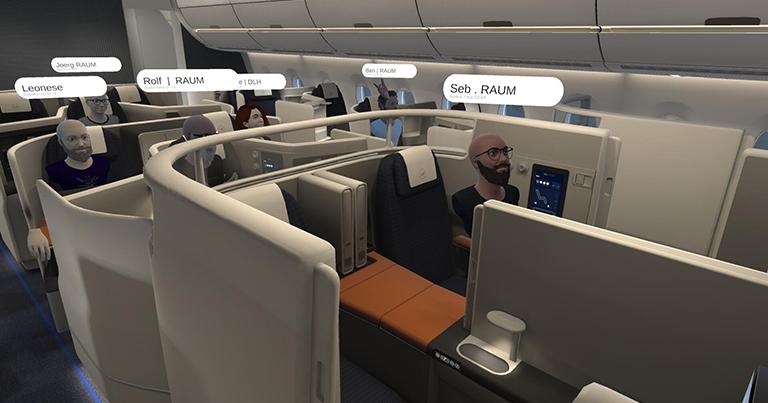
In terms of passenger experience, the most impressive implementation of immersive technologies that FTE has seen is Lufthansa’s collaboration with Meta to launch an Extended Reality (XR) Inflight Experience, becoming the first airline worldwide to offer virtual and augmented reality entertainment options for passengers in its Allegris Business Class Suites. Meta showcased this technology at FTE Global 2024, marking a world-first opportunity for the public to try the new Mixed Reality headsets. Then, at FTE Global 2025, Meta announced the next chapter in its ongoing partnership with the Lufthansa Group. Building on the success with its immersive inflight entertainment pilot leveraging Travel Mode, Meta is expanding the collaboration to bring virtual experiences to even more passengers of the Lufthansa Group, which includes airlines such as Lufthansa, SWISS, Austrian Airlines, Brussels Airlines and Discover Airlines. Lufthansa is moving beyond the successful pilot in its brand-new Allegris Business Class to begin offering Meta Quest headsets as a full part of the onboard product. Travellers on select long-haul routes out of Munich can enjoy an upgraded slate of immersive entertainment – featuring new, exclusive, and travel-optimised content.
Beyond inflight entertainment, devices such as the Apple Vision Pro and lightweight AR glasses showcased at CES 2026 point to a growing range of applications. Airlines and airports can explore immersive tech as a sales and marketing tool, enabling passengers to preview destinations, plan experiences, and interact with offers in a more engaging way. In airports, AR overlays could provide personalised wayfinding, real-time flight information, or interactive lounges, enhancing the passenger journey from curb to gate. Immersive XR can also support operational workflows, such as collaborative planning, remote expert guidance, and simulation of passenger flows, merging digital and physical environments for more efficient operations.
As these technologies mature, aviation organisations have an opportunity to rethink how people interact with space, information, and service. The combination of operational efficiency, personalised experiences, and interactive entertainment positions AR, VR, and XR as strategic tools for both business transformation and CX innovation. The challenge now is not just experimenting with headsets or content, but defining practical, scalable applications that complement human teams and enhance the overall passenger journey.
Immersive technologies are no longer a novelty; they are a frontier for operational excellence, revenue generation, and passenger engagement. For airlines and airports ready to experiment and integrate thoughtfully, XR offers a compelling avenue to shape the future of air travel.
Interested in the latest technologies and trends? Sign up to our newsletter >>
Collaborative innovation
Future Travel Experience (FTE) firmly believes that the best innovation is collaborative innovation. The FTE Accelerating Collaboration & Engagement (ACE) platform is designed to turn this belief into action, while the theme of FTE Global 2026 – ‘Transforming Travel Together’ – places collaboration at the heart of industry progress.
Through ACE, FTE facilitates fast progress and dynamic change across key aviation challenges. Collaboration allows stakeholders to move from knowledge-sharing to challenge-based innovation, assess which solutions deliver real-world results, and explore shared investment in promising new technologies.
The first project under the ACE platform, BOOST, is a global coalition focused on baggage transformation through robotics and automation. Members include Royal Schiphol Group, Avinor, Incheon International Airport Corporation, Brussels Airport, and Heathrow, all members of the FTE Baggage Innovation Working Group. BOOST harnesses the collective innovation power of multiple airports, emphasising hands-on execution, Proofs of Concept, and rapid implementation of emerging technologies, which you can read more about here.
The second ACE focus area is Smart Ramp, which explores autonomous vehicles, advanced inspection approaches, timestamping, and FOD detection. Participants include International Airlines Group (IAG), Schiphol Group, KLM, Miami International Airport, and All Nippon Airways. By collaborating across organisations, Smart Ramp aims to improve operational efficiency, safety, and predictability on the apron, while testing technologies that can be scaled globally.
Collaboration with startups remains a key priority. For many high-potential startups and scaleups, raising funds can be challenging, making industry support crucial. Many progressive airlines and airports are increasingly collaborating with high potential startups and scaleups. Indeed, the exponential growth of the FTE Digital, Innovation & Startup Hub demonstrates this – Alaska Airlines, AWS and Denver International Airport are among the latest Corporate Partners to join, while we now have over 560 approved startup members – and we expect the trend to further accelerate in 2026 and beyond. Among our Corporate Partners, Aeroporti di Roma recently kicked-off the fourth edition of the Call4Startups at the Innovation Hub of Rome Fiumicino Airport, as part of the ‘Runway to the Future’ acceleration programme; and International Airlines Group (IAG) selected a record 29 startups to join the 2025 IAGi Accelerator, marking the largest cohort in the programme’s nine-year history. These collaborations allow both startups and established industry players to experiment at speed, validate solutions in live environments, and deliver tangible benefits to passengers and operations alike.
By fostering collaborative innovation across airports, airlines, and startups, FTE is helping the industry solve complex challenges faster, implement proven solutions, and scale technologies that enhance operational efficiency, reliability, and passenger experience. The ACE platform, BOOST, Smart Ramp, and the FTE Digital, Innovation & Startup Hub exemplify how collective effort accelerates progress, proving that in aviation, the path to meaningful innovation is best travelled together.
A critical enabler of successful collaboration is data sharing, which will be a key focus of FTE Digital, Innovation & Startup Hub meetings throughout the year. Reflecting its role as an industry change enabler, Future Travel Experience is taking this one step further with the launch of a new FTE Data Sharing Think Tank – designed to turn shared data into shared progress – in which the likes of Alaska Airlines, Metropolitan Washington Airports Authority, International Airlines Group, Heathrow, Isavia, and Miami International Airport are actively participating.
 Learn more about the pioneering FTE Smart Ramp initiative at APEX FTE EMEA, co-located with APEX FTE Ancillary & Retailing in Dublin on 9-11 June 2026. APEX FTE EMEA will include a new track dedicated to Smart Ramp & Baggage Innovation, supporting the industry revolution towards greater autonomy in aircraft turnaround and baggage handling to achieve new levels of efficiency and consistency. The FTE Smart Ramp & Baggage Innovation Summit unites airlines, airports, ground handlers, manufacturers, and solution providers to collaborate on one shared goal: creating safer, smarter, and more efficient ramp & baggage operations through innovation, automation, and cross-industry partnership.
Register for the co-located APEX FTE EMEA and APEX FTE Ancillary & Retailing 2026 >>
Personalisation
At CES 2026, personalisation emerged as a defining theme across artificial intelligence (AI) and mobility technologies, demonstrating how experiences can now adapt dynamically to individual behaviours, preferences, and contexts. From AI-powered content recommendations to context-aware interfaces and generative AI platforms, the show highlighted the potential of real-time data and intelligence to make experiences more personal, intuitive, and seamless. While many of these technologies were showcased in consumer and automotive settings – such as LG’s AI Cabin Platform, which uses in-cabin sensors and generative AI to tailor content and interactions to each passenger – the implications for aviation are immediate.
Airlines and airports are increasingly exploring how similar AI-driven systems can transform the passenger journey, delivering bespoke inflight entertainment, personalised terminal guidance, predictive service alerts, and curated travel recommendations. CES 2026 underscored that personalisation is no longer a conceptual idea for aviation: it is an operational imperative, one that can enhance satisfaction, reduce friction, and turn data into actionable, meaningful experiences at every touchpoint.
Personalisation sits at the heart of transformation in aviation. By responsibly harnessing data, AI and biometrics, the industry is moving from one-size-fits-all processes to journeys tailored to each passenger – anticipating needs, smoothing connections, and delivering relevant, real-time services from curb to seat.
Lufthansa has taken personalisation to a new level with the launch of Allegris, its long-haul travel experience. At its core, Allegris empowers passengers to create a travel experience tailored to their needs, with choices spanning seating, meals, and other elements of the journey. The offering includes seven different seat types, reflecting the airline’s belief that premium travel is defined by the ability to customise the product to individual preferences.
Saudi Arabia’s digitally native Riyadh Air is also redefining personalisation, using AI to deliver intuitive, end-to-end experiences. Passengers can access personalised options, such as last-minute fast-track boarding for those running late, and book hotels, lounges, taxis, or even event tickets alongside flights – all in a single, integrated shopping experience. The Riyadh Air app acts as a digital travel assistant, turning passengers’ devices into a remote control for every aspect of their journey, from seat and lighting adjustments to onboard ordering.
Virgin Atlantic is investing heavily in personalisation and digital innovation, embedding these principles across its guest journey from terminal to touchdown. Its new app, The World of Virgin Atlantic in Your Pocket, integrates airline and holiday travel into one seamless, personalised platform, reflecting the airline’s $17 billion investment in fleet and product enhancements designed to elevate every step of the journey.
Finally, at APEX FTE Asia Expo 2025, Jan Takacs, Head of Design & UX, shared how AirAsia MOVE is leveraging personalisation to create more seamless and customer-centric experiences, demonstrating that these innovations are increasingly influencing operations and design thinking across the industry. Find out more in our in-depth report here.
Personalisation in aviation is no longer a niche initiative – it is becoming a core operational focus. From AI-driven insights to immersive digital platforms, airlines and airports are using data to deliver experiences that are predictive, responsive, and uniquely tailored. This trend will continue to accelerate throughout 2026 and beyond, driving loyalty, satisfaction, and operational excellence.
Read more in our comprehensive focus on personalisation.
Interested in the latest technologies and trends? Sign up to our newsletter >>
Biometrics and digital identity
Biometrics and digital identity continue to be a cornerstone of aviation technology, forming the foundation for both enhanced customer experiences and improved security across airports and borders. There is a clear business case for these technologies, which was explored in-depth in the ‘Biometrics & Digital Identity Summit’ at FTE Global 2025, which focused on ‘Advancing digital identity & seamless travel efforts’. Key insights came from U.S. Customs and Border Protection (CBP), Vancouver Airport Authority, Emirates, Fraport, Amadeus, iProov, and the U.S. Travel Association, highlighting how digital identity initiatives are transforming travel processes.
Passenger adoption is growing rapidly. According to SITA’s ‘2025 Passenger IT Insights’, 78% of travellers are now comfortable sharing their digital identity and biometrics ahead of travel, up from 73% in 2024. The report predicts that digital identity users worldwide will surge from 155 million in 2024 to 1.27 billion by 2029, a trend likely to accelerate as younger, tech-savvy generations become the majority of travellers. In the U.S., TSA data shows that 92% of Americans trust the agency for identity validation, with 78% accepting biometric processes – highlighting both security confidence and willingness to participate.
Implementation of biometric and digital identity systems continues at pace. In North America, Miami International Airport (MIA) has deployed U.S. CBP’s Enhanced Passenger Processing (EPP) using SITA Smart Path technology to deliver faster and more secure arrivals for U.S. citizens. MIA and SITA are both Corporate Partners of the FTE Digital, Innovation & Startup Hub, and MIA hosts the largest single deployment of EPP in the U.S., with several other airports going live this year. Read our full report here.
In Europe, the EU Entry/Exit System (EES) is gradually being rolled out. As we reported here, Zurich Airport, for example, launched the system in November 2025, supported by border control technology from secunet. The system captures biometric facial images, automatically verifies traveller identities, and reduces waiting times through self-service kiosks that allow travellers to enter their data in advance. These deployments illustrate how biometric and digital identity solutions can enhance operational efficiency, streamline passenger flows, and improve overall customer satisfaction.
Looking ahead, biometrics and digital identity will remain a critical focus in 2026. As adoption expands globally, airlines and airports will increasingly leverage these technologies not just for security, but as an enabler of seamless, personalised, and frictionless travel experiences.
Interested in the latest technologies and trends? Sign up to our newsletter >>
Sustainability
Sustainability continues to be a defining theme across air transport innovation, reflecting the global industry’s commitment to achieving net-zero carbon emissions by 2050. From Sustainable Aviation Fuel (SAF) adoption to energy-efficient digital infrastructure, sustainability technologies are enabling travellers to make greener choices with greater transparency while supporting more efficient operations.
Electric and hybrid aircraft are no longer just concepts – they are rapidly approaching commercial adoption. These technologies promise to reduce greenhouse gas emissions without compromising operational performance. Hydrogen fuel cells are gaining traction as a viable, transformative energy source, offering the potential for zero-emission flights. While challenges remain – including production, storage, and distribution infrastructure – collaborative efforts across the industry are accelerating progress. Hydrogen’s potential extends beyond propulsion, with applications in airport operations and auxiliary systems, signalling a shift from merely mitigating environmental impact to actively reimagining aviation’s role in a cleaner, greener world.
SAF remains a critical pillar of sustainability in aviation. Offering a renewable alternative to conventional jet fuel, SAF adoption is essential for meeting global climate targets and enabling environmentally responsible travel. By fostering innovations in fuel production technology and supporting circular economy initiatives, SAF is reshaping the industry’s approach to long-term sustainability and operational resilience.
Several pioneering projects exemplify this momentum. The Cathay Group and Airbus announced a joint investment of up to US$70 million to accelerate SAF production in Asia and globally. Schiphol, a Corporate Partner of the FTE Digital, Innovation & Startup Hub, has launched a pilot deploying hydrogen-powered vehicles on airport grounds. Alaska Airlines – also a Corporate Partner of the FTE Digital, Innovation & Startup Hub – is investing in JetZero to advance next-generation aircraft technology, while Air New Zealand is driving sustainability through its Mission Next Gen Aircraft programme. These initiatives demonstrate how airlines and airports are turning innovation into tangible environmental impact.
The FTE Energy & Sustainability Symposium at FTE Global 2025 explored the sustainability revolution in detail, with insights from Cincinnati/Northern Kentucky International Airport, Populous, Siemens, NVIDIA, and Donovan Energy, showcasing how technology, collaboration, and strategy are converging to accelerate progress. Watch the full video here.
Interested in the latest technologies and trends? Sign up to our newsletter >>
Advanced Air Mobility
A defining shift in 2026 is the commercial launch of Advanced Air Mobility (AAM), with companies like Joby Aviation targeting this year for the debut of electric vertical take-off and landing (eVTOL) aircraft. These air taxis are designed to provide zero-emission, quiet urban transportation, essentially adding a new layer to the traditional airspace. To support this, airports are investing in vertiports and digital towers that use satellite surveillance and artificial intelligence (AI)-based conflict detection to manage these new, complex traffic patterns.
CES 2026 highlighted how urban air mobility and electrification technologies are advancing rapidly, with innovations in battery density, autonomous flight control, and real-time monitoring systems making AAM increasingly viable. Demonstrations of eVTOL simulators, autonomous flight platforms, and next-generation energy management systems underscored the potential to integrate urban air transport seamlessly into existing aviation infrastructure. These technologies promise not only environmental benefits, through zero-emission flight, but also time savings and enhanced convenience for passengers, particularly for last-mile connections to airports or city centres.
Operational readiness remains a critical focus. Cities and airports are developing vertiport networks equipped with charging stations, passenger boarding systems, and digital queuing platforms to handle high-frequency, short-range flights. Integration with existing air traffic management systems is essential, requiring real-time AI-driven monitoring and predictive conflict resolution to ensure safety across mixed airspaces. Early pilots are already exploring fleet coordination, automated dispatching, and scheduling that dynamically adapts to passenger demand, weather conditions, and airspace restrictions.
The passenger experience is also evolving. AAM promises highly personalised journeys, with digital booking interfaces, AI-assisted routing, and seamless integration with other mobility services such as rideshare, rail, and traditional aviation. Airlines and airports exploring AAM view these services as extensions of their broader travel offering, allowing passengers to move quickly from urban hubs to main airports while maintaining a high level of convenience, safety, and reliability.
Momentum is being driven by several airlines and airports around the world. UrbanV – a company established by Aeroporti di Roma, SAVE Group, Aeroporto di Bologna and Aéroports de la Côte d’Azur – has partnered with Future Flight Global to develop and deploy Advanced Air Mobility (AAM) services, beginning in Rome and expanding to global markets. Virgin Atlantic is to partner with Joby Aviation on the launch of a revolutionary air taxi service in the UK. The partnership builds on an existing agreement between Joby and Delta Air Lines – which owns a 49% stake in Virgin Atlantic – to launch service in the U.S. and UK, with a commitment to innovation, customer service and challenging the status quo. Meanwhile, LODD, an Abu Dhabi-based company specialising in Artificial Intelligence (AI)-powered drone technology and autonomous aerial logistics, and Skyports Infrastructure have unveiled vertiport designs to be developed across three strategic locations. The project aims to enhance air mobility solutions, integrating new infrastructure into Abu Dhabi’s transportation network to accelerate cargo and passenger movement and improve logistical efficiency in the United Arab Emirate’s capital.
In addition, regulators and technology providers are working to build robust standards for safety, noise management, and urban integration, ensuring that these new air transport modes can scale responsibly. With the combination of environmental sustainability, operational innovation, and passenger-focused service design, 2026 is set to be a milestone year for AAM, transforming the concept of city-to-airport connectivity and expanding the very definition of what it means to travel by air.
Advanced Air Mobility will be explored in-depth in the ‘Air Mobility X’ conference track at FTE Global taking place in Dallas, Texas, on 8-10 September 2026, with Headline Partners including Dallas Fort Worth International Airport, Southwest Airlines, and Dallas Love Field Airport.
Interested in the latest technologies and trends? Sign up to our newsletter >>
Accessibility
Accessibility and inclusive travel remain key priorities for the aviation industry. Airlines and airports worldwide are innovating to make travel easier, safer, and more dignified for all passengers.
Cincinnati/Northern Kentucky International Airport (CVG) – a Corporate Partner of the FTE Digital, Innovation & Startup Hub – is a leader in accessibility innovation. In addition to deploying autonomous mobility vehicles, CVG has implemented AI-powered ASL digital signage through Signapse, as well as solutions such as Hello Lamp Post, MagnusCards, and GoodMaps. Collectively, these initiatives support independence, equity, and dignity for all travellers, and position CVG as a testbed for scalable solutions that extend beyond aviation into cities, healthcare, and logistics.
The Lufthansa Group has created an Accessibility Customer Advisory Committee to improve travel experiences for passengers with visible and invisible impairments, including limited mobility, visual or hearing impairments, and cognitive disabilities. Committee members share observations, experiences, and recommendations to enhance Lufthansa’s products, services, and accessibility offerings.
Changi Airport recently opened its first sensory-friendly facility, the Calm Room, a 200sqm space designed to support neurodivergent travellers and their caregivers. The facility provides a quiet, soothing environment that helps passengers manage sensory overload and travel-related stress.
Meanwhile, Dubai Airports recently announced the next phase of its accessibility strategy, committing to a 10-year plan to transform Dubai International (DXB) and Dubai World Central – Al Maktoum International (DWC) into the world’s most accessible airports by 2035. The initiative focuses on strengthening foundations, improving the customer experience across all touchpoints, and positioning DXB and DWC as global leaders in inclusive travel.
Looking ahead to 2026, technology will play an increasingly important role in accessibility. Beyond sensory rooms and translation tools, future innovations will focus on navigation, comfort, and workforce inclusivity. Airports and airlines must collaborate directly with disabled communities to co-develop tools that address real passenger needs. At the same time, emerging solutions will also support employees, including those who are neurodivergent or have language barriers, helping build a more inclusive workforce and ensuring that accessible travel is embedded at every level of operations.
Interested in the latest technologies and trends? Sign up to our newsletter >>
Airlines’ journey to becoming fully-fledged digital retailers

Innovative airlines are moving decisively away from legacy distribution and servicing models as they evolve into fully-fledged digital retailers. This transformation is reshaping how airlines create, sell, and service offers, and it is a trend set to accelerate further in 2026.
Eric Léopold, Founder & Managing Director of Threedot and APEX FTE Ancillary & Retailing Content Director, offers a unique perspective on this evolution. He believes airline retailing has now moved beyond connectivity and entered a phase of differentiated content. “Advanced airlines are embarking on the transition to 100% offers and orders, which means phasing out legacy processes entirely,” says Léopold. “Some airlines are still at the beginning of the journey, building the business case and implementing APIs, while others have already developed their own retailing technology or are working with third-party platforms that are rapidly modernising. For customers, the complexity will be hidden – they will increasingly experience greater transparency, choice, and personalisation without needing to understand what sits behind it.”
A major milestone in this transition was announced in January 2026, as we reported here, when the Lufthansa Group and Amadeus entered a ground-breaking partnership to simplify how flights are booked, changed, and managed. Central to this initiative is the introduction of an Order ID, which will eventually replace traditional booking and ticket numbers by consolidating all trip components – flights, seats, baggage, and ancillary services such as upgrades or lounge access – into a single, unified record. This shift replaces fragmented systems and gives customers a clear, end-to-end view of their journey. “The Lufthansa Group is the pioneer in modern airline retailing,” said Lufthansa Group Executive Vice President Strategy Tamur Goudarzi. “We are excited to partner with Amadeus to advance innovative order technology and further improve the travel experience for our customers.”
Similarly, as we reported here, United Airlines has entered a strategic relationship with Travelport that represents a new model of airline-distributor collaboration. Moving beyond traditional transactional relationships, teams from both organisations are working closely together to co-develop new retailing capabilities for agency and corporate buyers. Travelport will gain early access to United’s NDC technology roadmap, helping ensure travel sellers can leverage more sophisticated merchandising, servicing, and personalisation tools.
These themes were explored in-depth during a key session at the co-located APEX FTE EMEA and APEX FTE Ancillary & Retailing 2025 events, focused on advanced approaches to modern airline retailing and Offer & Order management, featuring Lufthansa Group, Air France-KLM, and Threedot. Watch the full video here.
As airlines continue their transition toward offers and orders, the prize is clear: greater retail agility, improved operational efficiency, and more personalised, transparent experiences for travellers. This journey will remain a central focus in 2026 and beyond, and will be explored further at this year’s APEX FTE Ancillary & Retailing event, co-located with APEX FTE EMEA in Dublin on 9-11 June 2026.
Register for the co-located APEX FTE EMEA and APEX FTE Ancillary & Retailing 2026 >>
Digital displays reinvented
Once again, some of the most compelling technology on show at CES 2026 came from advances in digital displays. This year, display innovation emerged as a powerful enabler of more immersive, informative, and emotionally engaging environments. Far from static screens, CES highlighted how digital displays are evolving into intelligent, experience-shaping interfaces, with glasses-free 3D signage, ultra-bright Micro LED panels, transparent displays, and interactive, context-aware visual systems taking centre stage.
These next-generation displays are designed not only to inform, but to capture attention, guide behaviour, and adapt dynamically to their surroundings. For the air transport industry, where complex environments, time-critical information, and diverse passenger needs converge, the innovations showcased at CES point toward a new role for digital displays as active contributors to the passenger journey. Used effectively, they can enhance wayfinding, reduce stress, support personalisation, and create more intuitive, engaging experiences across terminals and onboard environments.
Samsung made its enterprise display debut at CES 2026 with Spatial Signage, an immersive, glasses-free 3D digital signage solution that adds multidimensional visual depth to standard content without requiring special eyewear. For airports and airlines, this technology has clear relevance across retail, terminal wayfinding, lounges, and advertising – offering a powerful way to improve visibility, engagement, and message retention in busy, high-footfall environments.
Meanwhile, companies such as AUO Mobility Solutions showcased transparent Micro LED signage and interactive Augmented Reality display experiences that blend digital content seamlessly with the physical environment. Featuring gesture awareness and multilingual support, these solutions point toward a future where airport and airline displays can deliver intuitive, touchless interaction and personalised, context-aware information – from real-time journey updates to tailored service prompts.
This innovative use of digital space is already shaping real-world environments, whether through landmark installations like the Las Vegas Sphere or aviation-specific deployments such as Changi Airport’s 14-metre-tall ‘Wonderfall’ digital display. Beyond visual impact, the operational benefits are clear: guiding passengers more efficiently through security and border processes, improving dwell-time utilisation, and creating more compelling, revenue-generating retail environments.
As passenger expectations continue to rise, airports must evolve signage into dynamic platforms that balance engagement, efficiency, and commercial performance. Alongside advances in display hardware, content strategy and intelligent systems are becoming critical to redefining airport communication. A key session at FTE Global 2025 – ‘Smarter Signage Starts Here: Strategy, Content & Systems that Deliver’ – featured Dallas Fort Worth International Airport, Synect, Burns Engineering Group, and Faith Group, sharing valuable insights into how smart content and systems can influence passenger behaviour, streamline operations, and maximise ROI. Watch the full video here.
Interested in the latest technologies and trends? Sign up to our newsletter >>
What do our FTE Digital, Innovation & Startup Hub Corporate Partners think are the key tech and CX trends for 2026?
We asked Corporate Partners of the FTE Digital, Innovation & Startup Hub for their views on the tech and CX trends that will shape the air transport industry in 2026 and beyond. Read on for compelling insights from Southwest Airlines, CVG Airport, Aeroporti di Roma, Vancouver Airport Authority, Fraport, DataArt, Pittsburgh International Airport, Turkish Technology, Heathrow, EL AL, Assaia, Charlotte Douglas International Airport, Vienna Airport, and Tampa International Airport.
Kevin Kleist, Head of Emerging Trends, Southwest Airlines, and Head of Innovation, Digitalisation & Startup Engagement, Future Travel Experience

“2026 is not about discovering whether new technologies will work in aviation, it is about learning how they behave in real operations. Across artificial intelligence (AI), automation, robotics, Internet of Things (IoT), computer vision, digital identity, and autonomy, the core capabilities are proven. The uncertainty is no longer technical feasibility, and it is not quite yet large-scale production deployment. The real work now is operational learning: understanding how these technologies perform in live environments, how teams interact with them, how safety and reliability hold up, and how workflows need to evolve. Agentic AI is moving from co-pilots to operators. Physical AI and robotics are becoming practical tools on the ramp. Edge AI is becoming the default architecture for airside perception. Digital identity is shifting from pilots to infrastructure. And customer experience is increasingly determined by operational performance, our ability to anticipate disruption, make timely decisions, and communicate consistently. 2026 is the year aviation shifts from abstract exploration to hands-on execution through pilots, controlled trials, and real operational experiments. Cost pressure, labour constraints, reliability expectations, and ecosystem maturity are converging. The platforms are ready. The tools are available. The pressure is real. From a futurist lens, this is the inflection point where intelligence moves from the digital layer into the physical operation, and where AI, autonomy, and data start to change how work actually gets done. The question in front of us is no longer ‘does this work’, but ‘where do we learn first to build real operational advantage and materially better experiences for our customers and teams’.”
Brian Cobb, Chief Innovation Officer, Cincinnati/Northern Kentucky International Airport

“In 2026, Cincinnati/Northern Kentucky International Airport (CVG) is accelerating a shift from isolated systems toward integrated spatial intelligence and autonomy frameworks that treat the airport as a living, continuously learning environment. Rather than pursuing ‘digital twins’ as static replicas, CVG is aligning LiDAR, infrared, camera vision, and sensor data into operational mapping platforms that support real-time decision-making and predictive planning at campus scale. Platforms such as GoodMaps, Matterport, Esri, and CVG’s own EASE enterprise SaaS program are being leveraged to anticipate bottlenecks, manage assets dynamically, and provide a shared operational picture across stakeholders. In parallel, CVG is advancing robotics and autonomous systems with a deliberate governance-first mindset, working alongside OEMs such as Aurrigo and Avidbots to standardise interfaces, align with regulators, and proactively mitigate the expanding cybersecurity surface that comes with scaled autonomy. Equally critical is CVG’s focus on edge intelligence, long-range IoT, and inclusive experience design, ensuring innovation delivers measurable value without unnecessary complexity or cost. High-resolution camera vision is increasingly processed at the edge, reducing network strain while unlocking safety, flow, and operational insights through initiatives such as Miletsone’s Hafnia, Synaptic, and Tuatara’s CLEAR ground traffic capacity planning program. At the same time, CVG is revisiting low-cost, long-range IoT architectures using LoRa-enabled solutions from partners like Volan, Veovo, Donovan Energy’s FLOW Parking Guidance System, and Lyngsoe to extend safety, security, and asset monitoring across large, complex environments. These infrastructure investments are matched with a strong commitment to accessibility and inclusion, embedding technologies from Signapse, Hello Lamp Post, MagnusCards, and GoodMaps to ensure innovation improves dignity, independence, and equity for all travellers. Collectively, these efforts reinforce CVG’s role as a testbed not only for aviation, but for scalable, cross-industry solutions that can translate to cities, healthcare, logistics, and other complex, human-centred environments.”
Emanuele Calà, Senior Vice President Transformation & Technology, Aeroporti di Roma, and President & Managing Director, ADR Ventures
 “In 2025 we took a decisive step bringing artificial intelligence (AI) directly to travellers with the launch of Aeroporti di Roma’s (ADR) Virtual Assistant, our first large-scale generative AI service powered by Amazon Web Services and Storm Reply. The service supports passengers 24/7 on WhatsApp and adr.it providing real-time flight information and tailored guidance. Building on that, in 2026 we are moving past the ‘testing phase’ of AI, integrating it into the core of airport operations. At ADR, we provide the digital foundation, the sensors and data tools, to monitor the airport in real-time. By working with partners like Assaia and Outsight, we can now resolve potential delays or crowding before they even impact the passenger journey. For travellers, this means a seamless trip with fewer ‘pain points’. However, this evolution is not about replacing our team; it is about empowering them. By automating repetitive tasks and data analysis, AI acts as an enabler, freeing our staff to focus on high-value service and human empathy. Our vision is powered by AI agents, smart assistants that proactively solve logistical problems, ensuring our people always have the best insights to assist passengers. In this way, technology handles the complexity, while our people remain the heart of the experience.”
Albert Van Veen, Vice President, Innovation and Chief Information Officer, Vancouver Airport Authority

“As the industry looks toward 2026, the defining shift is less about which technologies airports are deploying and more about how effectively those technologies enable day-to-day operations. Across the sector, the focus is moving away from isolated pilots designed to solve individual challenges and toward cohesive enablement strategies that embed digital tools into operational realities, strengthen information sharing, and build trust with frontline teams, particularly during disruption. At Vancouver International Airport (YVR), this enablement lens is shaping how digital maturity, integration, and adoption are approached. This shift is evident across several technology areas and is reflected in the work underway at YVR. Biometrics is evolving from point solutions into more connected digital identity capabilities, while digital channels are increasingly treated as part of a single, coordinated experience layer. AI is moving from experimentation to application, strengthening operational intelligence and predictability by helping teams access information faster and work more effectively within existing workflows. At the operational core, this enablement focus is reflected in YVR’s advancement of Total Airport and Turnaround Management capabilities built on YVR’s Digital Twin. In parallel, YVR is learning from and collaborating with peer airports, including Schiphol Airport, whose Deep Turnaround approach demonstrates how shared situational awareness and predictive insights can materially improve on-time performance and turnaround throughput. By embedding predictive insights and shared situational awareness into day-to-day operations, the digital twin functions as an operational enablement layer rather than a standalone technology. Looking ahead to 2026, enablement remains the common thread – simplifying the digital environment, strengthening integration, and ensuring technology consistently supports people, decisions, and the passenger experience.”
Claus Grunow, VP Corporate Strategy & Digitalization, Fraport

“As we align our strategy Fraport.2030, we see 2026 as the tipping point where technology becomes an invisible layer of hospitality. The goal is to transition from being a transit hub to a digital-first service provider. From my perspective, the most critical trends in the industry are:
- Predictive biometric flow: Moving beyond digital IDs to ‘walk-through’ security and boarding, creating a completely frictionless terminal experience.
- Hyper-personalised AI concierges: Utilising real-time data to provide passengers with tailored retail offers and stress-reducing navigation directly on their devices.
- Circular smart infrastructure: Integrating IoT and green tech to balance operational efficiency with our ambitious sustainability targets.
On a more concrete level, we are driving three major initiatives at the moment:
- AI-driven ecosystems (AI@Fraport): We are embedding artificial intelligence across all operational layers – from predictive passenger flow management to hyper-personalised retail engagement. This will allow us to transition from a reactive model to a proactive, ‘invisible’ layer of service that anticipates traveller needs.
- Autonomous airside operations (AeroAS): Through our AeroAS program, we are aiming to revolutionise airside logistics. By implementing autonomous driving solutions for ground handling and fleet management, we aim to significantly increase safety and efficiency while optimising aircraft turnaround times.
- Robotics Competence Center (RCC): Our newly founded Robotics Competence Center serves as the engine for scaling automation. Whether it will be autonomous baggage handling or robotic facility maintenance, the centre ensures that we translate cutting-edge technology into reliable services that support our workforce and enhance throughput.”
Tim McMullen, VP of Business Development – Aviation and Travel Technology, DataArt

“In 2026, passenger demand continues to grow, with IATA forecasting 4.9% year-over-year growth, while fleets and infrastructure operate at consistently high utilisation and passenger expectations remain elevated. In this environment, the industry is moving beyond AI experimentation toward execution, with a growing focus on technologies that can be embedded into everyday operations and deliver consistent, measurable results. This shift is being enabled by data platforms that unify real-time operational signals across fragmented airline and airport systems, creating the foundation for agentic AI-driven automation. Rather than supporting isolated tasks, agentic AI is increasingly being deployed to orchestrate end-to-end operational workflows – from disruption response and recovery through to servicing and reconciliation. The real opportunity lies in building scalable automation capabilities on top of a shared data foundation and measuring success through outcomes such as cycle time, throughput, and operational reliability. Organisations that succeed will be those that embed data-driven, agentic automation at the core of their operations, enabling sustained improvements in speed, consistency, and network-wide resilience.”
Deepak Nayyar, EVP & CIO, Pittsburgh International Airport

“In 2026, the aviation industry I think will undergo a significant digital and sustainable transformation, moving from experimental pilots to the widespread deployment of foundational technologies:
- Technology – the rise of Advanced Mobility: A defining shift in 2026 is the commercial launch of Advanced Air Mobility (AAM), with companies like Joby Aviation targeting this year for the debut of electric vertical take-off and landing (eVTOL) aircraft. These air taxis are designed to provide zero-emission, quiet urban transportation, essentially adding a new layer to the traditional airspace. To support this, airports are investing in vertiports and digital towers that use satellite surveillance and AI-based conflict detection to manage these new, complex traffic patterns.
- AI: transitioning to ‘agentic’ intelligence: Artificial Intelligence (AI) has matured beyond simple chatbots into agentic AI, systems capable of managing complex, multi-step workflows with minimal human oversight. In 2026, AI acts as a collaborative partner that predicts disruptions before they occur, such as rerouting flights around emerging weather patterns or optimising crew schedules to prevent fatigue. This technology is also heavily utilised in predictive maintenance, where real-time sensor data allows airlines to identify potential mechanical issues long before they cause operational delays.
- Data – the foundation of unified operations: The industry is breaking down data silos by adopting standards like IATA’s ONE Record, and building ‘One Data Platforms’ which promote end-to-end data exchange across the supply chain. In 2026, advanced data analytics allow airlines to unify fragmented information from booking systems, flight operations, and ground handling to create a comprehensive view of the business. This ‘data playbook’ enables dynamic pricing that reflects real-time traveller intent and more efficient route planning by balancing fuel costs with sustainability goals.
- Cybersecurity – from defence to foundational infrastructure: As aviation becomes increasingly digitised and interconnected, cybersecurity has evolved from a secondary concern to a core determinant of operational resilience. In 2026, airlines and airports are treating cyber resilience as foundational infrastructure to protect critical navigation, communication, and control systems. New regulatory roadmaps from EASA and mandates from the FAA are taking effect this year, forcing the industry to address systemic risks where a single breach could impact entire fleets or regional operational continuity.
- Customer experience – seamless and biometric: The passenger journey in 2026 is defined by a contactless, paperless experience powered by biometric identity. Nearly half of all airports are expected to have implemented biometric identity management systems by the end of this year, allowing travellers to use their face as a boarding pass from bag drop to the gate. Furthermore, the smartphone has become the central control layer for the traveller, integrating AI-driven personalisation that offers relevant, contextual services throughout the flight, such as adaptive retail and personalised inflight entertainment.
- Sustainable Aviation Fuel (SAF) – economic realities and scaling: 2026 marks a phase of ‘measured reality’ for Sustainable Aviation Fuel (SAF), as the industry grapples with the high costs and supply challenges of scaling production. While IATA projects a $4.5 billion investment in SAF this year, production is expected to remain a small fraction of total fuel consumption, leading some to suggest that 2030 targets may be difficult to hit. However, mandates in the UK and EU are tightening, with the UK mandate increasing to 3.6% in 2026, forcing airlines to prioritise fuel efficiency and carbon reduction strategies as core operational metrics.”
Serdar Gürbüz, General Manager, Turkish Technology
 “Artificial intelligence (AI) has long been creating value in the aviation industry through decision-support systems and automation. However, as we approach 2026, a clear shift is emerging: AI is evolving from systems that simply recommend actions to agentic AI architectures that can act autonomously and manage processes end-to-end. This approach enables complex operational workflows to be handled in a context-aware and autonomous manner, with minimal human intervention. Agentic AI is built on intelligent agents that can perform multiple tasks simultaneously, draw insights from diverse data sources, and continuously improve decisions through feedback loops. As a result, operational efficiency increases while the customer experience becomes more proactive and seamless. In an industry where time, reliability, and speed are critical, such autonomous systems are becoming key enablers of operational resilience. A concrete example of this transformation is the agentic AI-based chatbot platform developed by Turkish Technology for Turkish Cargo and its customers. Rather than simply responding to queries, the platform acts as a digital assistant that actively manages processes through intelligent agents operating in the background. It brings together capabilities such as multiple AWB tracking, AI-powered smart responses, weekly flight schedules, station-specific information and capabilities, voice commands, and conversation memory within a single, unified experience – delivering fast, context-driven support to users. Looking ahead to 2026, agentic AI-driven solutions are set to become a critical technology trend in aviation, enabling invisible yet impactful improvements in customer experience, strengthening operational resilience, and allowing human talent to focus on more strategic, value-added activities.”
Stephen Glenfield, Head of Digital, Heathrow Airport
 “I see aviation entering a defining decade where personalisation sits at the heart of transformation. By responsibly harnessing data, artificial intelligence (AI) and biometrics, we are moving from one-size-fits-all processes to journeys tailored to each passenger – anticipating needs, smoothing connections, and delivering relevant, real-time services from curb to seat. Predictive analytics and AI-driven operations allow us to personalise experiences at scale while improving punctuality and resilience behind the scenes. Sustainability technologies, from Sustainable Aviation Fuel (SAF) adoption to energy-efficient digital infrastructure, are being embedded into these personalised journeys, enabling travellers to make greener choices with greater transparency. Internet of Things (IoT), 5G and platform ecosystems are connecting airports, airlines and partners to orchestrate experiences dynamically, while emerging MAS will extend personalised travel beyond the terminal into fully integrated, multimodal journeys. Together, these trends are transforming airports from transit points into intelligent, adaptive environments designed around the individual passenger.”
Oren Cohen Butansky, Senior Executive Vice President of Customer Service & Experience, EL AL
 “Technology is a tremendous force multiplier – a leading tool integrated into various aspects of business organisations – but it cannot be the primary strategy. At the heart of our strategy, even as we enter 2026, stand the people, who are truly irreplaceable. Whether it’s artificial intelligence (AI), automation, or data, these tools are transforming and improving the way we operate processes and refine the product – yet they serve as aids, not replacements. The moments of truth that shape customer experience are influenced mainly by human interactions, and we witness their importance at every stage of the customer journey – before and after the flight, on the ground and in the air. When a traveller faces discomfort, uncertainty, or complexity, the ones who can impact the experience are the service professionals – through their voice, their smile, their empathy, and their ability to look customers in the eye, listen, understand their needs, and make the right decisions in real time. Therefore, alongside technological advancements that will continue to improve and support airlines in enhancing their product – including digital innovations that enable increasingly simple and convenient self‑service actions – we will continue to invest in training and empowering our teams. Technology creates service continuity and streamlines processes, but in our view, it is no substitute for human touch. Our goal is to create a meaningful partnership between humans and AI: while the latter enables personalisation and product precision, service professionals translate customer needs into empathy, judgment, and fast, accurate solutions for every situation. In the aviation world especially – where the customer journey can be personal and sensitive – the most significant competitive advantage will remain the human element; technology simply enhances our ability to be there for our customers.”
Tim Toerber, President – Americas, Assaia
 “As passenger demand continues to climb toward new highs, aircraft availability, labour, airport surface, and airspace constraints remain tight. The defining challenge for airports and airlines with aging infrastructure in 2026 is not just growth, but reliability at scale. We’ll see a sharper pivot from ‘digital transformation’ to operational execution: real-time data foundations (A-CDM style decisioning), artificial intelligence (AI)-assisted disruption management, and increasingly automated ramp workflows aimed at protecting on-time performance and gate/stand capacity. If you’re a ‘constrained airport’ and you’re not running 10 turns per gate per day already, you have lots of room to grow with operational reliability measures and optimisation efforts (let’s talk). At the same time, cyber resilience becomes a board-level operational priority as more airport systems move to the cloud and as stakeholder integration deepens. Standards like ISO27001 and SOC 2 will become the minimum entry requirements for basic consideration of new software. On the customer side, airports will differentiate through more human-centred, personalised experiences, using technology to remove friction without losing hospitality. And on sustainability, the near-term story is pragmatic: accelerating operational efficiency, reducing aircraft fuel burn on the surface (taxi and APU), electrifying ground equipment, and scaling Sustainable Aviation Fuel (SAF) where possible. The fastest emissions wins in 2026 will come from better utilisation and smarter operations (low hanging fruit), not a single breakthrough. Large-scale events like the FIFA World Cup will be small stress tests for what the industry reality will become as we move from 5.2 billion expected passengers in 2026 to over 8 billion by 2040 (IATA forecast).”
Richard Adkins, Innovation Implementation Manager, Charlotte Douglas International Airport
 “In 2026, it’s Charlotte Douglas International Airport’s (CLT) estimation that key tech and CX trends will include the expansion and refinement of existing passenger-facing innovations. For example, biometric devices may shift to more installations in smaller form factors. Terminal passenger flow analysis innovations may continue to rely on LiDAR in key security and inspection areas, but favour video analytics, WiFi analytics, and data scraping of traffic data to cover terminal congestion and airport property traffic. Generative and agentic AI will continue to expand in the airport space. Artificial intelligence (AI) will integrate with digital platforms to provide more accurate and intuitive multilingual support, but also support accessibility needs. There are trending solutions that allow passengers to use their personal devices, airport geofencing, and mobile device apps as a vision assistant. Display signage may also continue to shift to dynamic, wide-format, digital panel displays with dynamic content for terminal directions, flight information, or inspection lane assignments. Last, we’re always interested in understanding passenger engagement with our digital information displays, whether it is marketing, advertising, maps, or flight information; engagement tracking, integrated with AI, is a trend we’re monitoring. All things considered, it’s looking like 2026 will allow CLT to deploy trending innovations that make the experience more frictionless, more predictable, and place the journey back into the hands of the passenger.”
Thomas Dworschak, Head of IT Digitalization & Innovation, Vienna Airport

“We are working hard that the Single Token concept (IATA OneID) which utilises a single biometric token will take the crucial step from Proofs of Concept to at least broader tests this year. This will streamline the travel experience for passengers with fewer identity checks, reduced waiting times and enhanced security. But there is still a lot of work to do, especially in the EU. Robotics is still a very high priority at Vienna Airport. Maybe the availability of capable humanoid robots like Boston Dynamics’ Atlas will help to get some major improvements especially in baggage loading. We see that as a realistic chance to retrofit existing facilities. We also strive for advancements in autonomous driving technology within the airport environment. We will be testing autonomous cargo transport within the cargo halls soon, while getting autonomous vehicles out on the apron still seems a long endeavour because of the risks involved. Last but not least we are broadening our use of artificial intelligence (AI) in different fields. In direct customer service we see the biggest chance for quick efficiency gains. But also real-time resource planning and control is a field we are looking at. Not to forget also that support and administrative processes still have a lot of potential for improvement.”
Douglas Wycoff, Director of Digital Technologies & Innovation, Tampa International Airport
 “Tampa International Airport (TPA) continues to be an innovative leader in security, operational efficiency and customer experience through a variety of technology solutions across the campus. Currently, the team is focusing on the curb-to-gate biometric experience for our customers on the outbound experience, as well as easing the biometric arrival journey for U.S. passport holders arriving on all international flights. In 2026, TPA will continue the development of our GIS data platform and expanding our LiDAR solutions, along with the use of the AI Overwatch software. This focus will continue to enhance our security checkpoints, underwing processing and car garage safety, among other benefits and improvements across the airport campus. Building operational efficiency with technology could help mitigate the impacts of the critical growth the industry is seeing, as well as potentially deferring some of the long-term construction costs and reducing staffing demands. Our hope with 2026 is to optimise the technology foundation we have been building to truly begin seeing the benefits of this foundation.”
Learn more about the FTE Digital, Innovation & Startup Hub >>
Interested in the latest technologies and trends? Sign up to our newsletter >>
Mark your diary for FTE’s 2026 global event schedule in Dublin, Dallas and Singapore
See the full FTE events and activities schedule >>