Shortlisted for the 2025 Southwood Prize
About the research
Overview
In temperate Europe, open ecosystems are typically managed through mechanical cutting or seasonal grazing, practices the EU subsidizes to the tune of 6 billion euros annually. Despite these massive financial efforts, protected grasslands are still losing species.
My shortlisted paper, based on field data collected during my Master’s and realized during my PhD at Aarhus University, investigates whether we can halt this loss. Supervised by Drs. Camilla Fløjgaard, Jens-Christian Svenning, and Rasmus Ejrnæs, we set out to test how the emerging restoration strategy of year-round grazing shapes plant communities across varying abiotic conditions in Denmark.
Surprises and challenges
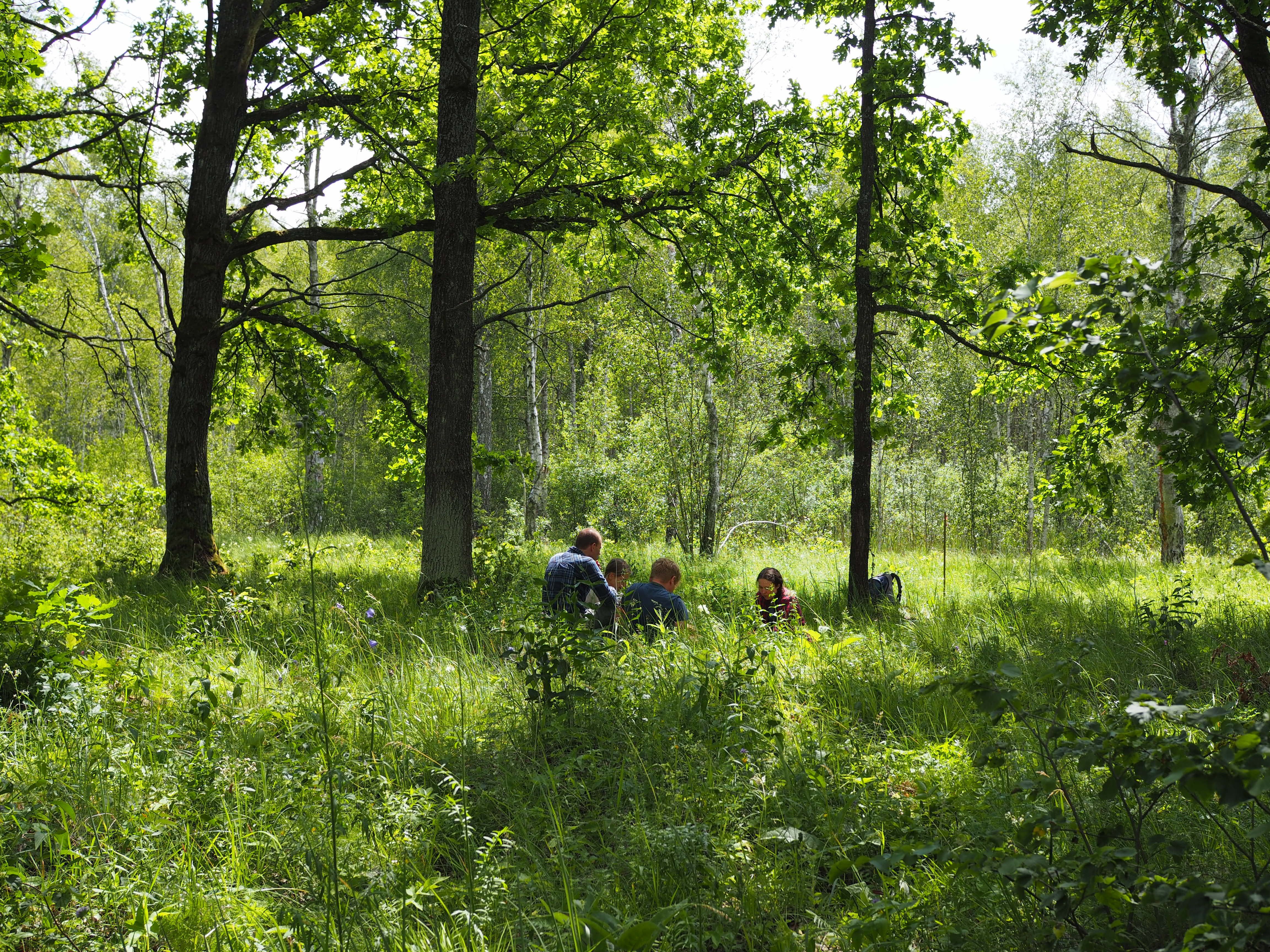
The fieldwork took me to all corners of mainland Denmark, and surveying the extensive peat bogs of northern Jutland was the first time I ever felt a slight sense of jeopardy from pure wilderness. Råbjerg Mose is a 4,000-hectare mosaic of forests, grasslands, heaths, and swamps, but the peat bogs are especially treacherous due to historic peat digging.
To reach my plots, I had to leap from one tussock of Deschampsia cespitosa to another. While I was stumbling and getting my feet soaking wet, the grazing cattle seemed completely untroubled as they navigated the bog. It’s definitely a quadrupedal advantage!
Next steps and broader implications
A key focus moving forward will be exploring the mechanisms behind winter grazing pressure. During our study, we found that higher grazing pressure during the winter months was associated with increased species richness and forb cover.
Among Danish livestock farmers, rural wisdom warns against letting cattle and horses access grasslands too early to avoid “dead-biting” – a phenomenon where early herbivore disturbance has lasting, negative effects on the growth of nutritious grasses favored in modern farming. It seems we may have struck upon scientific evidence for this phenomenon, and I am incredibly curious to explore the ecological mechanisms of dead-biting in the future.
Our study shows that the most common management strategies for European temperate grasslands, i.e. seasonal grazing and mechanical cutting, underperform significantly when compared year-round grazing. Year-round grazing is today found mainly in two places – as extensive livestock rearing in the margins of Europe, countries like Romania and Bulgaria, where it has been continuously practiced since the Neolithic, and as rewilding initiatives, especially in northwest Europe. Increasingly, studies are showing that a more natural grazing process is beneficial for conservation. By both studying old and new cases of year-round grazing and expanding rewilding initiatives, our study points out opportunities for more effective conservation grazing.
About the author
Current position
I am currently about halfway through my PhD studies at Aarhus University. My research focuses on developing a new conceptual understanding of natural vegetation in temperate Europe, and directly linking that to modern restoration ecology and policy.
Getting involved in ecology
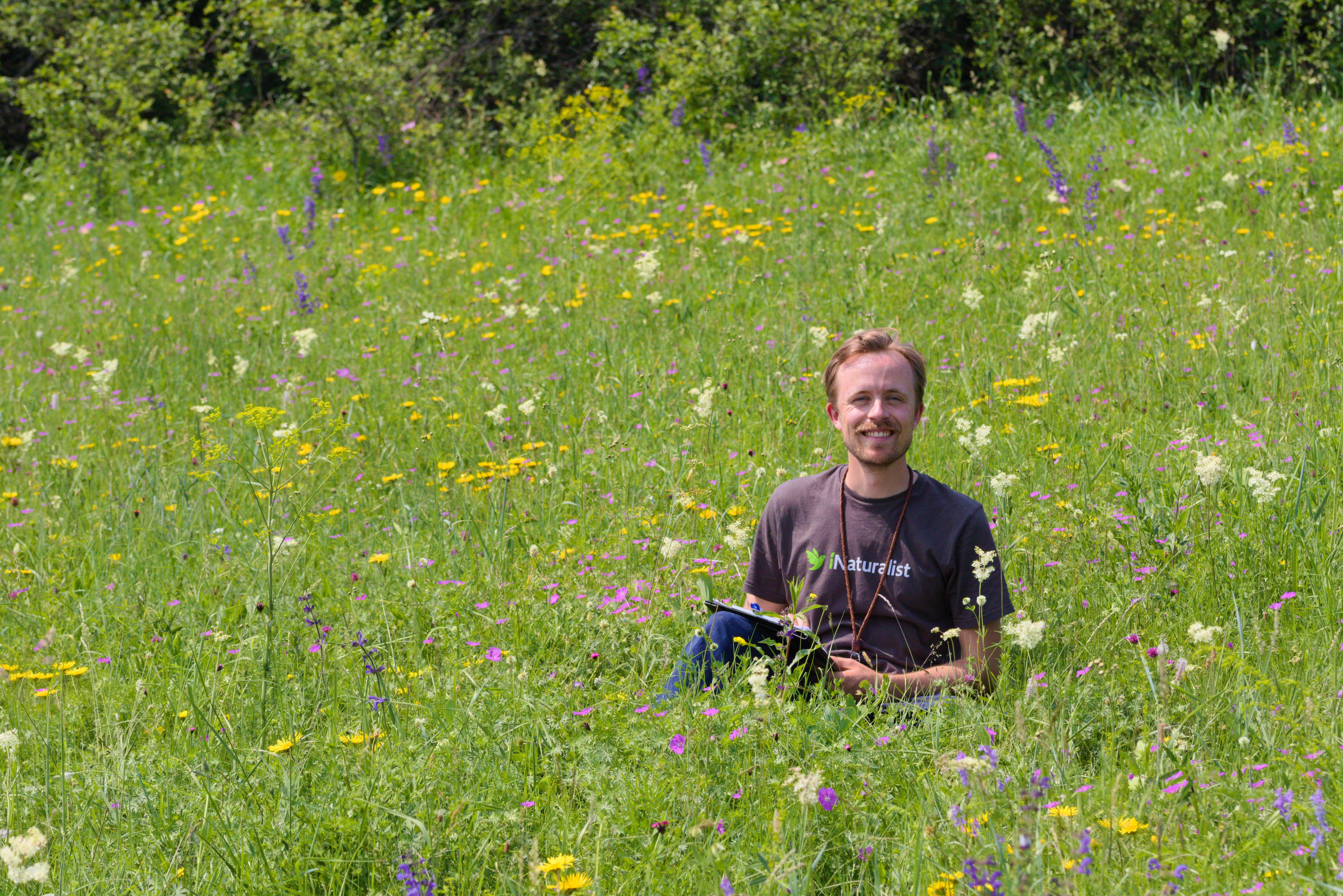
Like many biology students, I was originally convinced I would become an adventurous marine ecologist. However, using the identification app iNaturalist put me on a completely different trajectory. Discovering that I had been surrounded by plants that were practically invisible to me my entire life was stunning; it sparked an obsession with uncovering the temperate flora of Europe. Morten DD Hansen, a legendary biologist and nature guide from Aarhus University, then opened my eyes to how the largest mammals are intimately linked to the smallest forbs and grasses. I’ve been hooked on herbivory and vegetation ecology ever since.
Current research focus
Quantifying the effects of grazing naturalness on vegetation is central to the broader aim of my PhD, which is to understand the biotic integrity and naturalness of European vegetation as a whole. My next steps involve testing whether specific vegetation metrics can be used as reliable indicators for the general intactness of entire biotas.
Advice for fellow ecologists
Download a species identification app on your phone and start ID’ing! Learning to recognize species and truly understand their specific ecologies is an inexhaustible source of both scientific inspiration and personal joy.
Read the full article ‘From Grasslands to Forblands: Year-round grazing as a driver of plant diversity’ in Journal of Applied Ecology.
Find the other early career researchers and their articles that have been shortlisted for the 2025 Southwood Prize here!