Body odour has a reputation problem. It is often treated as a hygiene failure or a social offence. In reality, it is biology at work, plus a big helping of culture.
Most body odour is not produced by sweat itself. Sweat is largely odourless. Smell develops when bacteria (and sometimes fungi) on the skin break down compounds in sweat and skin oils, producing pungent byproducts. That is why odour is often strongest in warm, moist areas with lots of sweat glands, such as armpits, feet and the groin. It is also why two people can smell very different after the same workout. Their skin chemistry and microbiomes differ.
In our latest episode of Strange Health, we spoke to Mats J. Olsson, a professor of experimental psychology at the Karolinska Institutet in Stockholm, who studies how humans perceive body odour.
One of his key points is easy to forget in a deodorant-saturated world: humans have the anatomy of a species built to smell. We have sweat and sebaceous glands in “strategic” places, and we have a sense of smell capable of picking up subtle cues. But in modern life, we also wash frequently and layer fragrances, which can mask those cues.
So what does body odour communicate, if anything? Olsson argues that for humans, smell often works as an “approach or avoid” signal. We might not always be able to describe odours clearly, but we register them quickly as pleasant, neutral or off-putting.
He also emphasises that much of what we label as “good” and “bad” smell is learned. Babies are not born with strong cultural disgust reactions. We acquire them, and different cultures acquire them differently.
His research also suggests smell can carry information about health. In one set of experiments, Olsson and colleagues temporarily activated participants’ immune systems using a safe method that mimics the early stages of illness (a short-lived inflammatory response).
Then they collected body odour samples from the armpits using cotton pads. When other people were asked to smell the samples, they rated the “sick” samples as slightly worse, often describing them as smelling more “sweaty”. Participants were not coughing or visibly unwell, which suggests our noses may pick up early, subtle shifts that we cannot easily put into words.
Olsson has also explored how disease cues affect us. In one study, exposure to disgusting odours was linked to a measurable immune response in the mouth, as if the body was preparing for potential pathogens. It is a reminder that smell is not just about social judgement. It can be part of a broader, protective system.
Most changes in body odour are not a sign of disease, though. Diet, stress, hormones and new products can all shift your scent. Garlic and onions can linger. Low-carb diets can change breath. Menstrual cycle changes and menopause can alter sweat and skin oils. Stress sweat can smell different from exercise sweat because its chemical mix is different.
Read more:
Your unique smell can provide clues about how healthy you are
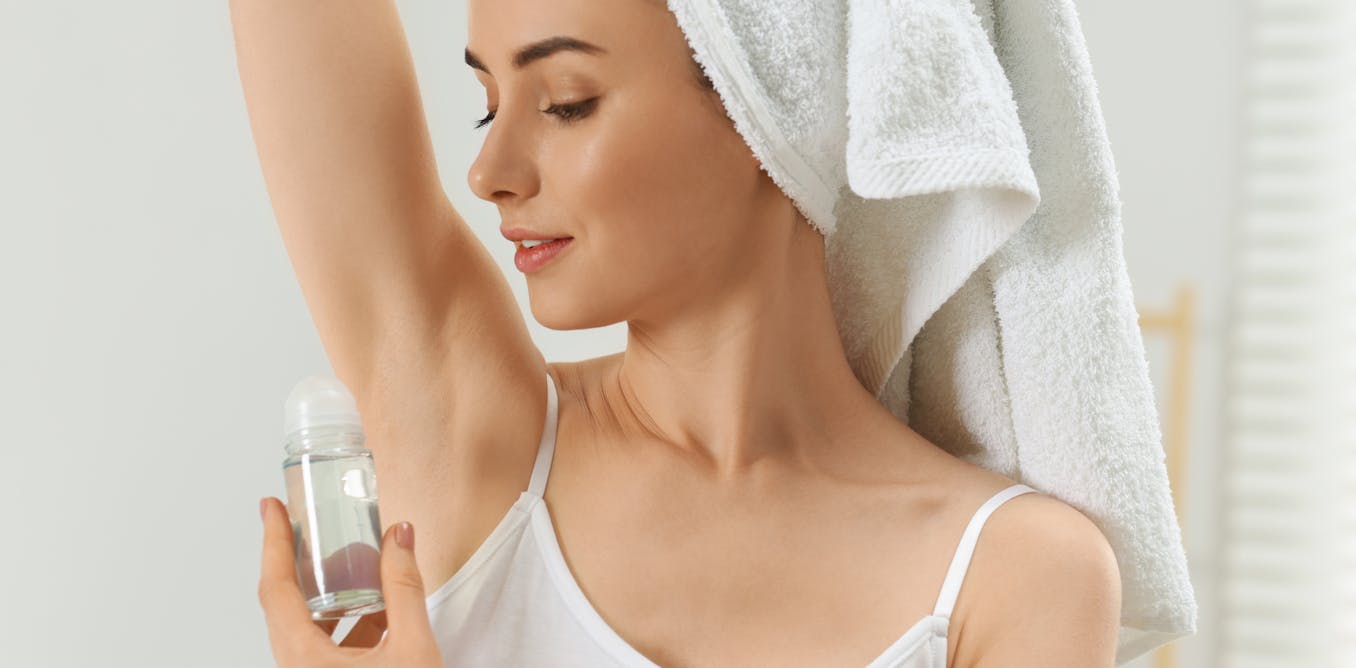
If odour bothers you, the practical aim is not to “eliminate” a natural human smell. It is to reduce the conditions that let odour-producing microbes thrive. Washing after sweating helps. Antiperspirants reduce sweat using aluminium salts that block sweat ducts. Deodorants mainly mask smells or reduce bacteria. Applying them to clean, dry skin often works best, commonly at night when sweating is lower.
Body odour, then, is not simply something to be “fixed”. It is a mix of microbiology and meaning: what your skin produces, and what your culture has taught you to feel about it.
Strange Health is hosted by Katie Edwards and Dan Baumgardt. The executive producer is Gemma Ware, with video and sound editing for this episode by Anouk Millet. Artwork by Alice Mason.
In this episode, Dan and Katie talk about a social media clip via YouTube from Alexandrasgirly.
Listen to Strange Health via any of the apps listed above, download it directly via our RSS feed or find out how else to listen here. A transcript is available via the Apple Podcasts or Spotify apps.

Katie Edwards works for The Conversation in the UK. Mats J. Olsson has received research funding from the Swedish Research Council.
Dan Baumgardt does not work for, consult, own shares in or receive funding from any company or organisation that would benefit from this article, and has disclosed no relevant affiliations beyond their academic appointment.