(Washington, DC) – Venezuelan authorities should take prompt measures to reform key judicial and electoral institutions and repeal abusive laws, Human Rights Watch said today.
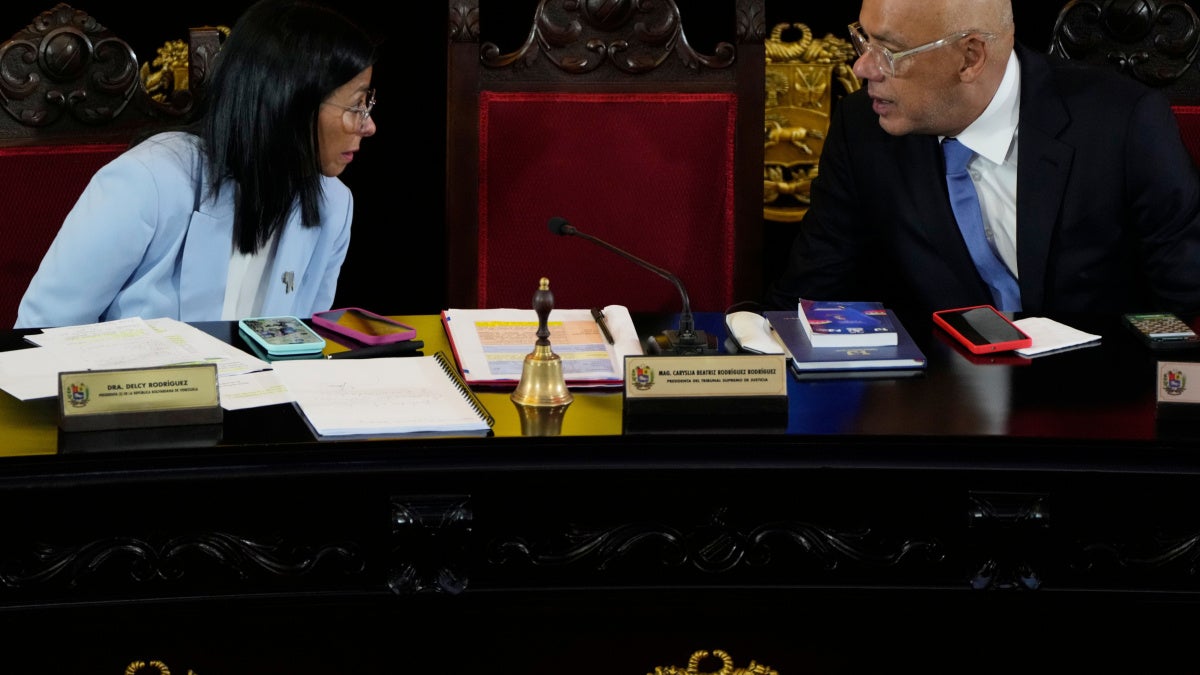
Following US military strikes in Venezuela and the arrest of Nicolás Maduro and his wife, Cilia Flores, on January 3, 2026, Venezuelan authorities have released hundreds of political prisoners and said that the country is undergoing a process of “national pacification.” The Trump administration has continued to work with Maduro’s former vice president, Delcy Rodríguez, in what it describes as a three-phase plan of “stabilization, recovery and transition,” with a particular focus on changes to the oil sector.
“The release of political prisoners brings important relief, but the repressive apparatus the government used to detain them remains in place,” said Juanita Goebertus, Americas director at Human Rights Watch. “Venezuelan authorities should make real reforms to key judicial and electoral institutions and laws. Anything less would amount to a fake transition that may serve the Venezuelan and US governments but will not vindicate the rights of the Venezuelan people.”
According to Venezuelan human rights groups, the authorities have released about 400 political prisoners. About 600 others remain behind bars, according to the organization Foro Penal. The people released remain under criminal investigation, and face restrictions on their freedom of speech and their participation in protests, nongovernmental organizations and prisoners’ relatives told Human Rights Watch. Some opposition figures have been transferred to house arrest, including Juan Pablo Guanipa, an opposition leader who was released on February 9 and detained again hours later after he called on people to participate in protests.
Since 2014, Venezuelan authorities, often making use of the Attorney General’s Office and the judiciary, have committed widespread human rights violations including baseless, politically driven criminal prosecutions of political opponents, journalists, and human rights defenders. Nearly 19,000 people have been detained for political reasons, according to Foro Penal. The authorities have arbitrarily arrested and forcibly disappeared people. Many detainees have been held incommunicado, denied access to lawyers, charged en masse in virtual hearings, and subjected to ill-treatment and torture.
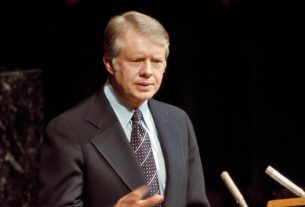
Over the last decade, Venezuelan authorities have also conducted unfair elections, marred by human rights violations and irregularities that have kept the playing field uneven. Following the 2024 presidential election, the National Electoral Council and the Supreme Court declared that Maduro had been reelected. The opposition collected tally sheets showing that Edmundo González, who is backed by the opposition leader María Corina Machado, won more than two-thirds of the votes cast across 81.7 percent of polling places. Independent observers from the Carter Center reviewed those tally sheets and concluded that they were accurate and legitimate.
Venezuelan authorities should take prompt steps to create the conditions for free and fair elections, including by reviewing the composition of the Electoral Council. Its current members took steps to prevent the registration of opposition candidates in previous elections.
Venezuelan authorities should also take steps to restore the integrity and independence of the judiciary. The judiciary stopped functioning as an independent branch of government in 2004, when then-President Hugo Chávez passed a raft of legislative changes and packed the Supreme Court with his supporters. The court has since unwaveringly supported the executive branch in repression of critics.
The UN Independent International Fact-Finding Mission on Venezuela (FFM) also found that courts of the special jurisdiction for terrorism cases, committed “systemic violations of due process.”
The FFM said that Attorney General Tarek William Saab “led the State action that resulted in human rights violations” following the 2024 elections. It concluded that Saab is part of the “Government’s repressive apparatus to give a semblance of legality to the serious human rights violations committed….”
Given his record, Saab’s continuing service as attorney general is incompatible with any meaningful effort at reforms to respect rights and uphold the rule of law, Human Rights Watch said.
The National Assembly should also amend or repeal laws that have enabled human rights violations including:
- The 2024 Law on Oversight, Regularization, Operations, and Financing of Non-Governmental Organizations, which grants the government extensive regulatory powers over groups’ operation and financing and establishes vague grounds to dissolve them.
- The 2024 Simón Bolívar Organic Law against the Imperialist Blockade and in Defense of the Bolivarian Republic of Venezuela, which criminalizes any criticism of the authorities or advocacy for sanctions against Venezuela or targeting particular officials. Violators face sentences of up to 30 years in prison and a lifetime ban on holding public office.
- The 2017 Law Against Hatred, which imposes sentences of 10 to 20 years for anyone who publicly “promotes, encourages, or incites hatred, discrimination, or violence” and has been used to arrest critics under these broadly defined offenses.
- The 2012 Law Against Organized Crime and Terrorism Financing, which has been used to prosecute political opponents, protesters, and foreign nationals, among others, on alleged terrorism-related charges carrying sentences ranging from 25 to 30 years.
- The 2004 Law on Social Responsibility in Radio and Television, amended in 2010, which has been used to restrict free speech and press freedoms, and to censor and close media outlets.
The Rodríguez administration should allow international human rights monitors, including the FFM and the Inter-American Commission on Human Rights, unfettered access to visit Venezuela and document the country’s human rights situation.
In February, the government allowed the Office of the UN High Commissioner for Human Rights (OHCHR) to briefly visit the country to monitor the release of political prisoners. The Venezuelan government should allow OHCHR to reestablish its office in Venezuela, which was closed in 2024, without undue restrictions, Human Rights Watch said.
On January 30, Rodríguez announced that the government was working on an amnesty law to benefit individuals detained for acts of political violence dating back to 1999, which is currently under discussion in the National Assembly. The current draft would require people to request amnesty before a court and would only benefit people detained “in the context” of specific events, such as the 2024 elections, and the 2017 and 2014 protests.
“The proposed amnesty does not ensure that everyone arbitrarily detained will be unconditionally released,” Goebertus said. “Its consideration by legislators should not be used as an excuse to delay the unconditional release of political prisoners or the broader structural reforms needed to restore Venezuela’s democracy.”