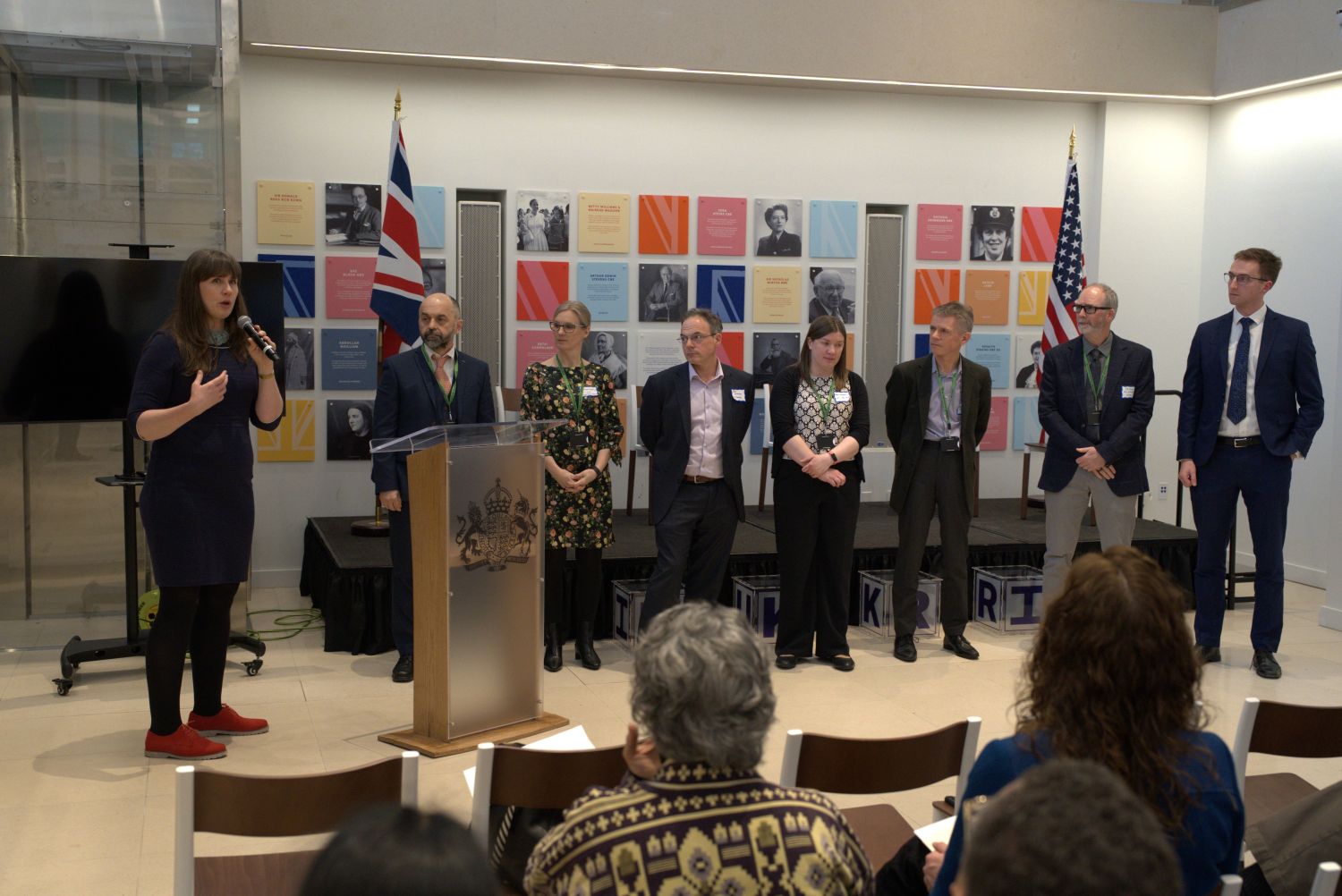
Seven UK-US collaborations spanning a wide range of disciplines demonstrated how the UK-US research and innovation partnership is addressing global challenges.
The teams were presented the Pioneering UK-US Breakthroughs (PUB) Award by His Majesty’s Ambassador to the US, Sir Christian Turner, and UKRI’s International Director, Frances Wood.
The event was hosted at a reception at the British Embassy in Washington, DC, this week.
These awards recognised the outstanding global impacts that arose from their international collaborations.
The awards reception, hosted by UK Research and Innovation (UKRI) North America, brought together researchers and innovators whose work spans:
- cancer imaging
- quantum technology
- precision agriculture
- nuclear energy
- particle physics
- museum accessibility
Meet the PUB Award recipients
Award winners are those listed through the competition run by UKRI North America.
Revolutionary scanners aiding cancer therapies
UK award winners:
- Matt Wilson, Rutherford Appleton Laboratory
- Dr Diana Caprotti, Science and Technology Facilities Council (STFC) Technology Department
- Joshua Nagel Smith, STFC Innovations Ltd
US award winners:
- Professor Ling-Jian Meng, University of Illinois at Urbana-Champaign
- Xiaopei Huang, MH3D Inc
- Dr Aileen Ouyang, MH3D Inc
This UK-US team created commercial medical scanners that reveal how new cancer therapies behave, accelerating drug development and paving the way for personalised care.
The UK–US research partnership demonstrated that these medical scanners, called HEXITEC X-ray detectors, could capture the extremely low and complex gamma ray signals produced by emerging targeted alpha cancer therapies.
Targeted Alpha Therapy visualised in small mammals using the Alpha-SPECT Mini by MH3D Inc.
The University of Illinois Urbana-Champaign (UIUC) scaled up the technology.
Medical device company, MH3D Inc., supplies this scanner to researchers around the world to support the adoption of these new cancer treatments and move towards human diagnosis and therapy monitoring.
Faster, more precise development of targeted cancer therapies can reduce healthcare burdens and accelerate the shift toward personalised medicine, attracting commercial investment.
This work was funded by the Engineering and Physical Sciences Research Council (EPSRC) and STFC and by the US National Institutes of Health, National Cancer Institute, and National Institute for Biomedical Imaging and Bioengineering.
A new device to detect crop viruses
UK award winners:
- Dr Bruce Grieve, University of Manchester
- Dr Vasthi Alonso Chavez, Rothamsted Research
- Prof Hujun Yin, The University of Manchester
US award winners:
- Dr Siobain Duffy, Rutgers University
- Professor Linda Hanley-Bowdoin, North Carolina State University
- Professor Trino Ascencio-Ibáñez, North Carolina State University
Early-stage crop viral infections are now detected more rapidly and cost-effectively using a new device than from traditional genetic testing methods.
This project brought together UK sensor engineering and machine learning expertise with US crop virology capabilities to address Cassava Mosaic and Brown Streak diseases.
These threaten the key carbohydrate crop, Cassava, across Sub-Saharan Africa and Latin America.
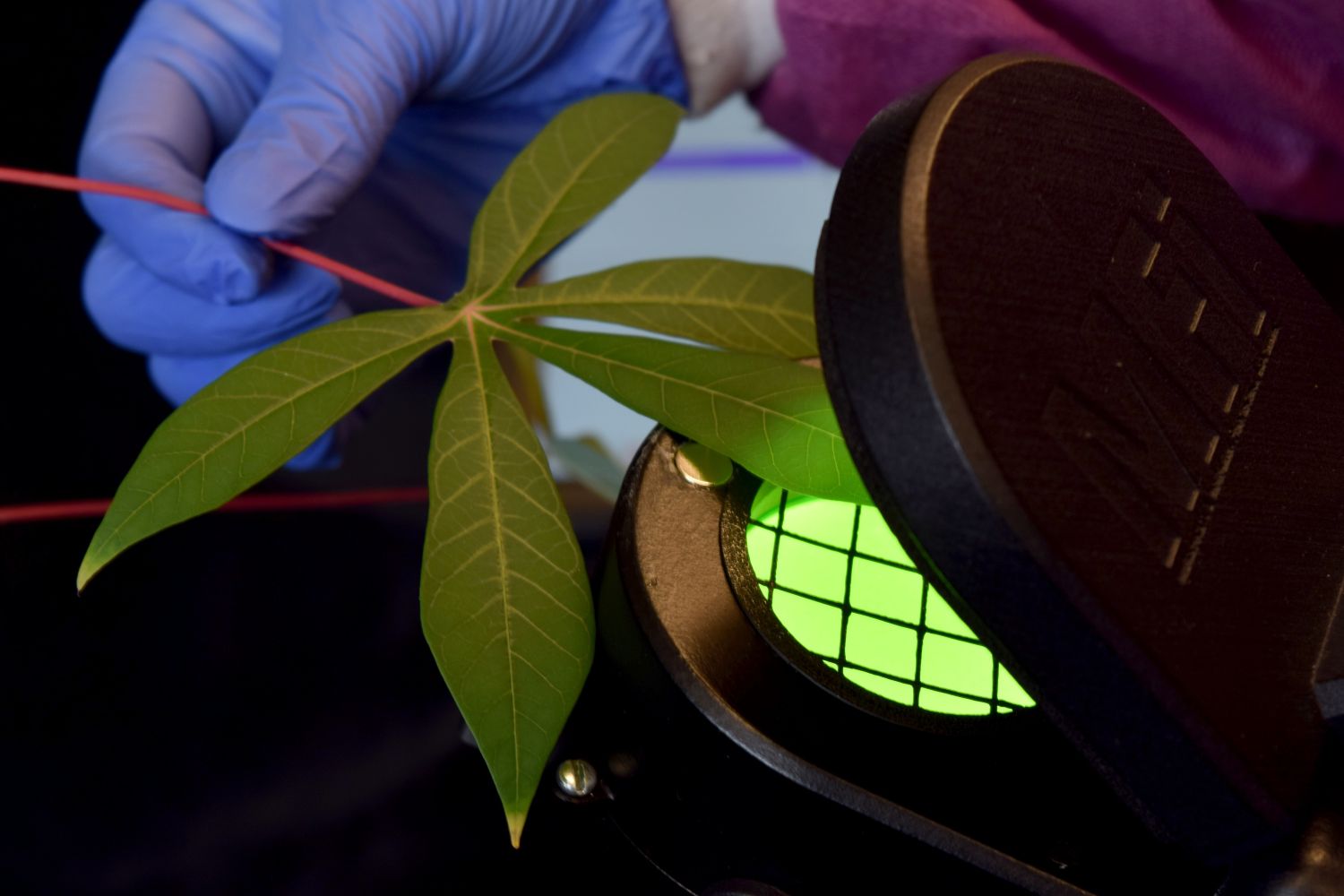
A new device for field-testing crops for Cassava Mosaic and Brown Streak disease.
Cassava is increasingly being used as a replacement for wheat flour in the US and Europe as the Cassava plant uses less water and can survive harsh conditions compared to wheat.
By enabling the identification and containment of devastating crop diseases before they spread, this technology can help safeguard food security.
Earlier detection of plant viruses reduces crop loss, boosting crop yields and lowers reliance on expensive laboratory diagnostics.
This new device will support local livelihoods, strengthen rural economies, and contribute to more resilient global food systems.
This work was funded by the Biotechnology and Biological Sciences Research Council and US National Science Foundation through the Ecology and Evolution of Infectious Disease Programme.
Training the next generation of nuclear scientists
UK award winners:
- Dr David Armstrong, University of Oxford
- Prof Chris Grovenor, University of Oxford
US award winners:
- Professor Peter Hosemann, University of California Berkeley
- Dr Brenden Heidrich, Idaho National Laboratory
Since 2015, a series of collaborations between the University of Oxford and partners in the US have advanced nuclear materials research and training through the EPSRC-Nuclear Energy University Program (NEUP).
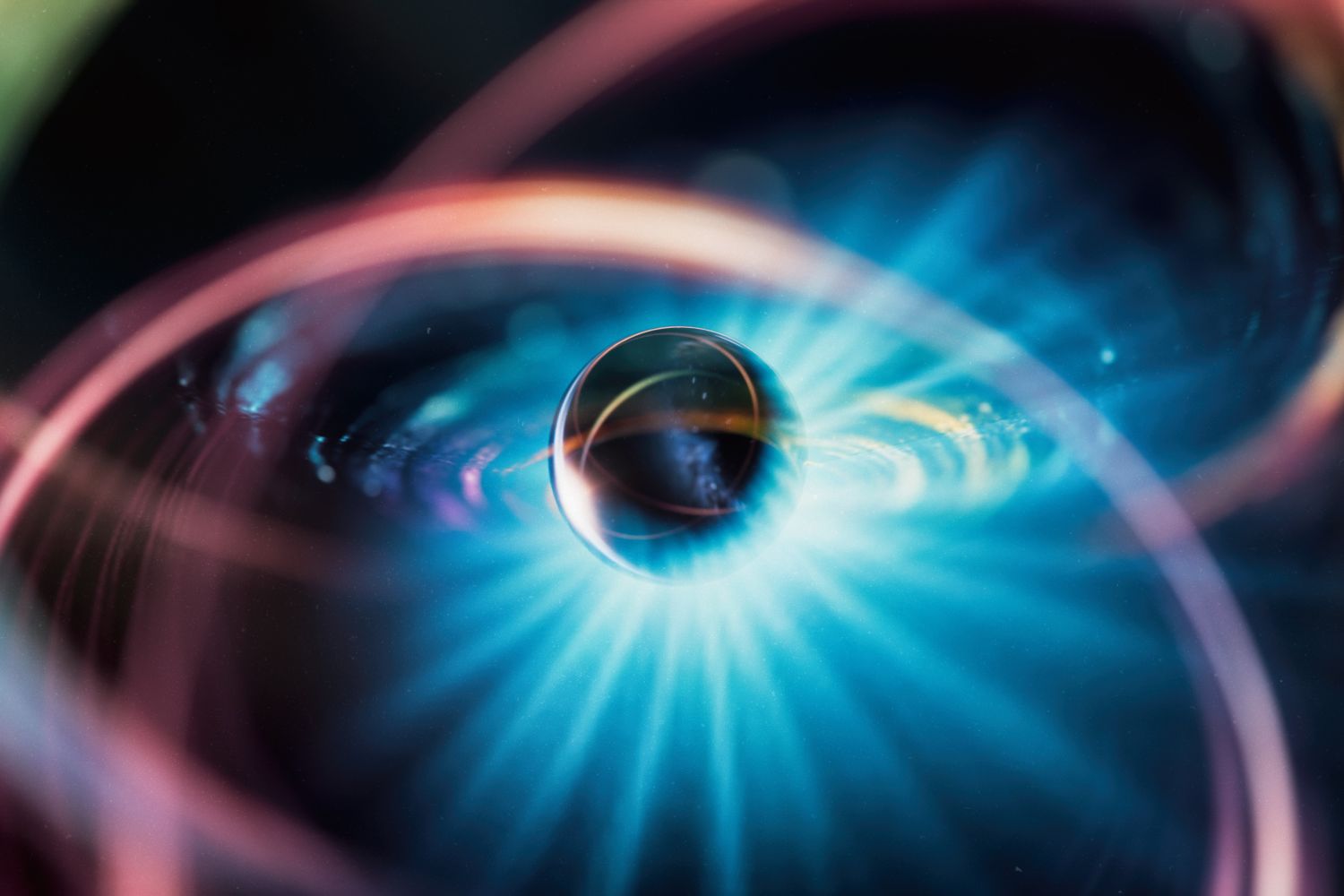
Nuclear fusion: 3D rendered image illustration of a high-energy plasma core within a tokamak. Credit: koto_feja, E+ via Getty Images.
These collaborations delivered the first university-led UK-US neutron irradiation campaign in a generation and developed innovative methods for microscale mechanical testing of Silicon carbide (SiC) SiC-SiC composites.
This partnership accelerated the development of cleaner energy technologies and more efficient jet engines.
The resulting materials innovations support the UK’s civil nuclear ambitions and enable safer and more durable reactor components.
In turn, this boosts high-value manufacturing, enhances energy security, and contributes to global efforts to deploy low-carbon power.
This work was funded by EPSRC and the US Department of Energy through the EPSRC-NEUP.
Smart soil sensors drive cleaner, more efficient agriculture
UK award winners:
- Dr Aleksander Radu, University of Lincoln
- Dr Ernesto Saiz Val, Teesside University
US collaborators were recognised from Tufts University.
This UK-US team developed a battery-free, wireless sensor platform that delivers high-resolution, real-time soil nutrient measurements for nitrate and ammonium, directly in the field.
These soil nutrient sensors have led to a field-ready prototype, attracting around £200,000 in follow-on investment and formation of a technology company.
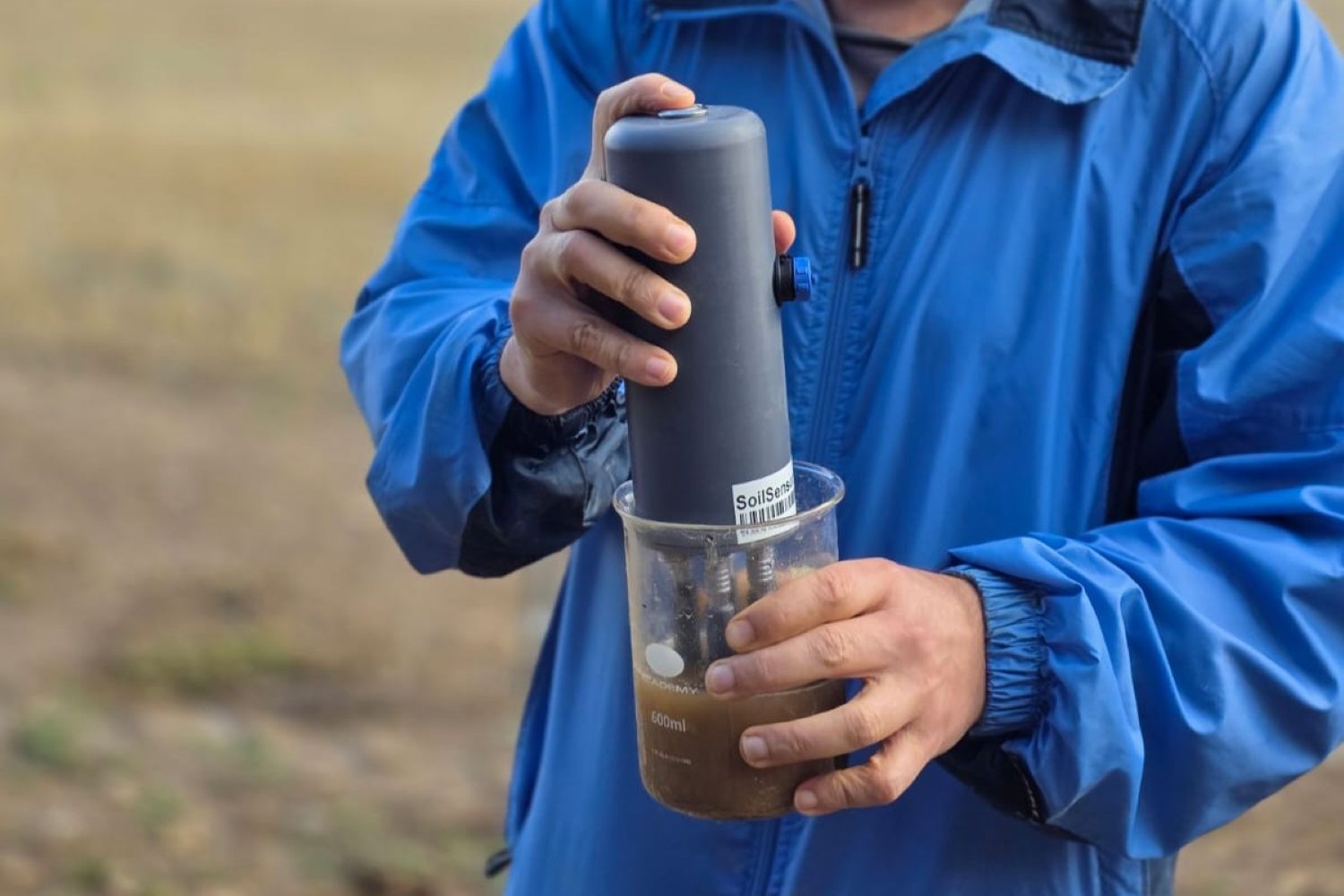
Dr Aleksander Radu using the new soil nutrient sensor, Agristat, to measure soil nitrate and ammonium content.
The creation of a new company and follow‑on investment also demonstrates strong commercial potential, contributing to high‑value green tech innovation and future job creation.
This innovation aims to transform soil ecosystem science and precision agriculture, contributing to global efforts that:
- improve nitrogen use efficiency
- reduce pollution
- protect soil and water health
- supporting national climate targets and healthier ecosystems
This work was funded by the Natural Environment Research Council and the US National Science Foundation through the Signals in the Soil Programme.
Rewriting what museums look and sound like
UK award winners:
- Dr Alison Eardley, University of Westminster
- Dr Deborah Husbands, University of Westminster
- Dr Lindsay Bywood, University of Westminster and VocalEyes
US collaborators recognised from the National Gallery of Art and the University of Michigan.

A W-ICAD workshop to create audio-descriptive text for those who are blind and partially blind.
This project explores how museums can communicate with all visitors, beyond sight, helping cultural institutions reach new audiences, meet accessibility standards, and become more welcoming public spaces for all.
An internationally recognised framework Workshop for Inclusive Co-created Audio Description (W‑ICAD) is enabling blind, partially blind and sighted people to co-create inclusive audio descriptions.
Adopted across 25 museums in the UK, US, and Germany, W-ICAD is transforming museum practice by supporting richer, multisensory, and more inclusive visitor experiences.
This approach widens access to culture, strengthens social inclusion, and improves visitor wellbeing.
This work was funded through the Arts and Humanities Research Council and US National Endowment for the Humanities partnership on Digital Humanities: New Directions for Digital Scholarship in Cultural Institutions.
The UK’s coolest export yet
UK award winners:
- Peter McIntosh, STFC Daresbury Laboratory
- Ed Cavanagh, STFC Daresbury Laboratory
US collaborators recognised from Fermilab.
New facilities at STFC’s Daresbury Laboratory can now assemble and verify advanced particle-accelerating devices, called cryomodules.
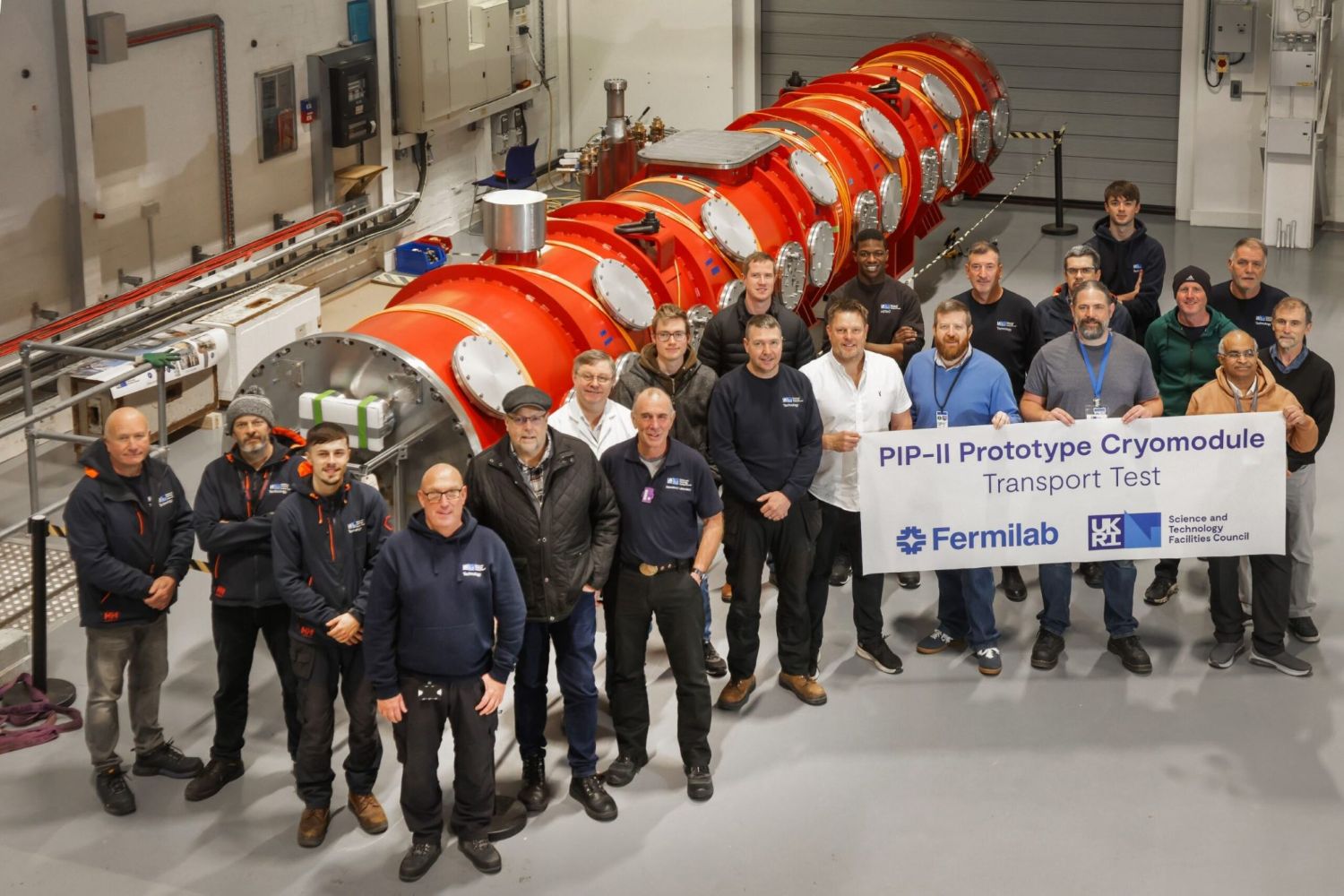
The first prototype PIP-II HB650 cryomodule.
These will be used to accelerate neutrinos to almost the speed of light in the Long Baseline Neutrino Facility and Deep Underground Neutrino Experiment (LBNF-DUNE) at Fermilab in the US.
The international LBNF-DUNE project aims to answer the biggest question in science: how did our universe begin, and why is everything made of matter rather than nothing at all?
This research could advance theories that inform everything from astrophysics to quantum science.
The UK-US collaboration supports industrial supply chains, creates specialist skills, and enhances national capabilities in frontier research.
This cutting edge of discovery science contributes to long‑term technological innovation with spill over benefits across multiple sectors.
This work was funded by STFC and US’ Department of Energy as part of the international LBNF-DUNE project.
New cold atom tech brings dark matter detection closer to reality
UK award winners:
- Dr Anna Marchant, Rutherford Appleton Laboratory
- Charles Baynham, Imperial College London
US-based collaborators recognised from Stanford University.
UK and US experts developed a world-leading, cold atom source of atomic strontium, a building block for the next generation of quantum sensors.
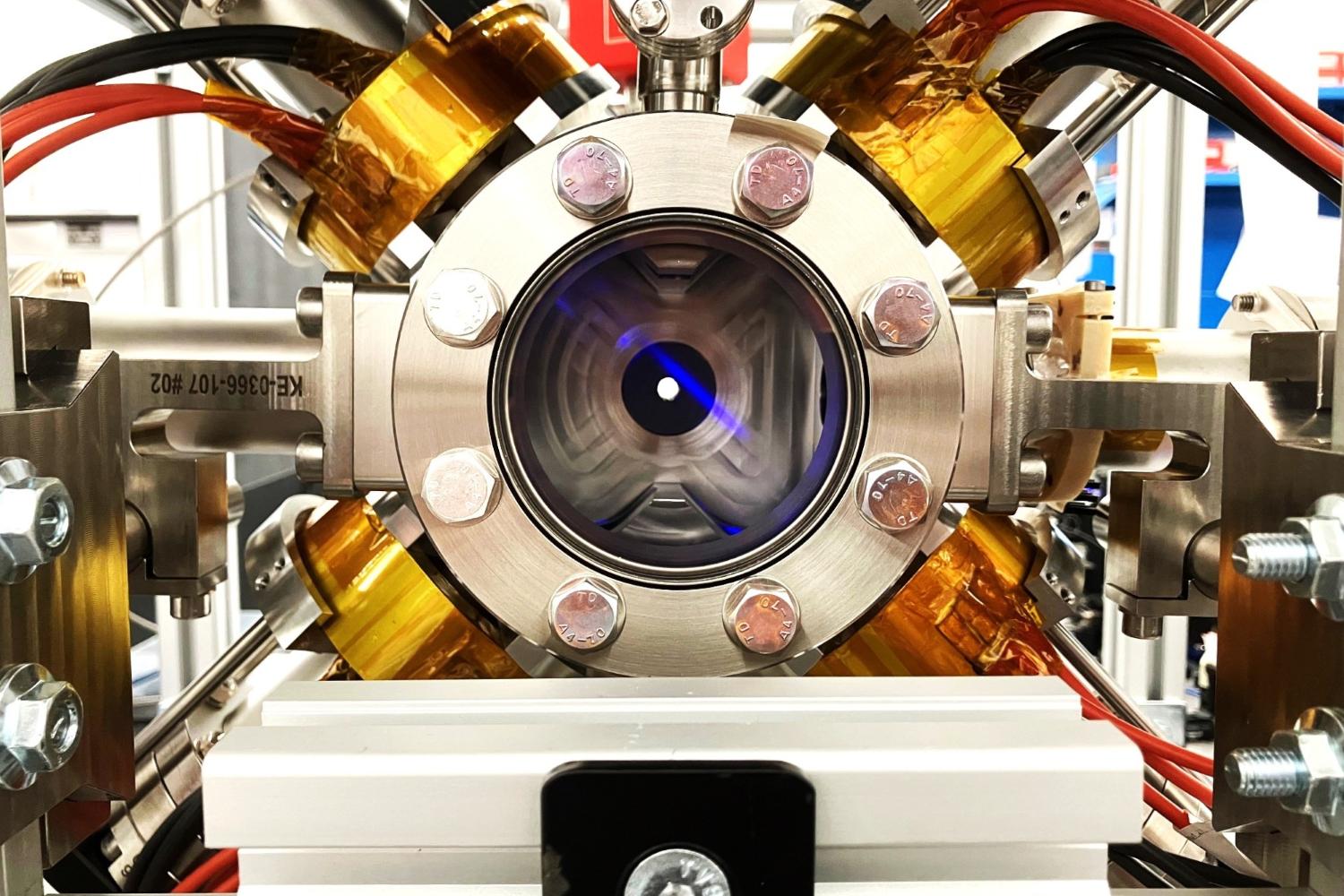
Strontium atoms within the High Flux Atom Interferometry Source vacuum chamber, observed as the blue fluorescent line.
These advanced sensors could form detectors capable of spotting ripples in space from merging black holes and help scientists search for dark matter.
Future detectors could also drive innovation in navigation, communications, and Earth observation.
This positions the UK and US at the forefront of the rapidly growing quantum technologies sector, supporting high-value jobs, advanced manufacturing, and long-term scientific leadership.
This work was funded through the International Science Partnerships Fund administered by STFC and the Gordon and Betty Moore Foundation in the US.
An enduring partnership
Liz Kebby-Jones, UKRI North America Director, said:
Over the past five years, I have seen first-hand how UK and US researchers and innovators come together to solve problems neither could tackle alone.
These seven teams are a testament to what happens when talent, ambition, and shared purpose cross borders.
As my time in Washington, DC, draws to a close, I know that UK-US research and innovation will continue to flourish through partnerships built on trust, curiosity, and a genuine desire to make a difference.