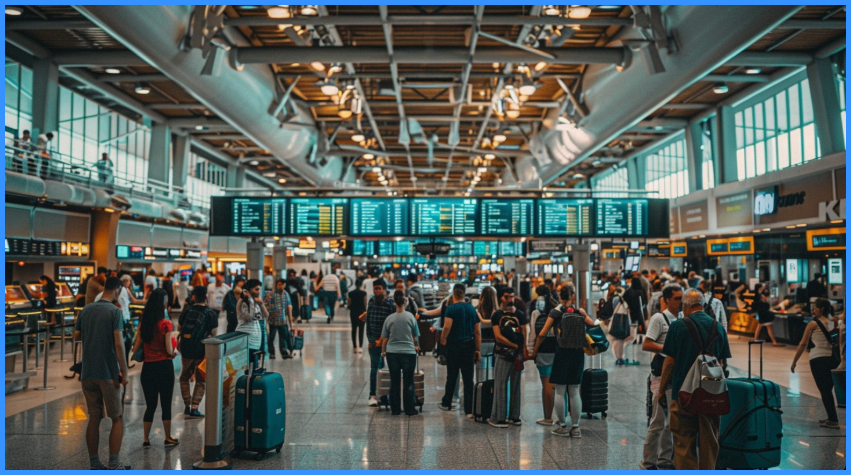
ATLANTA / CHARLOTTE — Travelers across the Southeast are facing significant disruptions as the Federal Aviation Administration (FAA) issued ground stops for Hartsfield-Jackson Atlanta International Airport (ATL) and Charlotte Douglas International Airport (CLT) on Saturday, March 21, 2026. The measures were taken as a powerful spring storm system, moving from the Midwest toward the Atlantic coast, brings the risk of severe thunderstorms, damaging winds, and tornadoes.
As of Saturday afternoon, national flight tracking data indicates that over 4,800 flights within, into, or out of the U.S. have been canceled, with total delays exceeding 12,800 nationwide.
Real-Time Disruption Data (March 21, 2026)
According to live feeds from FlightRadar24 and the FAA Command Center, the impact on the two major hubs is as follows:
| Hub | Status | Avg. Delay | Cancellations | Impacted Passengers (Est.) |
| Atlanta (ATL) | Ground Stop | 120+ mins | 500+ | 75,000+ |
| Charlotte (CLT) | Ground Stop | 90+ mins | 350+ | 45,000+ |
Note: Ground stops are “dynamic” and may be lifted or extended depending on the movement of the storm cells. Currently, departures at ATL are being held until at least 6:00 PM EDT.
Primary Reasons for the Gridlock
- Severe Weather Front: The National Weather Service (NWS) has placed the region under a Level 4 out of 5 risk for severe weather. Wind gusts of 70–80 mph and “long-track” tornadoes are possible throughout the afternoon in the Carolinas and Georgia.
- Ground Operation Safety: High winds and lightning have made it unsafe for ground crews (baggage handlers and fuelers) to operate on the tarmac, leading to a complete suspension of gate activities at both airports.
- Compounding Factor: DHS Shutdown: Ongoing staffing shortages related to the Department of Homeland Security (DHS) shutdown (Day 32) have further slowed security screenings and air traffic control processing, making it harder for the system to recover after ground stops are lifted.
Forecast: Continued Turbulence
Meteorologists expect the storm line to intensify as it reaches the East Coast this evening. Travelers should prepare for:
- “Ripple Effect” Delays: Even after storms pass, aircraft and crews will be significantly out of position. Disruptions are expected to persist through Sunday, March 22.
- Regional Hub Congestion: Secondary airports in the Northeast, including JFK, Newark (EWR), and Philadelphia (PHL), are also reporting ground delays of 60–90 minutes as the weather moves north.
Critical Advice for Impacted Flyers
1. Monitor Flight Status Digitally
Do not head to the airport if your flight is already canceled or severely delayed. Use the FlightRadar24 “Airport View” or your airline’s mobile app for the most accurate, second-by-second updates on aircraft position.
2. Rebooking Strategies
- The “Social Media” Hack: Customer service lines at the airport are currently exceeding four-hour wait times. Try reaching out to your airline’s official support handle on X (formerly Twitter) or using their app’s “chat” feature for faster rebooking.
- Overnight Accommodations: Since these delays are weather-related (“Outside Carrier Control”), airlines are not legally required to provide hotel vouchers. If you are stranded, document your expenses for potential reimbursement via travel insurance.
3. Know Your Rights (APPR/DOT)
Under U.S. Department of Transportation guidelines, if your flight is canceled and you choose not to travel, you are entitled to a full cash refund, regardless of the reason for the cancellation. If you choose to be rebooked, the airline is not required to provide monetary compensation for weather delays.