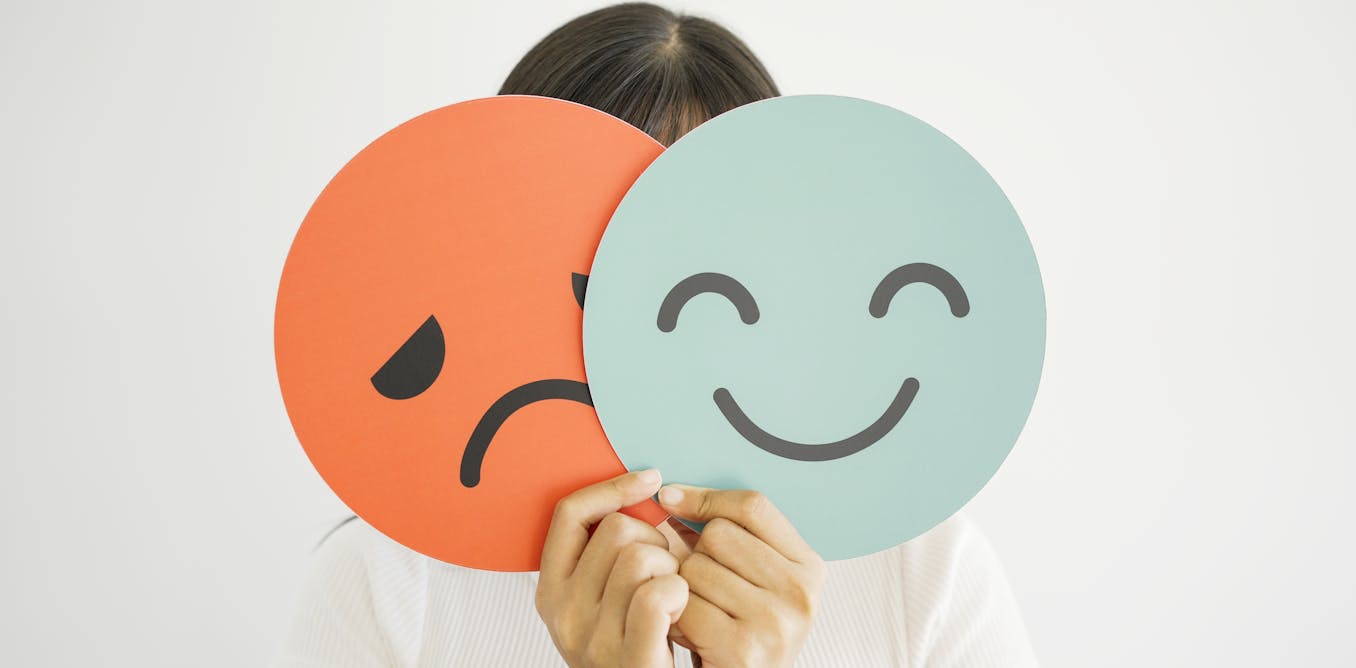
Some mental health conditions, such as anxiety, depression and ADHD, have become more accepted in society. People can now talk about them at work, at home and online and often be met with understanding.
This change matters. It makes it easier to ask for help and harder for employers and institutions to pretend mental health problems do not exist.
Public sympathy is uneven. Some conditions are widely understood, while others are still judged harshly.
As some conditions become familiar, they set the template for what mental illness is supposed to look like. Presentations that do not fit that picture are more likely to be perceived differently.
The recent Baftas Tourette’s incident showed how quickly behaviour can be moralised when it breaks a social rule.
Research on Tourette stigma finds public understanding is often limited and stereotypes continue to shape how the condition is perceived. Tics can be mistaken for deliberate misbehaviour, especially when they are seen as offensive or involve taboo words or racial slurs.
Schizophrenia, bipolar disorder and some personality disorders, including borderline and narcissistic personality disorder, tend to attract less empathy and more suspicion. A big part of the difference is familiarity, whether the behaviour fits a story people already understand. When it does not uncertainty can tip into fear.
Fear is the driver
That difference shows up in research. In a study testing stigma across nine diagnoses – measured by how much people wanted to keep their distance from someone with each condition – depression and anxiety drew the least stigma, while schizophrenia and personality disorder drew the most. Across diagnoses, fear was the most consistent driver of stigma.
Part of the sympathy gap can be recognition. People often sense something is wrong without knowing what to call it. When experiences or behaviour cannot be named, it becomes easier to explain it as “mad, bad, or dangerous”.
A cross-cultural study asked people to read short vignettes and name the condition. Around seven in ten correctly identified ADHD, but only around a third correctly identified bipolar disorder.
That is where the hierarchy of sympathy does its damage. Anxiety and depression can be recognised as suffering.
Other presentations are morally reinterpreted as defective personality. Mood swings are seen as selfishness, suspicion as nastiness, hearing voices as dangerousness and rapid shifts between closeness and anger as manipulation.
Personality disorder labels are especially vulnerable to this moralising. They are often heard not as descriptions of distress but as verdicts on character.
Borderline personality disorder, for example, is often misread as attention-seeking or manipulation rather than recognised as a pattern of intense fear, instability and emotional pain. That misreading can contribute to people being dismissed, not taken seriously, or even denied care.

fizkes/Shutterstock.com
Narcissistic personality disorder is routinely stigmatised and used as shorthand for cruelty or selfishness. Clinically, it is typically conceptualised as a rigid coping style that can mask underlying insecurity and fragility.
This split shows up online. A study analysing tweets about several mental and physical health conditions found mental health terms were more likely to be used in stigmatising or trivialising ways, and schizophrenia was the most stigmatised mental health condition examined.
On social media, anxiety and ADHD are more likely to be met with sympathy, but “psychotic” is used as an insult, and “bipolar” as a joke about someone whose mood has changed.
Personality disorder terms get used similarly: “narcissist” becomes a throwaway label for a bad relationship, and “borderline” a smear for being too much. Diagnosis turns into name calling.
Trivialisation and stigma are different, but they converge. They turn illness into a social weapon and make it easier to respond with ridicule or fear than with care.
The term “trauma” adds another twist. When distress is framed as trauma, it often attracts more sympathy because it fits a clear story something bad happened, and the person is suffering – for example, surviving a natural disaster.
But public attitudes are more complicated. A multi-study paper found many people still hold negative views of trauma survivors, including beliefs that they are permanently damaged, unpredictable, or dangerous.
Many diagnoses that attract suspicion, including psychotic disorders and some personality disorders, are also strongly linked to trauma histories. The difference is not just cause. It is whether the label makes distress look like an understandable injury, or a frightening personality.
There are parallels in physical health too, where severe illness can equate to more sympathy. Cancer, stroke or dementia are often seen as serious and largely outside a person’s control, so they attract support.
But blame changes the picture. When illness is seen as linked to behaviour, such as smoking, sympathy can fade.
In mental health, the pattern can look reversed. The most severe conditions, including psychotic disorders and some personality disorders, are often treated as if they reflect character or choice, even though they are strongly linked to factors beyond control such as biology and development. People who have the least control over their symptoms often receive the least sympathy.
Much has been done to raise awareness. But until empathy and understanding extend to forms of distress that are often perceived as frightening, disruptive, or hard to make sense of, the hierarchy will persist.

Robin Bailey does not work for, consult, own shares in or receive funding from any company or organisation that would benefit from this article, and has disclosed no relevant affiliations beyond their academic appointment.