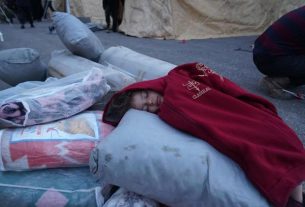
GENEVA — United Nations High Commissioner for Human Rights Volker Türk issued a stark warning on Tuesday, March 10, 2026, alerting that the escalating Middle East war is causing “foreseeable” and widespread harm to civilians that now reverberates across the globe. Deploring the systematic targeting of vital infrastructure, Türk warned that the current “tit-for-tat dynamic” between warring parties is creating a humanitarian and environmental crisis that extends far beyond the immediate battlefield.
The High Commissioner’s appeal follows two weeks of intense military action involving the U.S., Israel, Iran, and several regional states, which has already displaced hundreds of thousands and crippled global supply chains.
The Architecture of Destruction
In a detailed statement from Geneva, Türk highlighted a disturbing pattern of strikes on essential services that are protected under the laws of war.
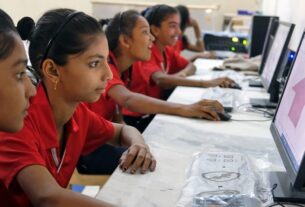
- Targeting the Essentials: The UN confirmed extensive damage to water desalination plants, fuel facilities, health clinics, and educational institutions.
- The Case of Qeshm Island: Türk specifically cited an attack on a desalination plant on Iran’s Qeshm Island over the weekend, which has reportedly cut off water access for at least 30 villages.
- Regional Ripple Effects: Similar “infrastructure warfare” was noted in Bahrain, where a desalination plant providing critical water access was also impacted, highlighting the indiscriminate nature of the current missile exchanges.
Environmental and Health “Time Bombs”
The High Commissioner expressed “grave worry” over the long-term biological and environmental consequences of the conflict.
- The Acid Rain Threat: Following strikes on Iranian oil depots and chemical facilities, the Iran Red Crescent Society warned of “highly dangerous and acidic” rainfall. Türk noted that such contamination could cause permanent lung damage and chemical burns to civilian populations.
- Toxic Street Pollution: In several Iranian cities, oil from damaged refineries has spilled into drainage lines and streets, creating “igniting fires” and toxic fumes that pose a direct threat to urban residents.
Global Economic and Social Fallout
Türk emphasized that the conflict is no longer a regional affair, citing its “widening geographic spread” and impact on the global most vulnerable.
- The Remittance Crisis: Migrant workers in the Gulf region—many of whom have been killed or trapped—are no longer able to send money home, threatening the livelihoods of families in Southeast Asia and Africa.
- Supply Chain Paralysis: The virtual closure of the Strait of Hormuz has triggered a plunge in commercial shipping, driving up the costs of food, fertilizer, and energy. Türk warned this would lead to “macro-economic and social instability” in countries already burdened by debt.
- The “Digital Iron Curtain”: The High Commissioner also condemned the “repression and intimidation” of people expressing opinions on the conflict, calling for the restoration of internet services in Iran and the release of those arbitrarily detained for dissent.
A Call for “Legal Scrutiny”
Underlining the principles of proportionality and precaution, Türk asserted that the deliberate targeting of infrastructure warrants “careful legal scrutiny” for potential war crimes.
“Under the laws of war, civilians and civilian infrastructure must be protected at all costs,” Türk stated. “All parties are bound by these rules and must be held to account. The world is watching.”
As the conflict enters its third week and diplomatic exits remain elusive, the UN’s message is a reminder that the “ultimate price” is being paid not by the combatants, but by millions of civilians caught in a web of global instability.
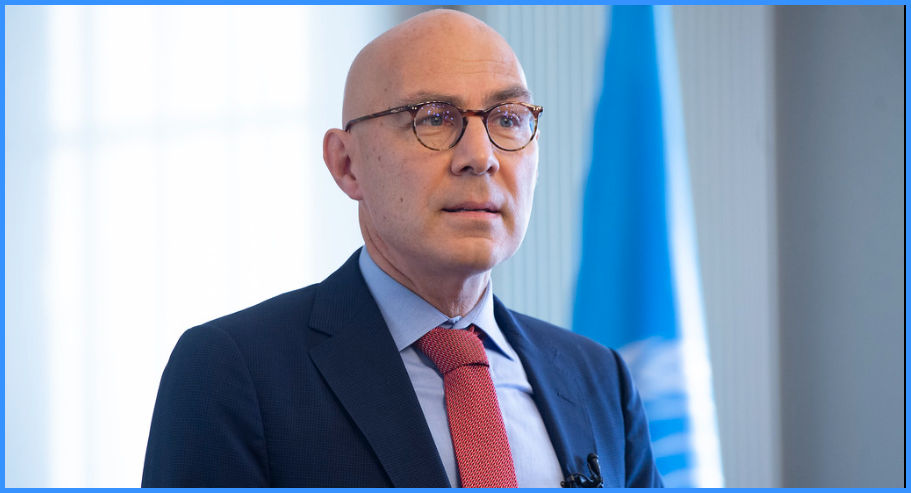
Volker-Turk-UN-High-Commissioner-for-Human-Rights-Flickr-Picture-by-UN-Geneva