The impacts of the joint US-Israeli operation against Iran, which began on February 28, will be felt globally in ways that we cannot yet foresee. Financial markets are reacting negatively to the offensive, and the price of Brent crude oil has risen by 25% since the attack began.
Iran has also announced that it will close the Strait of Hormuz. If the blockade is effective and prolonged, the world will face a very turbulent economic outlook in the near future, and Europe will not be spared.
Many Middle East countries have already been subject to Iranian retaliation. Part of the EU’s territory is also within range of Iranian missiles. A British military base in Cyprus was bombed in a drone attack on March 1.
Given the presence of American military forces in south-eastern Europe, which have been deployed to deter Russia as part of Nato operations, the possibility of an attack by Iran on European territory cannot be ruled out. This could lead to Article 5 of the North Atlantic Treaty being invoked – which has not yet happened – and the consequent involvement of Nato in the war.
Europe’s unequal, unclear response
Whether it likes it or not, Europe is already involved in this new episode of violence. But the EU’s position thus far has been lukewarm and uneven. Lacking a cohesive common position, it is keeping a low profile and resorting to platitudes – calls for restraint, respect for international law, use of diplomacy – in order to maintain a balance that satisfies everyone and avoid committing to anything.
The contrast between European countries speaks volumes in itself, and reveals the level of cohesion on this issue within the EU. France, Germany and the United Kingdom (a non-EU member) are states with a clear regional leadership vocation that played an active role in the 2015 Iran nuclear deal. Their willingness to take defensive measures against the Islamic Republic can be interpreted as support for US operations.
Greece has joined them. Though it has made no formal declaration, two Greek navy units were dispatched to Cypriot waters to support the defence of the territory.
Other EU countries are remaining deafeningly silent and, in general, staying on the sidelines. Some, such as the Baltic republics and Poland, are closer to the United States but remain cautious, while others such as Ireland and Austria have taken a more critical but ultimately similar stance.
The rest, who make up the majority, have said very little. None of those hosting US bases have placed any obstacles to the military forces using them or their airspace in support of operations. There is one major exception.
Spain says “no to war”
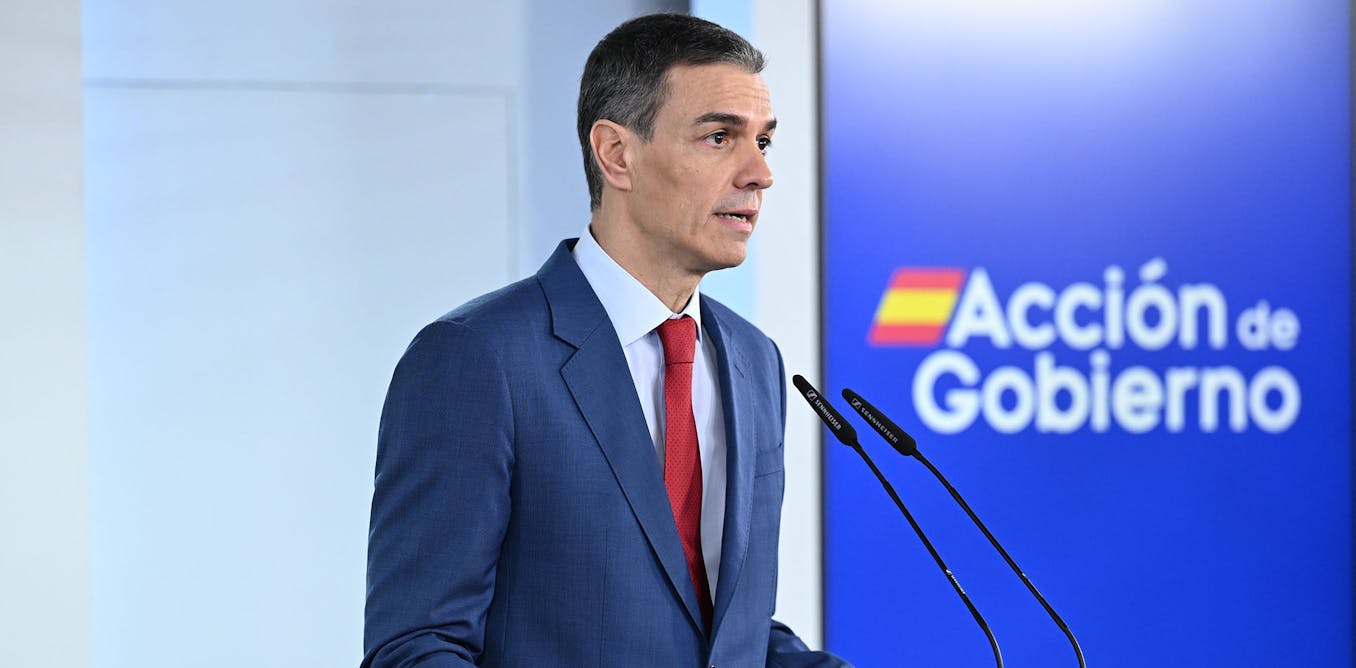
In this panorama, Spain stands alone. The Spanish government has vocally objected to the operation, which it considers a violation of international law. Madrid is not alone in this assessment, which is shared by Ireland, Austria and Malta.
But this is where the similarities end. Spain, acting alone, has made itself the champion of opposition to US action, reviving the slogan “no a la guerra”, “no to war”, that the Socialist Party used in its opposition to the Iraq War in 2003. It has put its words into action, denying the US, its main military ally, the use of its bases on Spanish territory at the very moment when it needs them most.
Reaction from the US administration has been fierce. The US Treasury Secretary Scott Bessent has been particularly harsh, saying that Spain’s position has “put American lives at risk”.
Spain’s actions present it, in the eyes of the United States, as an unreliable partner. There will undoubtedly be reprisals, which will not be good for national interests. The US has already threatened Spain with trade sanctions, and Spain has since firmly reiterated its “no to war” stance. It is also sending a frigate to Cyprus, for the explicit purpose of defending the island nation.
In an unpredictable and escalating situation, the lack of a cohesive European position could end up exacerbating the continent’s vulnerability. More than ever, the crisis is testing Europe’s ability to act as a strategic player, as opposed to a mere spectator to the decisions made by others.
A weekly e-mail in English featuring expertise from scholars and researchers. It provides an introduction to the diversity of research coming out of the continent and considers some of the key issues facing European countries. Get the newsletter!