Over the last quarter of a century, it has been hard to look at Venezuela objectively. Politically, it is often interpreted more as a symbol than as a society: for the right, a recurring argument to discredit left-wing politics, and for the left, an uncomfortable topic that is best avoided.
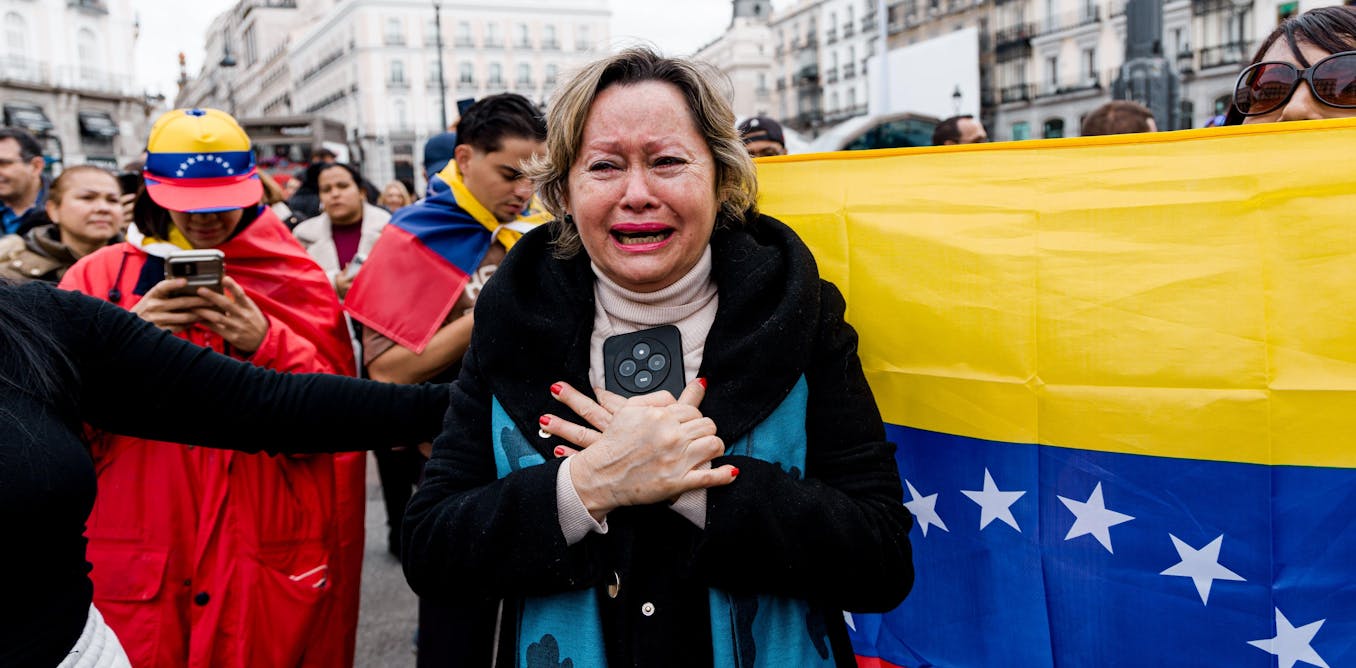
But both of these perspectives overlook the country’s authoritarian drift and its human consequences, making it hard to understand why much of the Venezuelan diaspora greeted the US intervention on Jan 3 with relief, and even happiness.
Geopolitical precedents
From an international perspective, there are now clear, serious risks. Iraq and Libya show how toppling an authoritarian regime can easily lead to a lengthy period of instability, violence and institutional collapse, with all the suffering this entails.
Furthermore, US president Donald Trump did not present the invasion of Venezuela as an action taken on behalf of the Venezuelan people. Instead, he has been explicit about his strategic interests. His actions thus undermine the basic principles of international law and set a dangerous precedent, which makes his warnings to Colombia and statements about Greenland even more disturbing. For all these reasons, condemnation of the US intervention must be clear and unwavering.
However, such condemnation coexists with the reality faced by the majority of Venezuelan people, for whom life in the country has long been an experience of daily suffering.
Read more:
Venezuelans are reacting to Maduro’s capture with anger, fear, hope and joy
The Venezuelan diaspora
This reality is what guides my own approach to Venezuela, which is rooted in both personal and academic perspectives. Through personal connections, I sought to understand the country during the Chávez era, and I have subsequently analysed the migration patterns of displaced people, as well as the migration policies of Colombia and Peru, the main recipients of an exodus of nearly eight million people.
My research has reinforced a view that is less ideological, and more attentive to human consequences. It has shown me how, behind the political debates, there are countless stories of loss and interrupted life projects.
Since 2017, there has been a broad consensus, both inside and outside Venezuela, on the need for political change. This has been consolidated by economic collapse and growing autocratisation under Nicolás Maduro’s regime, evident in the worsening humanitarian crisis and exodus, its repression of protests, and the replacement of the National Assembly with a Constituent Assembly.
The consensus was not ideological. It was born from the conviction that the system had ceased to guarantee fundamental rights and minimal living standards.
Opposition and elections in 2024
A divided opposition meant that this consensus did not crystallise until after the 2024 presidential elections, which were held under unfair, undemocratic conditions. The disqualification of opposition candidate María Corina Machado, elected in an October 2023 primary process, was followed by that of her successor, Corina Yoris, as repression intensified. In addition, nearly 30% of the Venezuelan population – those who had been forced to leave the country – were unable to vote.
After the election on July 28, 2024, the National Electoral Council proclaimed Maduro as president. However, the opposition meticulously gathered and verified records with the support of organised citizen groups. They managed to show that they had in fact won with 67% of the votes.
Winning under these conditions had enormous symbolic significance, but it did not translate into regime change. Rights violations continued without immediate consequences.
Faced with this sustained deterioration, the international community failed to mount an effective response. Neither the diplomatic blockade of 2019 that followed the breakdown of constitutional order, nor the Barbados Accords (which aimed to pave the way for guaranteed elections in 2024) were successful.
Read more:
Venezuela’s leader may be gone, but his regime remains – with a new chief in Washington
Exhaustion and relief
In this context of exhausted stagnation, the relief, or even hope, felt by much of the Venezuelan diaspora after the US intervention starts to make sense. This is how some of the people I have spoken to describe it.
My Venezuelan friends Andrés, César and Génesis emigrated first to Peru, and then to Spain. Their reactions to the US intervention have been nostalgia and restrained joy. They now believe the situation will improve, and that eventual regime change could bolster the country’s economy. If this is the case, then César’s father might be able to receive cancer treatment without depending on remittances from abroad.
Another friend, Alejandra, left Venezuela for Colombia after the 2017 protests. Since the US intervention, she has been caught between worry over President Trump’s policies towards Latin America and hope that things might work out this time. She is weighing up the possibility of returning.
The sentiments expressed by many Venezuelans are not just an emotional reaction, but also a rational assessment. The country had been in a state of collapse for years, with any domestic avenues for change closed off. Although Trump’s statements are not encouraging – ambitions regarding oil, postponing democratic transition, risk of armed conflict – there seems to be hope, however fragile, for change.
Andrés and Alejandra both reject the “inhumane” nature of Trump’s policies and acknowledge his interests in Venezuela. But they also believe that Venezuela’s oil was already in the hands of Russia and China, and agree that there is now a possibility that the country could, over time, once again become a place where they could live.
Contradictory, fragile hope
The paradox is clear: what the world sees as a serious disruption of the international order is also, for many people, the first step out of a years-long dead end, even though it may not ultimately lead to real change.
We can recognise this contradiction without legitimising the intervention or ignoring its dangers. But the events have a different political significance for those living in a society undergoing prolonged collapse. For many Venezuelans, merely breaking what seemed like absolute paralysis is enough to see this moment as a new beginning, however fragile and uncertain it may be.