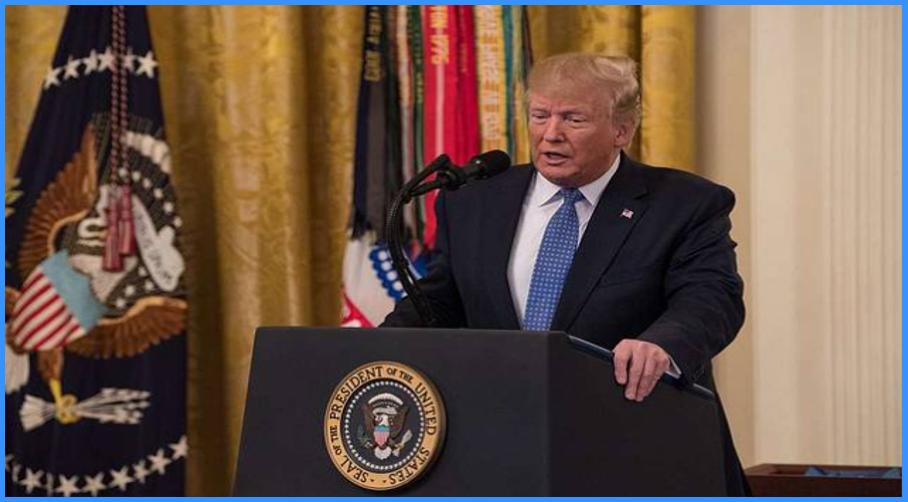
WASHINGTON / DUBAI — Amid a historic paralysis of global energy markets, President Donald J. Trump issued a definitive directive on Saturday, March 14, 2026, promising that the United States and a growing international coalition will restore order to the Strait of Hormuz. In a series of high-profile statements, the President characterized the current blockade as a “failed last-ditch effort” by Tehran and pledged to return the waterway to an “open, safe, and free” status “very soon.”
The declaration follows a massive U.S. strike on Kharg Island, Iran’s primary oil export hub, and signals a shift toward active naval intervention to break the two-week-old shipping freeze.
“Open, Safe, and Free”: The International Coalition
Speaking from Florida, President Trump revealed that the U.S. is not acting alone in its mission to secure the waterway through which 20% of the world’s oil and liquefied natural gas (LNG) passes.
- A Global Naval Front: The President claimed that “many countries”—specifically calling upon the UK, China, France, Japan, and South Korea—would contribute warships to a multi-national escort operation.
- Escorts Imminent: While the Pentagon has been cautious regarding timelines, the President told reporters on Friday evening that U.S. Navy-led escorts for commercial tankers would begin “very soon” to counter Iranian drone and mine threats.
- Risk Insurance: The administration is currently finalizing a “Risk Insurance” protocol, where the presence of the U.S. 5th Fleet would serve as a physical and financial guarantee for shipping companies that have largely abandoned the route.
The Kharg Island Ultimatum
The diplomatic push is backed by a stark military warning. Early on Saturday, the President confirmed that U.S. Central Command (CENTCOM) had “obliterated” every military target on Kharg Island, the export terminal for 90% of Iran’s crude.
- Calculated Restraint: Trump noted that while the island’s naval bases and air defenses were destroyed, he chose not to “wipe out the oil infrastructure” for “reasons of decency.”
- The “Reconsideration” Clause: In a direct social media post, the President warned: “Should Iran, or anyone else, do anything to interfere with the Free and Safe Passage of Ships through the Strait of Hormuz, I will immediately reconsider this decision.”
- The Energy Shock: The threat aims to curb the volatility that saw oil prices spike to $120 a barrel on Monday. Trump dismissed Tehran’s claims of $200 oil, asserting that a massive 400 million barrel release from global strategic reserves will bridge the gap until the Strait is reopened.
Economic and Strategic Stakes
The blockage has created a “tank-top” crisis for Gulf producers, with Iraq forced to slash production by 3 million b/d and Qatar halting LNG shipments due to the threat of drone strikes.
- American Energy Dominance: President Trump leaned into his “Energy Dominance” policy, arguing that U.S. shale production makes the nation less vulnerable to the shock than its adversaries. “The U.S. is the largest oil producer in the world… when oil prices go up, we make a lot of money,” he noted, though he acknowledged the domestic pressure of rising gasoline prices.
- The “Saturday Ultimatum”: As the deadline for an “unconditional surrender” from Iran’s leadership approaches, the administration remains firm. Secretary of Defense Pete Hegseth reiterated that the U.S. is prepared to strike “twenty times harder” if the maritime interference continues.
A Region on the Brink
Tehran has responded with defiance, with the IRGC warning that any strike on Iranian energy assets will lead to the destruction of all oil infrastructure in the region belonging to U.S.-linked companies. With 2,200 Marines and the USS Tripoli steaming toward the Gulf, the physical contest for the world’s most vital maritime artery appears to be entering its most volatile phase.