BRUSSELS — In a bid to dismantle the bureaucratic hurdles that have long stifled European entrepreneurship, European Commission President Ursula von der Leyen has officially unveiled “EU Inc”—a transformative legislative framework designed to harmonize corporate rules across the 27-nation bloc. Announced on Wednesday, March 18, 2026, the initiative aims to allow entrepreneurs to register a new company in just 48 hours for a flat fee of under €100.
The “EU Inc” status represents a “28th regime” for corporate law, allowing businesses to operate under a single set of rules rather than navigating 27 disparate legal systems.
Breaking the “Bureaucracy Barrier”
For decades, European startups have struggled with the “fragmentation tax”—the high cost of legal and administrative compliance when expanding from one member state to another. Currently, launching a cross-border business in Europe can take weeks and cost thousands of euros in notary and legal fees.
- The 48-Hour Guarantee: Under the new mandate, all member states must provide a fully digitalized “Single Entry Point” for company registration, ensuring a turnaround of no more than two days.
- The €100 Cap: To encourage “garage-to-global” innovation, the Commission is imposing a strict price ceiling on registration and administrative startup costs.
- A Single Rulebook: EU Inc companies will follow a unified set of regulations regarding corporate governance, insolvency, and digital reporting, effectively removing the need for local subsidiaries in every country of operation.
Scaling Without Borders
The initiative is a direct response to the “innovation gap” between the EU and the United States. By simplifying the scaling process, Brussels hopes to prevent “brain drain,” where successful European founders move their headquarters to the U.S. or Singapore to access a more streamlined capital market.
- Cross-Border Mobility: An EU Inc entity will be recognized automatically in all member states, allowing for seamless hiring, contracting, and capital raising across the Single Market.
- Investor Clarity: The standardized legal structure is expected to attract more venture capital by providing investors with a predictable, transparent framework that eliminates the “hidden risks” of unfamiliar national laws.
- Digital-First Compliance: The framework mandates “Once-Only” data submission, meaning businesses will no longer have to provide the same information to multiple national authorities.
The Legislative Path to Implementation
While the proposal has been hailed by trade associations and tech hubs in Berlin, Paris, and Stockholm, it must now navigate the European Parliament and the Council.
“We are replacing 27 legal labyrinths with one open door,” President von der Leyen stated during the launch. “If a student in Tallinn or an engineer in Lisbon has a world-changing idea, they should be able to launch it for the price of a dinner and in the time it takes to fly across the continent.”
Critics, particularly from some national justice ministries, have raised concerns regarding anti-money laundering (AML) checks and the potential for “letterbox companies.” However, the Commission has integrated advanced AI-driven verification and the European Digital Identity (EUDI) wallet into the EU Inc registration process to ensure rigorous oversight without sacrificing speed.
Economic Impact Forecast
Preliminary impact assessments suggest that EU Inc could save European businesses upwards of €4.5 billion annually in administrative costs and boost the bloc’s GDP by 0.8% by 2030 through increased entrepreneurial activity.
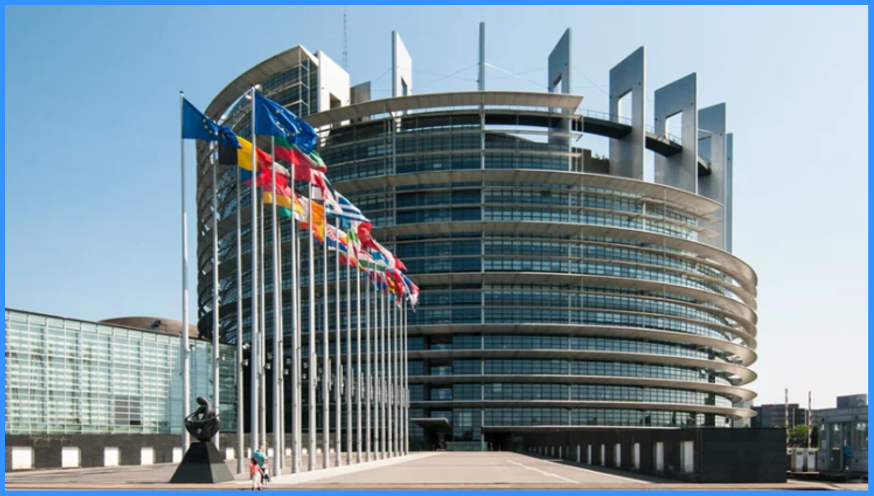
The EU Parliament building in Strasbourg on ndla by Samfoto