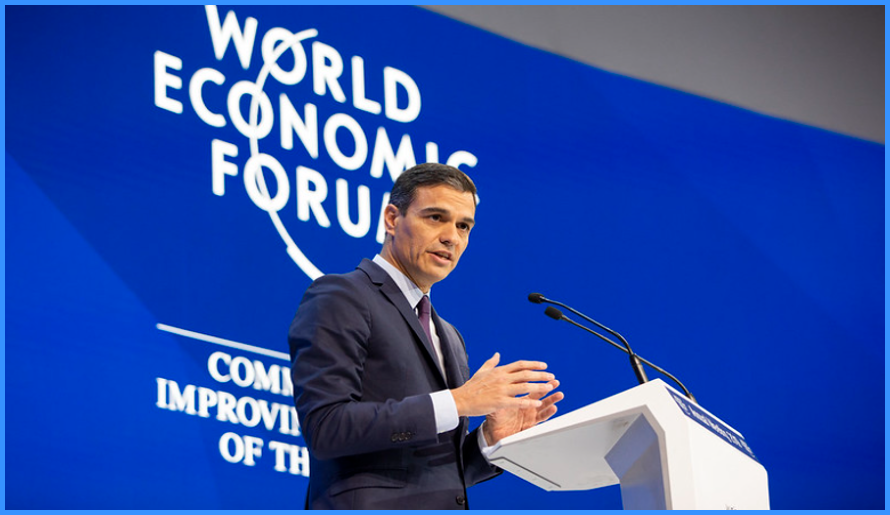
MADRID — In a move that has sent shockwaves through the NATO alliance, Spanish Prime Minister Pedro Sánchez has formally rejected a request from the United States to use Spanish military bases for offensive operations against Iran. Speaking in a televised address on Wednesday, March 4, 2026, Sánchez declared that Spain would not be “complicit” in a conflict he described as “unjustifiable and dangerous,” opting instead to defend the primacy of international law over military escalation.
The decision has triggered a sharp diplomatic rift with the Trump administration, marking the most significant strain in the U.S.-Spain relationship since the 2003 Iraq War.
Drawing the Red Line at Rota and Morón
The core of the dispute lies in the jointly operated naval base at Rota and the air base at Morón de la Frontera. Under longstanding bilateral agreements, the U.S. maintains a significant presence at these hubs, which are critical for transatlantic logistics.
- The Refusal: Foreign Minister José Manuel Albares clarified that while the bases remain available for humanitarian and evacuation missions, any combat sorties or “Midnight Hammer” strikes require explicit Spanish authorization—which will not be granted.
- UN Charter Mandate: Madrid maintains that because the current campaign lacks a United Nations Security Council mandate, using Spanish soil for strikes would violate both Spanish sovereignty and the UN Charter.
- Strategic Relocation: In response to the blockage, the U.S. has already begun rerouting assets. At least 15 KC-135 refueling aircraft were reportedly relocated from Andalusia to Ramstein, Germany, and other allied hubs earlier this week.
Trump’s Retaliation: Trade and Retribution
President Donald Trump has reacted to the news with characteristic intensity. Following a meeting with German Chancellor Friedrich Merz, Trump labeled Spain a “terrible” ally and threatened to “cut off all trade” with the country—a move that could jeopardize billions in transatlantic investment.
“We could use their base if we want; we could just fly in and use it,” Trump stated on Tuesday, a remark Sánchez later rebuked as “playing Russian roulette with the destiny of millions.”
The White House also signaled a potential “trade embargo,” though EU officials were quick to note that such a move would trigger the bloc’s Anti-Coercion Instrument, effectively a “trade bazooka” designed to protect member states from economic bullying.
A Principled Stand or Political Gamble?
Sánchez, who has emerged as one of Europe’s most vocal proponents of a “multilateral order,” framed his decision as a moral imperative. “The position of the Spanish government can be summarized in four words: ‘No to the war,'” he stated.
However, domestic critics and some NATO allies point to a growing “neutrality gap” within Europe:
- Portugal’s Divergence: In contrast to Madrid, neighboring Portugal has authorized the “conditional” use of its Lajes airbase for “defensive or retaliatory” strikes.
- The NATO Standoff: The friction comes as Trump continues to pressure Spain over its refusal to meet a 5% GDP defense spending target, a demand Sánchez has consistently resisted.
The Regional Ripple Effect
As the Middle East crisis deepens, Spain’s defiance has made it a symbol of European resistance to “unilateralism.” While the standoff complicates U.S. logistics in the Mediterranean, Madrid’s stance has also drawn praise from regional actors—including the Iranian government—who view it as “responsible conduct.”
For the global community, the “Spanish No” serves as a stark reminder: in the 2026 geopolitical landscape, even the closest of allies are no longer willing to offer a “blank check” for war.
Pedro Sánchez, Prime Minister of Spain Picture by Faruk Pinjo for WEF, Flickr