The pre-dawn capture of Nicolás Maduro and Cilia Flores on January 3, 2026, by U.S. forces has ignited a global debate that transcends the borders of Venezuela. While many Venezuelans celebrated the removal of a leader widely viewed as an autocrat, the operation raises profound questions regarding the legality of unilateral intervention, the jurisdictional reach of domestic courts, and the ethical management of a sovereign nation’s resources during a transition.
1. The Legality of the “Abduction” under International Law
From a strictly legal perspective, the U.S. operation faces significant hurdles. Under Article 2(4) of the UN Charter, states are prohibited from the “threat or use of force against the territorial integrity or political independence of any state.”
- The Crime of Aggression: Legal scholars from the University of Pennsylvania and Emory Law have argued that without a UN Security Council resolution or a demonstrable case of immediate self-defense, the raid constitutes a “crime of aggression.”
- Lack of Extradition: Because the U.S. and Venezuela do not share an active extradition treaty and the host government did not consent, the removal of a sitting head of state is characterized by critics as an illegal abduction.
- The “Ker-Frisbie” Doctrine: Despite these international violations, U.S. domestic law operates differently. Under the Ker-Frisbie doctrine, U.S. courts typically do not care how a defendant is brought before them—even by force—as long as they are physically present to stand trial. This means Maduro is unlikely to successfully challenge the New York court’s authority to try him.
2. Jurisdiction: U.S. Courts vs. The ICC/ICJ
A central point of contention is whether the Southern District of New York (SDNY) is the appropriate venue for a case of this magnitude.
- The Case for the ICC: The International Criminal Court (ICC) already has an open investigation into Maduro for crimes against humanity. Proponents of an international trial argue that the ICC or a specialized tribunal would provide a more “unbiased” forum, as its mandate focuses on human rights rather than narco-terrorism, which is the focus of the U.S. Department of Justice.
- The Case for U.S. Courts: The U.S. argues it has “universal-like” jurisdiction because the alleged drug trafficking (the Cartel of the Suns) directly harmed American citizens. Historically, the U.S. set a precedent with the 1989 capture of Manuel Noriega, who was tried in Florida despite similar international outcries.
3. Governance: Transitional Bodies vs. “Running the Country”
President Trump’s statement that the U.S. would “run” Venezuela until a transition occurs has sparked alarm among both allies and critics.
- Sovereignty Concerns: Customary international law and the Responsibility to Protect (R2P) framework emphasize that a “proper transition” should be led by a domestic transitional body—often a coalition of civil society and opposition leaders—rather than a foreign power.
- The Machado Factor: By declining to back opposition leader María Corina Machado, the U.S. has created a political vacuum. Analysts argue that bypassing recognized democratic leaders in favor of direct U.S. administration risks being perceived as “imperial tutelage,” which could fuel long-term local resistance.
4. Natural Resources and Foreign Investment
The President’s focus on U.S. companies developing Venezuela’s oil reserves is perhaps the most controversial element of the post-capture strategy.
- FDI vs. Control: While Venezuela’s energy sector is in desperate need of Foreign Direct Investment (FDI) and modernization, international law generally protects a nation’s “permanent sovereignty over natural resources.”
- The “Iraq Model” Risk: Critics warn that prioritizing U.S. multinationals over a transparent, competitive bidding process could delegitimize the new government. A more “judicious” approach would involve allowing an interim Venezuelan authority to open the economy to a diverse range of global partners, ensuring the revenue remains in blocked accounts for the benefit of the Venezuelan people rather than being managed directly by Washington.
The Way Forward: A Multilateral Roadmap?
To achieve a “safe and proper” transition, the way forward likely requires a shift from unilateralism to multilateralism:
- UN Oversight: Establishing a UN-backed transitional council to oversee elections.
- Hybrid Tribunal: Potentially creating a special court that includes international and Venezuelan judges to handle Maduro’s prosecution, ensuring global legitimacy.
- Economic Autonomy: Ensuring that the development of oil reserves is managed by a sovereign Venezuelan entity, even if heavily supported by U.S. technical expertise.
Ultimately, the legitimacy of this new chapter for Venezuela depends on the framework through which it is built; should the United States disregard universally recognized legal norms and institutional sovereignty, it risks assuming the role of a patriarchal hegemon—potentially mirroring the very authoritarianism it sought to dismantle.
The Path Ahead: Justice or Precedent?
As legal teams in the Southern District of New York prepare for one of the most consequential trials in modern history, the international community remains divided. The central question is no longer whether Nicolás Maduro should face justice, but whether the process of delivering that justice will strengthen or fracture the global order.
- The Judicial Choice: Proponents of a United Nations-backed tribunal argue that moving the case to a neutral, international venue would insulate the verdict from accusations of political bias and ensure its acceptance by the global South.
- The Economic Vision: For Venezuela to recover, the transition must prioritize a transparent, competitive market. Opening the energy sector to broad Foreign Direct Investment (FDI)—rather than exclusive bilateral agreements—is seen by many economists as the only way to restore the nation’s creditworthiness and domestic trust.
- A Sovereign Transition: The installation of a civilian-led transitional body, rather than direct foreign administration, remains the gold standard for lasting stability. Respecting the political agency of leaders like María Corina Machado may prove more effective in the long term than a period of “running the country” from Washington.
Closing Argument
The capture of Maduro has provided a rare, albeit controversial, opportunity to reset the trajectory of a failing state. However, the methods employed during this transition will serve as a permanent benchmark for international relations in the 21st century. Ultimately, the legitimacy of this new chapter for Venezuela depends on the framework through which it is built; should the United States disregard universally recognized legal norms and institutional sovereignty, it risks assuming the role of a patriarchal hegemon—potentially mirroring the very authoritarianism it sought to dismantle.
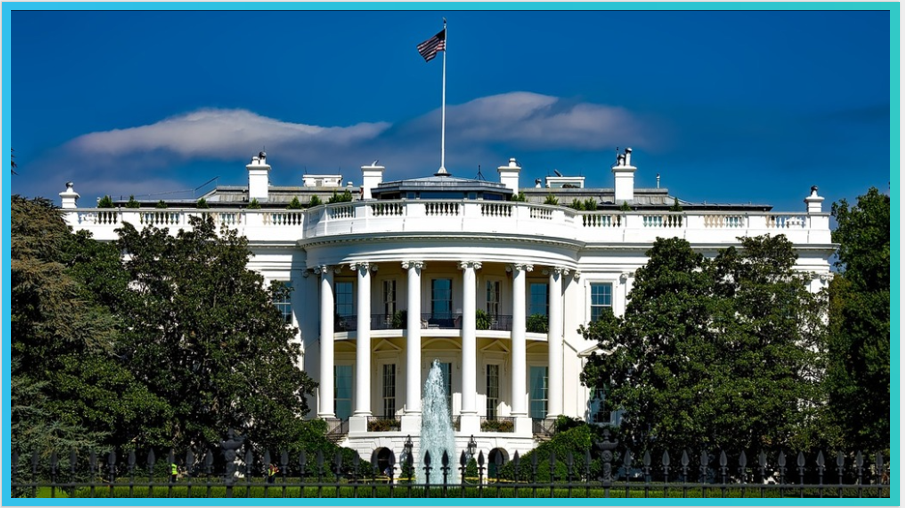
The-White-House-Washington-D.C-Picture-from-Picryl