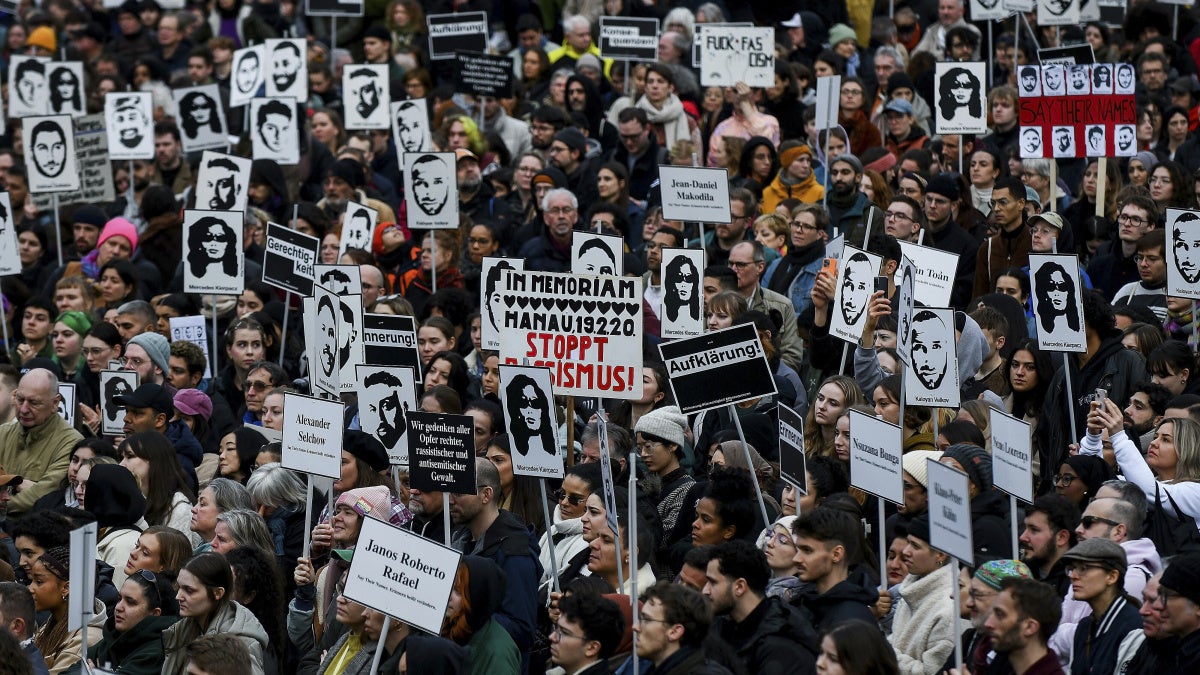
Six years ago, on February 19, 2020, a far-right extremist shot and killed nine and injured six people predominantly of Muslim background in Hanau, Germany. The attack was motivated by racism and Islamophobia.
Today, we remember:
Ferhat Unvar
Hamza Kurtović
Said Nesar Hashemi
Vili Viorel Păun
Mercedes Kierpacz
Kaloyan Velkov
Fatih Saraçoğlu
Sedat Gürbüz
Gökhan Gültekin
The attack in Hanau was not an isolated racist hate incident. Official statistics reflect a steep rise of racist, antisemitic, and Islamophobic hate crime, with actual numbers of incidents expected to be much higher. Systemic anti-Muslim discrimination remains to be a daily reality in Germany as a result of ineffective government protection of Muslims and persons perceived as such. Where protection falls short, groups targeted by hate crime will face an environment that can threaten their lives.
The authorities’ investigations into the attack were deeply flawed and, still today, there are unresolved questions about the police’s response when some victims called the emergency hotline as the incident unfolded. A comprehensive official investigation has not been conducted and, six years later, victims’ families are still fighting for accountability.
The families’ efforts to commemorate their loved ones have also come under attack after they criticized political actors.
Bereaved families, survivors, and supporters founded the Initiative 19. Februar Hanau as well as individual initiatives in victims’ names. These grassroots groups have become a central, survivor‑led force in the advocacy for remembrance, justice, and full accountability. Ahead of the sixth anniversary, the initiative is once again calling for commemorations and acts of solidarity across Germany.
Serpil Temiz Unvar, the mother of Ferhat Unvar, said last year that these initiatives “have contributed to society coming together in this case more than in similar events in the past. But these individual efforts, as important as they are, are not enough to bring about fundamental societal transformation.”
A 2023 government-commissioned report on anti-Muslim hostility in Germany—following the Hanau attack—showed the widespread nature of hatred and discrimination affecting Muslims and persons perceived as such and outlined concrete recommendations for government action.
However, the German government is not taking action. As far-right political forces gain strength in Germany, the government should finally take seriously the threats against racialized communities and support civil society fighting for their protection every day.
The government should invest in protecting Muslims and all other minority communities in Germany, such as through sustained funding for independent, community‑based protection and support centers, because it is ultimately an investment in the safety and cohesion of the entire society.