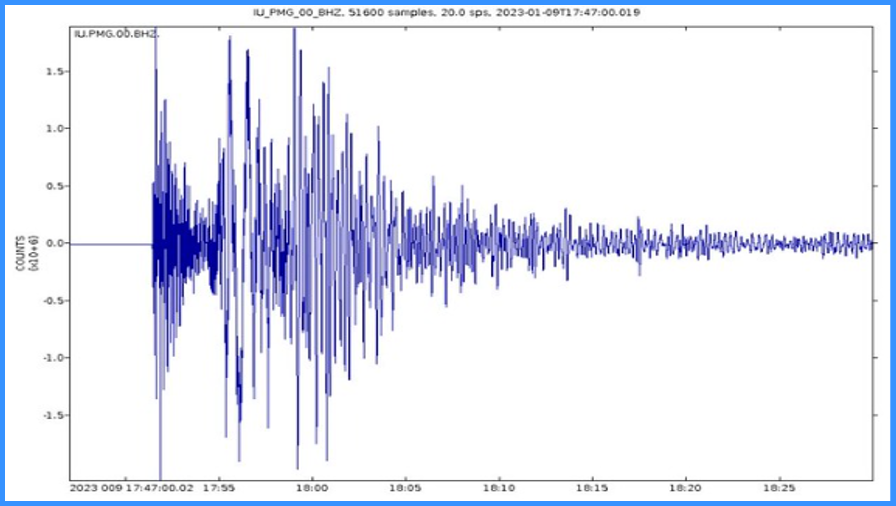
GERASH, FARS PROVINCE — A moderate, shallow earthquake with a magnitude of 4.4 struck southern Iran on Tuesday, March 3, 2026, adding a layer of natural volatility to a region already engulfed in a high-intensity military conflict. The tremor, recorded at 10:24 AM local time, was centered approximately 52 kilometers northwest of Gerash at a depth of 10 kilometers, according to the U.S. Geological Survey (USGS).
While light earthquakes are a frequent occurrence along the Zagros fold-and-thrust belt, the timing of the event has triggered heightened anxiety as the joint U.S.-Israeli air campaign against the Iranian regime enters its fourth decisive day.
Natural Tremors Amidst Kinetic Warfare
Initial reports from Fars province indicate that the shaking was felt widely across the rural districts of Gerash and Khonj, prompting some residents to flee their homes. However, local emergency services have confirmed no immediate casualties or significant structural damage directly attributed to the quake.
- Seismic vs. Kinetic: Seismologists were quick to clarify that the event was a natural tectonic shift. Despite social media speculation, experts noted that the “signature” of the 4.4 magnitude quake was consistent with crustal stress release and showed no characteristics of a man-made explosion.
- Infrastructure Stress: The earthquake occurred as “Operation Epic Fury” continues to target strategic sites across the Islamic Republic. Following the death of Supreme Leader Ayatollah Ali Khamenei, the conflict has escalated into a multi-front war involving missile exchanges across the Persian Gulf.
Retaliatory Missteps and the Pariah Risk
The execution of the conflict has drawn sharp criticism for its heavy humanitarian toll and strategic “mismanagement” on both sides. In the southern city of Minab, near the earthquake’s broader regional vicinity, Iran held mass funerals on Tuesday for 165 schoolgirls and staff killed in what Tehran describes as an “indiscriminate” strike on a civilian educational facility.
Conversely, Iran’s subsequent response—targeting U.S. bases in neighboring countries—has been described by analysts as strategically counterproductive. Furthermore, the threat to block the Strait of Hormuz serves as an aggravation of the crisis that transcends a bilateral dispute. By risking global energy paralysis, Iran’s interim leadership faces further isolation, potentially cementing the nation’s status as a pariah state at a time when diplomatic legitimacy is most vital.
Global Plea for Restraint: UN Warns of “Uncontrollable Conflagration”
As both natural and man-made disasters converge on the Iranian plateau, United Nations Secretary-General António Guterres has issued an urgent plea for “maximum restraint.” Warning that the Middle East is standing on the precipice of a total, uncontrollable conflagration, Guterres emphasized that the window for a “war of words” over a war of missiles is rapidly closing.
With the U.S. suggesting the campaign could last for several more weeks and Iran’s interim leadership vowing an open-ended response, the 4.4 magnitude tremor serves as a stark reminder of the fragile ground upon which the region’s security currently rests.