
Shortlisted for the 2025 Southwood Prize
About the research
Overview
Seabirds and fisheries almost inevitably meet at sea because we depend on the same marine resources. Interactions become direct when seabirds deliberately follow vessels to take advantage of what seems like an easy meal. We have long known this can pose a serious threat. A seabird may dive for bait on a longline or approach a trawler to feed on discards, but what looks like an opportunity can quickly end in bycatch, drowning after being hooked, or injury from colliding with fishing gear.
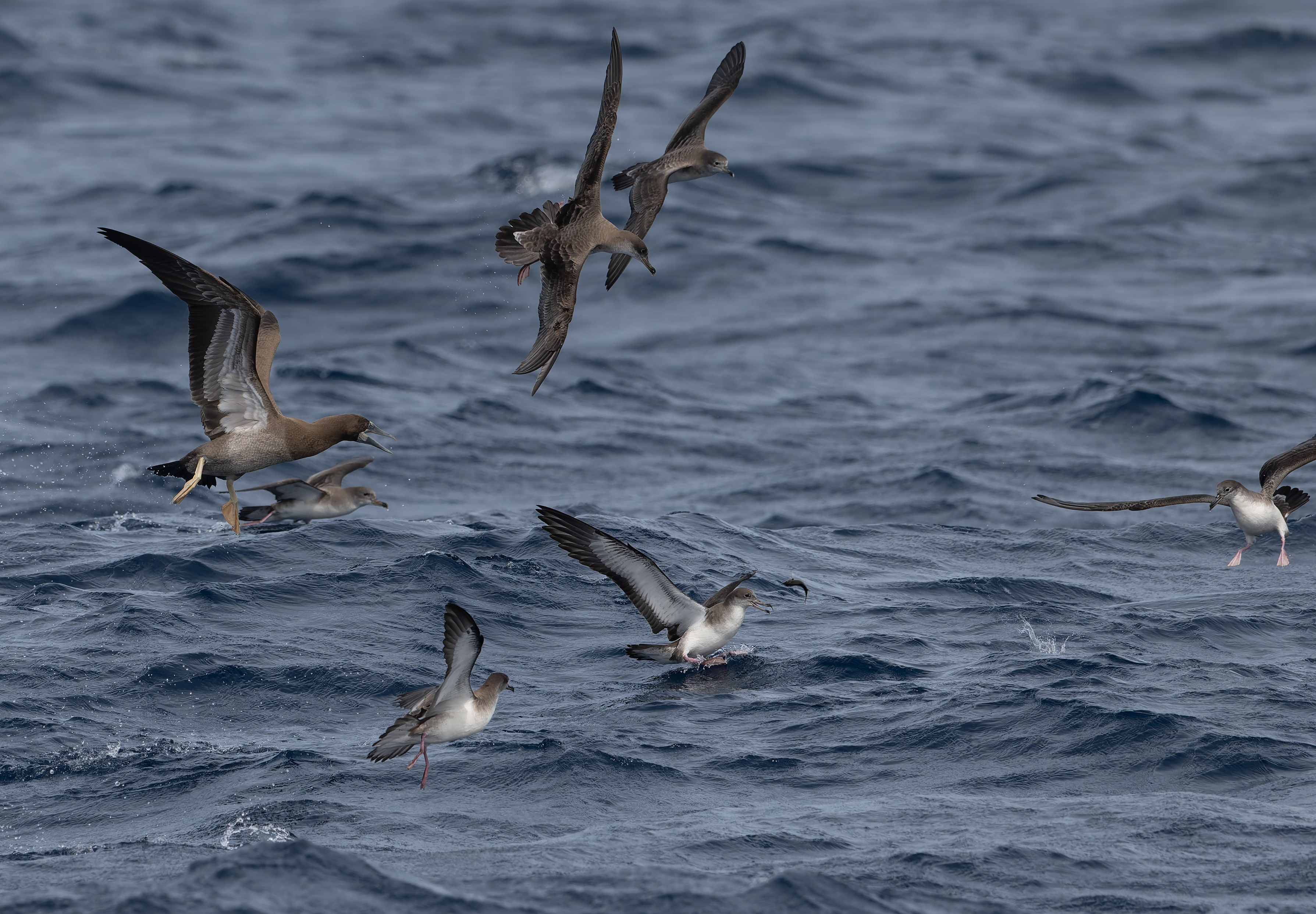
In Northwest African waters, one of the world’s most important seabird hotspots and a heavily fished region, this concern felt especially urgent. So, with an amazing network of collaborators, we combined tracking data from nine species with vessel trajectories to ask: which species meet which fleets, where, and what drives these interactions?
Surprises and challenges
One of the biggest challenges was integrating the enormous, high resolution datasets from both seabirds and vessels, ensuring the metadata were correct and running the right analyses to answer our questions. We had never worked at this scale before, and mentorship from colleagues who openly share code and workflows was crucial. When we produced this first fine scale picture of seabirds and vessels in this rich biodiversity area, it became clear that none of these birds are truly alone at sea. All nine species were associated with vessel activity.
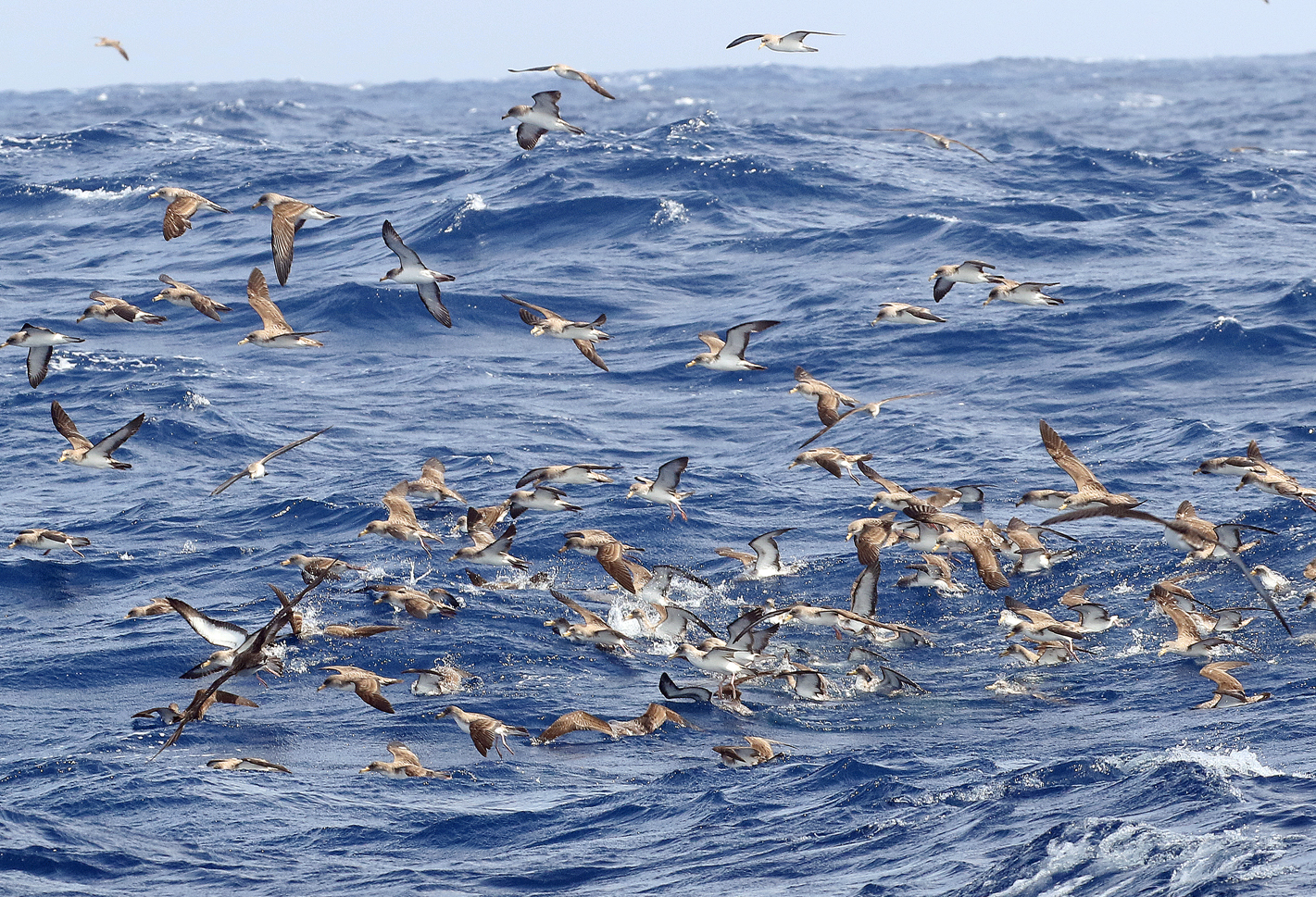
Fortunately, not all seemed strongly attracted to industrial fisheries and may therefore face lower direct risks such as bycatch. However, Audouin’s gull, Cory’s shearwater, and the endemic Cape Verde shearwater stood out as potentially more exposed, highlighting that seabirds do not all respond to fisheries in the same way, even when they share the same waters.
Next steps and broader implications
What we have shown is seabird exposure to industrial fishing activity. The urgent next step is to quantify mortality. To understand the real consequences for populations, we need to combine interaction data with reliable bycatch records and translate this fine scale overlap into demographic impacts. This will require a major effort to strengthen observer programmes and install electronic monitoring on the fleets we identified as priorities in our study. However, this will not be simple and will require multinational coordination.
At the same time, we need to better identify and understand the vessels involved in these interactions. In this region, weak regulation and illegal, unreported, and unregulated fishing are known to occur, which limits transparency in vessel activity. As a result, it becomes harder to clearly understand the scale of the problem and to respond effectively.
Finally, we still lack information about the impact of small scale fisheries, which represent more than half of all reported fishing vessels in the area and are essential for livelihoods, economic prosperity, and food security in West African coastal countries. However, there is still a major gap in our understanding of the bycatch rates they may have on seabird populations.
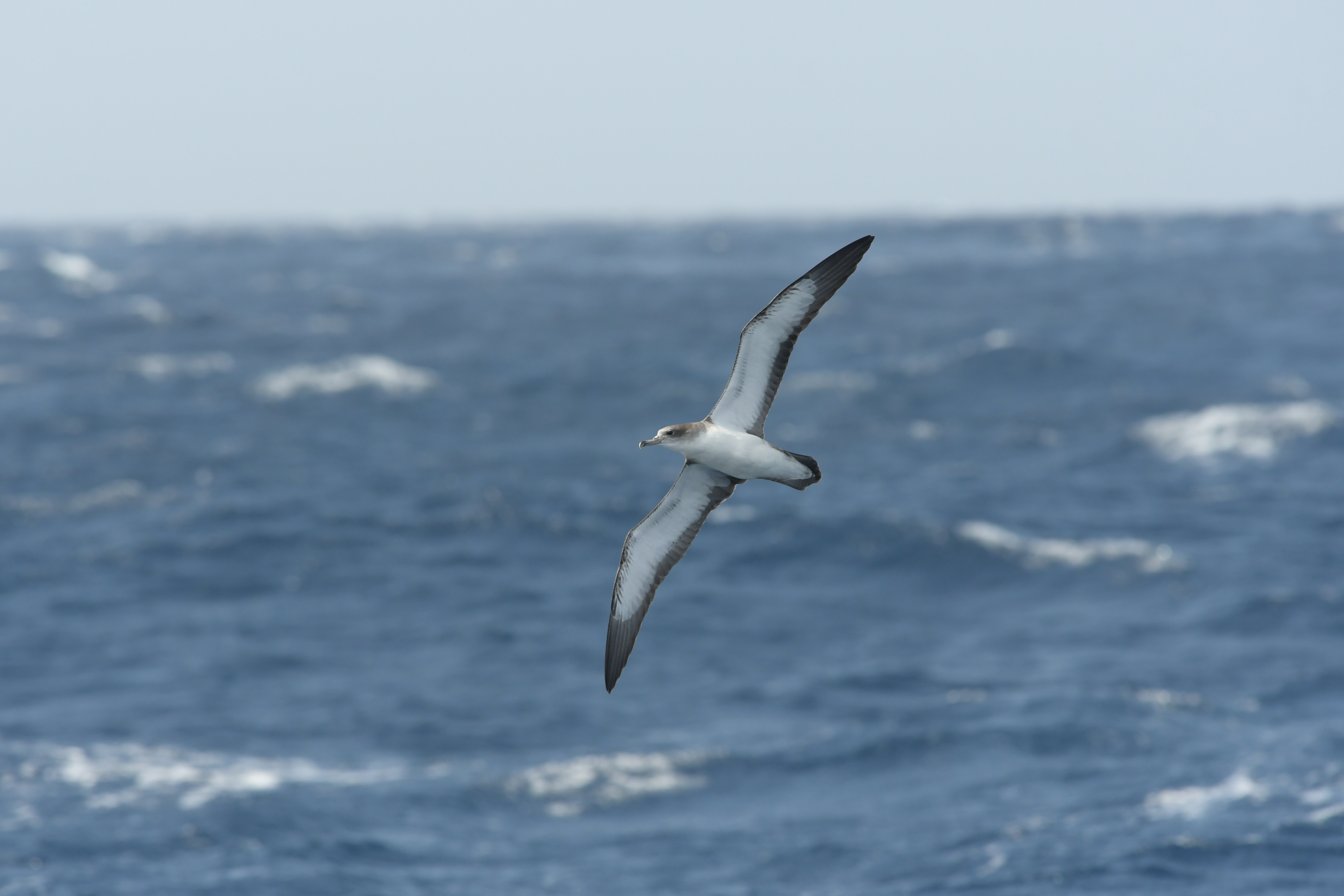
Our work shows that seabird exposure to industrial fishing in Northwest African waters is spatially explicit, varies across species, and is shaped by environmental conditions and vessel activity. This means conservation cannot be generic, and we now have the evidence to take the first steps towards focusing on specific fleets, areas, periods, and species. This can provide clear guidance on where mitigation measures such as night setting, bird scaring lines, and discard management are likely to be most effective. It also opens the possibility of anticipating high risk interactions, helping to inform fishers and support more dynamic management approaches. Finally, and importantly, for management to be effective in Northwest African waters, all these actions must be taken at a multinational level, reflecting the shared responsibility for conserving these species across borders.
About the author
Current position
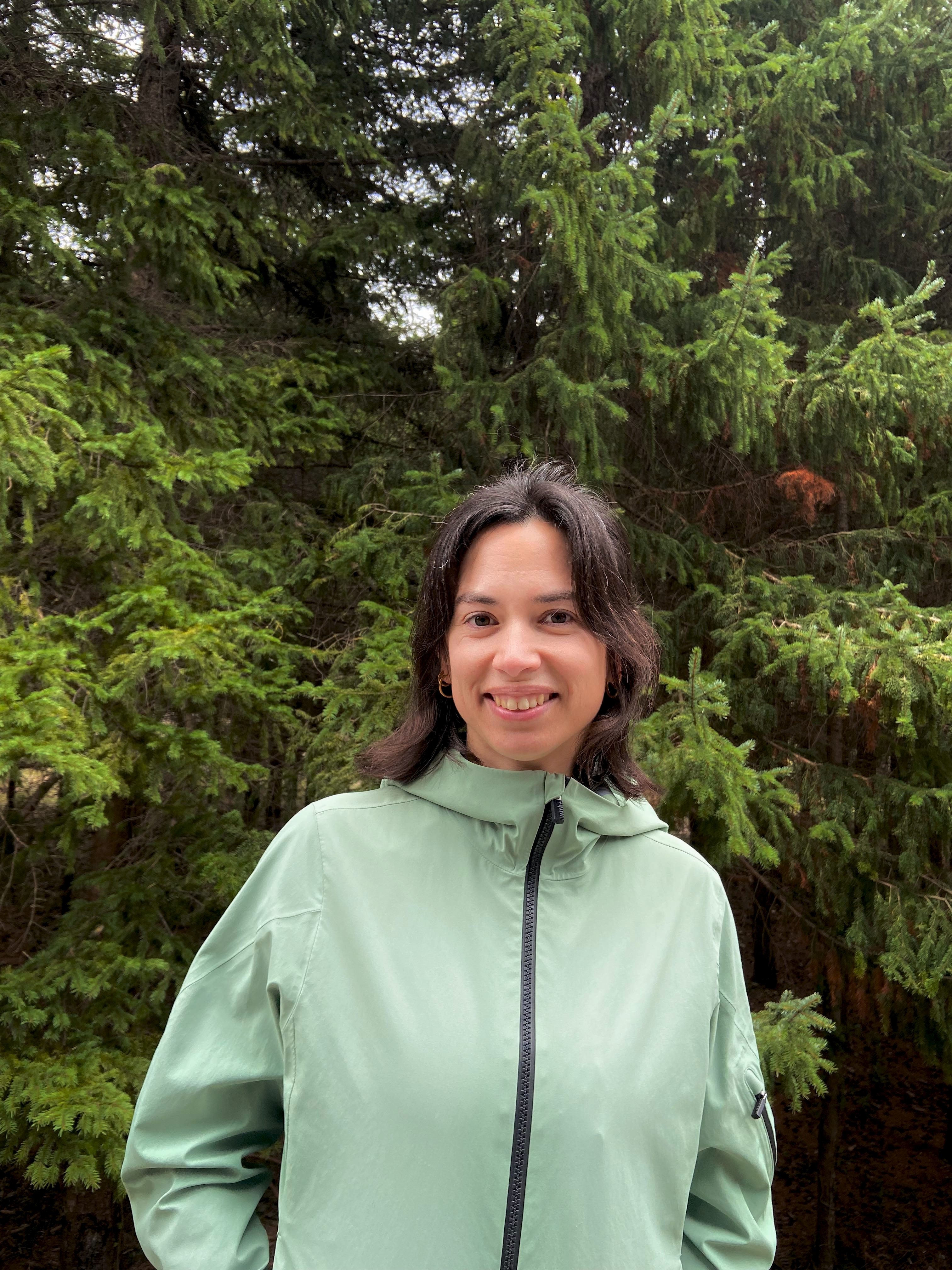
I feel very lucky to be currently working as a postdoctoral researcher on the REDUCE project, which focuses on reducing bycatch of endangered marine megafauna in the Eastern Central Atlantic. The project brings together scientists, policymakers and local communities to develop practical solutions that can make industrial fisheries more sustainable while protecting marine wildlife. This transition from PhD to postdoc, felt very natural. My PhD co-directors, Dr Jacob González-Solís and Dr David March, are deeply engaged in the project, which began just as I was finishing my PhD. In many ways, it feels like a continuation of the work I had been doing, now expanded into a broader, more applied and interdisciplinary context.
Getting involved in ecology
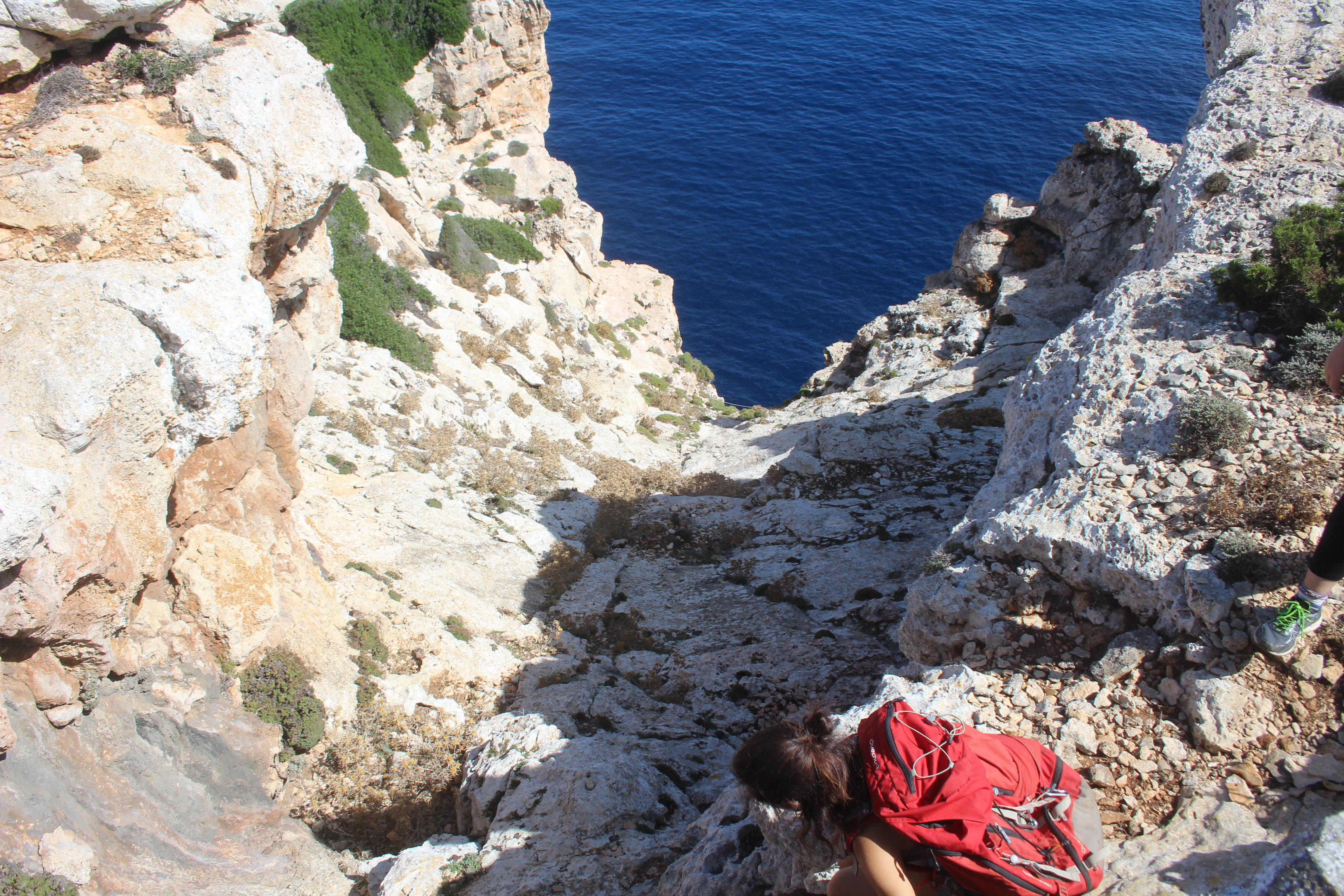
I grew up in a small village about 20 minutes from two very different protected natural areas. On one side there were mountains and forests, and on the other a huge river delta full of water, birds and the sea. Looking back, I’m sure those places had a lot to do with it. But not everything was outdoors. Like many kids of my generation, I grew up obsessed with watching nature documentaries on TV. I remember watching researchers working with wild animals and imagining what that life would be like. So you can imagine that years later, when I found myself on sea cliffs at night with a fantastic team who later became close friends, waiting for shearwaters in the dark, it felt incredibly exciting. After my master’s thesis, I had the chance to join that team and start a PhD, and I think that’s when I truly became part of the ecology world.
Current research focus
In the REDUCE project, I am still very much working in the same area. I continue to work on seabird-fishery interactions, but I am also expanding into related topics such as fishing effort distribution, illegal practices, and the impacts of ghost gear in West African waters.
The project is highly collaborative, and the outputs from each researcher often feed into the work of others. I am learning a lot about how ecological research can connect directly with management tools that genuinely reduce bycatch, not only of seabirds but also of other marine megafauna such as elasmobranchs, turtles and cetaceans.
Advice for fellow ecologists
A PhD often involves long periods in the field, hours of programming to analyse data, and, especially in the final months, the pressure of time running out. Struggling is common, particularly because everything is new and there is so much to learn. During that training, it can sometimes feel like an extension of our studies rather than a real job. For me, changing that perspective from seeing myself as a student to recognising myself as a researcher made a big difference. I believe PhD candidates are researchers in training who need proper mentorship, but the time we dedicate to our PhD is professional work, work that can even have serious policy implications for conservation. Once, when I was struggling, someone told me, “It’s just work. It’s already late, and tomorrow at 9:00 you’ll continue.” That helped me find balance. I care deeply about what I do, but when the workday ends, there is life outside of it.
Read the full article ‘Seabird-vessel interactions in industrial fisheries of Northwest Africa: Implications for international bycatch management‘ in Journal of Applied Ecology.
Find the other early career researchers and their articles that have been shortlisted for the 2025 Southwood Prize here!








