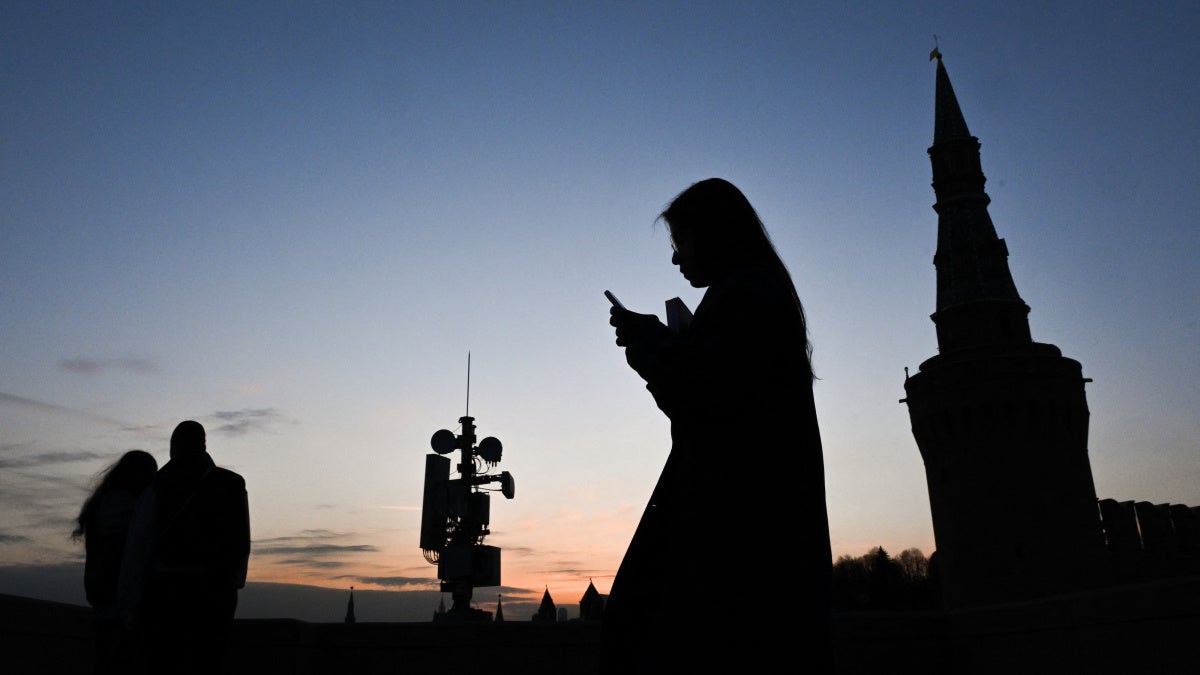
(Berlin, March 31, 2026) – Russian authorities increasingly impose broad mobile internet shutdowns under the pretext of public safety, Human Rights Watch said today. Over the past month, they blocked mobile internet and cellular access in areas of Moscow and Saint Petersburg for almost three weeks.
On March 29, 2026, police detained at least 14 people at a peaceful protest against internet restrictions in Moscow, and 5 more people in other cities. Two said they were beaten. The authorities banned the protests in at least 40 cities across Russia under false pretexts. They also arrested and threatened organizers ahead of the planned rallies.
“Russia’s internet shutdowns and the crackdown on peaceful protesters are blatant violations of Russia’s obligations to respect freedom of expression, of information and of assembly,” said Hugh Williamson, Europe and Central Asia director at Human Rights Watch.
On March 5, internet users in mostly central and southern parts of Moscow reported unavailable cellular network and mobile internet. Mobile service providers said that the issues were due to “externally” imposed restrictions. Users reported that connectivity varied within the affected areas, sometimes from street to street.
On March 11, Dmitry Peskov, a presidential spokesperson, said that “all recent connection and internet restrictions in Moscow were introduced in accordance with [Russia’s] legal framework and aim at ensuring the safety of Russian citizens.” He also said the measures would remain in place for “as long as necessary to ensure the citizens’ safety.”
On March 9, the authorities began blocking mobile internet in Saint Petersburg and the neighboring Leningrad region, following an announcement by the Leningrad region governor about a possible internet slowdown due to the threat of drone attacks by Ukraine.
On March 24, the mobile internet reportedly became available in Moscow. But internet users in Saint Petersburg continued reporting issues accessing the internet, coinciding with the announcement of air raid and internet slowdown state alerts by the Russian System for Warning and Action in Emergency Situations.
Russian authorities have been blocking mobile internet in many regions due to drone attacks since at least spring 2025. The Moscow Times reported that Russia had the most mobile internet shutdowns of any country in 2025.
Human Rights Watch spoke to seven people who confirmed protracted mobile internet blocking in Orel, Vladimir, Nizhniy Novgorod, Novorossiysk, and Moscow. In some regions mobile internet access has been restricted for more than six months. In Nizhniy Novgorod, the authorities have been restricting mobile internet access since May 2025. Regional authorities cited the threat of Ukrainian drone attacks as justification. Ukrainian areas occupied by Russia have also faced such shutdowns.
Mobile internet blocking, especially coupled with a lack of cellular access, affects rights and freedoms of internet users, preventing them from accessing basic services. During the March blocking in Moscow, users could not connect to messengers and maps, use ATMs or taxi apps or pay for services via card machines if they were not connected to landline internet. Users often could not access public Wi-Fi. According to some estimates, Russian businesses lost 1 billion rubles for every day of the Moscow shutdown.
During the recent mobile internet shutdowns, mobile service providers sent out notifications outlining the lists of websites, the so-called whitelists, that should remain accessible when the internet was blocked, but users said that at times, even these censored resources would not load.
The “whitelists,” announced by the Ministry of Digital Development, Communications and Mass Media in August 2025, were to include “all resources essential to everyday life,” said the minister, Maksut Shadayev. In September, the first version of the lists was published, including the websites of state media, state services online, government agencies, Russian social media and streaming platforms transparent to the government. It has been expanded several times to include online shops, food delivery, major taxi services, banks, and other services.
While the criteria for getting on the list are not fully clear, the Ministry compiles it “in consultation with state bodies responsible for security.” All the listed resources are registered and have infrastructure based in Russia, and are obligated under Russian law to share information with state agencies.
Sergei Boyarskiy, head of the State Duma Committee on Informational Technology, Communications and Policies, said that Russian messenger MAX, for instance, is included on the lists as it cooperated with Russian state bodies via closed channels, while Telegram, a foreign platform that authorities have taken steps toward banning, was predictably not included.
The switch to whitelists is an incremental shift in Russia’s online censorship. Previously, authorities fully or partially blocked access to specific sites. The latest approach introduces new challenges to circumventing censorship and accessing information, Human Rights Watch said.
On March 26, Boyarskiy said that internet shutdowns were a “new norm” and shutdowns without access to even whitelisted sources were also possible.
Prior to the March 29 protests, regional authorities in 40 cities rejected notifications of planned assemblies to protest blockings, with bogus pretexts such as COVID-related restrictions, threats of terrorism or drone attacks, snow, tree inspections, repair works, sports festivals, and other government events. Authorities in Yakutsk issued a blanket ban on all events to protest internet restrictions due to “increased attention from malicious actors.”
In the days before March 29, law enforcement searched homes, detained organizers, and issued “warnings” against “violating the law.” Five organizers were sentenced to 15 days of detention for allegedly disobeying law enforcement in Moscow, an administrative offense; a Rostov rally organizer was sentenced to 10 days of detention and was allegedly beaten in custody.
According to International Telecommunication Union data from 2024, internet usage in Russia is predominantly through mobile broadband connections. While landline internet has not been affected to the same extent recently, government internet censorship technology facilitates full landline internet blockings, including by the Federal Security Services without a court order.
The increasing blocking in Russia violates the right to seek, receive, and provide information and ideas through all media, including the internet. Any restrictions imposed on internet access and related communications, whether in the context of potential Ukrainian drone attacks or otherwise, must have a proper legal basis, and be both necessary and proportionate to achieve a legitimate purpose. The protracted internet shutdowns and cell networks shutdown across the regions of Russia, as well as in Russia-occupied areas of Ukraine, cannot be justified and do not comply with international human rights law, Human Rights Watch said.
Russian authorities should restore unrestricted access to the internet and communications networks and end the prosecution of peaceful protesters against internet shutdowns. The international community, foreign governments, and technology companies should support the groups working to ensure access to information online and censorship circumvention.
“A government has no legitimacy to determine what is ‘essential’ for an average internet user in Russia or limit internet access to a handful of state-approved resources,” Williamson said. “Neither should it prevent people from peacefully protesting its assault on their right to access an open and free internet.”