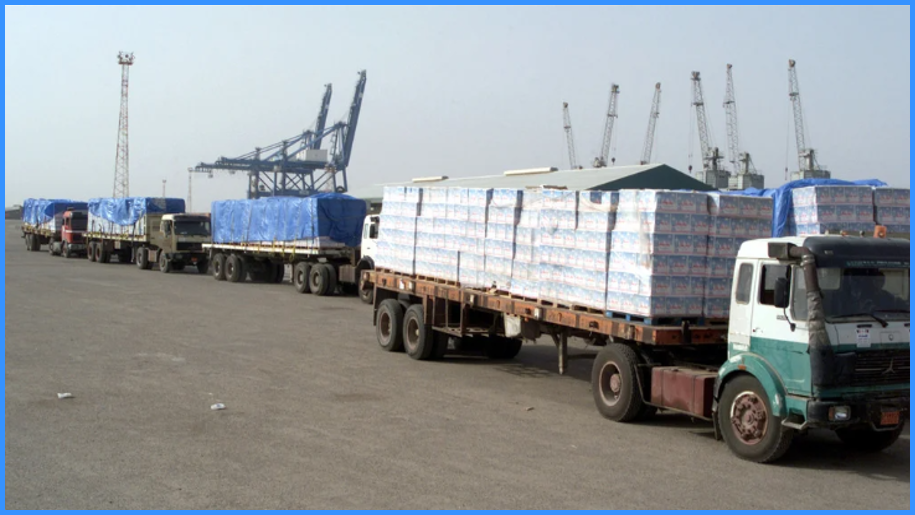
KEREM SHALOM — In a critical humanitarian breakthrough, Israel began the “gradual” reopening of the Kerem Shalom crossing on Tuesday, March 3, 2026, allowing life-saving supplies to re-enter the Gaza Strip. The move follows a three-day total blockade imposed during the onset of “Operation Roaring Lion”—the joint U.S.-Israeli military campaign against Iran—which had effectively severed the enclave’s remaining lifelines.
The Israeli government agency COGAT confirmed that the decision, coordinated with the American Civil Military Coordination Center (CMCC), was reached following a fresh security assessment to ensure the safety of personnel on both sides of the border.
A Race Against Exhaustion
The reopening comes at a moment of extreme desperation for Gaza’s 2.1 million residents, who have been caught in a “new chokehold” as regional hostilities diverted global attention and resources.
- WFP Readiness: The World Food Programme (WFP) stated that its teams are prepared to move supplies “imminently,” noting that even a 72-hour closure causes food stocks to deplete and prices to skyrocket.
- Malnutrition Crisis: Current UN projections indicate that over 100,000 children in Gaza are at risk of acute malnutrition by mid-April. Aid agencies emphasized that the current volume of aid—while vital—needs to triple to meet the basic survival needs of the population.
- Fuel Shortages: The closure had forced hospitals and bakeries to ration their final liters of fuel. The resumption of deliveries through Kerem Shalom is expected to prioritize petroleum products alongside flour and medical kits.
Security vs. Humanitarian Access
While Kerem Shalom has resumed operations under strict “security restrictions,” the Rafah crossing on the Egyptian border remained closed for transit as of Tuesday morning. COGAT officials maintained that the temporary suspension was a “national emergency” measure necessitated by the threat of retaliatory Iranian missile strikes.
“Opening the crossings under fire puts lives at risk,” a COGAT spokesperson noted, clarifying that the measure was intended to be temporary.
Diplomatic Pressure
The decision to reopen the corridor also follows significant diplomatic pressure from Washington and the UN. As the war with Iran expands into its fourth day, international observers have warned that a total blockade of Gaza would exacerbate an already “uncontrollable conflagration” in the Middle East.
For the NGOs operating on the ground, such as World Central Kitchen, the reopening is a reprieve from an imminent total depletion of food stocks. However, with the regional conflict showing no signs of a ceasefire, the stability of this humanitarian bridge remains precarious at best.
UN humanitarian aid trucks by Nara