WASHINGTON — The Pentagon has ordered a Marine Expeditionary Unit (MEU) and a three-ship amphibious task force to the Middle East, according to U.S. officials on Friday, March 13, 2026. The deployment of approximately 2,200 Marines marks a significant escalation in American naval posture, specifically aimed at countering the Iranian blockade of the Strait of Hormuz and protecting critical global shipping lanes.
The move follows a week of intensifying maritime attrition and the formal confirmation of the first American fatalities in the current conflict.
The Task Force: Amphibious Power Projection
According to reports from The Wall Street Journal, Secretary of Defense Pete Hegseth approved the request from U.S. Central Command (CENTCOM) for an Amphibious Ready Group (ARG). While the Pentagon has not officially named all vessels, military analysts and tracking data indicate the force will be centered around a high-capability assault platform:
- The Lead Vessel: The USS Tripoli (LHA 7), an amphibious assault ship currently positioned in the Pacific, is reportedly being diverted to lead the task force.
- The Marine Contingent: The 2,200-member MEU is a self-sustained “force in readiness,” featuring integrated air, ground, and logistics components capable of conducting both amphibious landings and rapid-response security operations.
- The Mission Profile: Officials state the primary objective is to provide a “flexible set of capabilities” to Operation Epic Fury, including the potential for Marines to serve as security details aboard commercial oil tankers.
Countering the “Silent” Blockade
The deployment is a direct response to Tehran’s continued efforts to paralyze energy traffic through the Strait of Hormuz.
- The Security Gap: Despite a massive U.S. air campaign that Secretary Hegseth claims has “functionally defeated” Iran’s missile production, maritime strikes by drones and fast-attack boats have continued.
- Tanker Protection: The arrival of the ARG-MEU provides the U.S. with the “boots on the ground” (or deck) necessary to protect tankers without committing full carrier strike groups to escort duties.
- Psychological Deterrence: The presence of a Marine “flotilla” is intended to signal to global shipping giants—like those in Norway, which recently banned its fleet from the region—that the U.S. is prepared to physically secure the waterway.
A Heightened Readiness Footprint
The deployment brings the total number of American service members in the CENTCOM theater to its highest level since the 2003 invasion of Iraq.
- The “Saturday Ultimatum”: The Marines are expected to arrive as the U.S. nears President Donald Trump’s Saturday deadline for an “unconditional surrender” from the Iranian regime.
- The Cost of Operations: The news follows the tragic confirmation that all six crew members of a KC-135 refueling plane died in a crash over western Iraq yesterday, a reminder of the lethal risks involved in the current tempo of operations.
Strategic Versatility
Unlike the carrier strike groups currently operating in the Arabian Sea and the Mediterranean, the Amphibious Ready Group is uniquely suited for “gray zone” conflict. Its ability to launch F-35B Lightning II fighters, transport helicopters, and hovercraft allows for a rapid pivot from humanitarian evacuations to high-intensity coastal raids.
As the USS Tripoli and its escorts steam toward the Gulf, the Pentagon’s message is clear: the U.S. will no longer rely solely on air superiority to break the Iranian blockade; it is now preparing for a physical contest over the world’s most vital maritime artery.
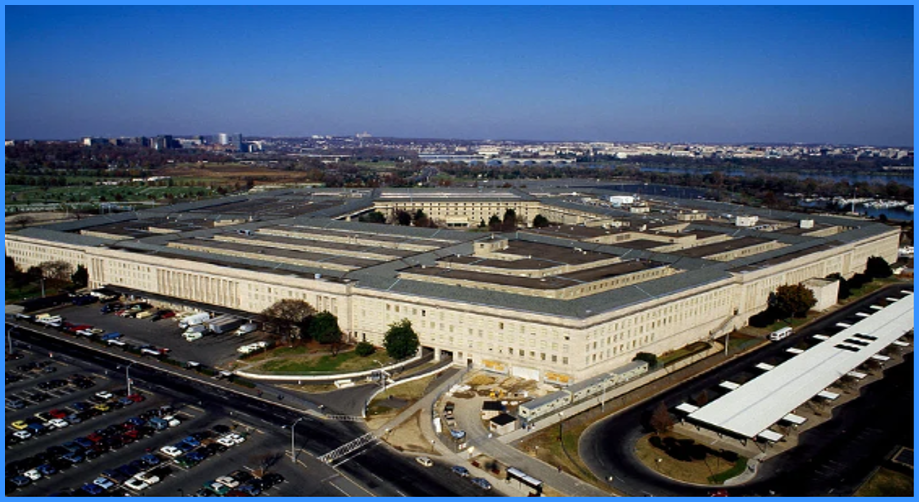
Pentagon Aerial view Image by Carol M. Highsmith’s on Rawpixel