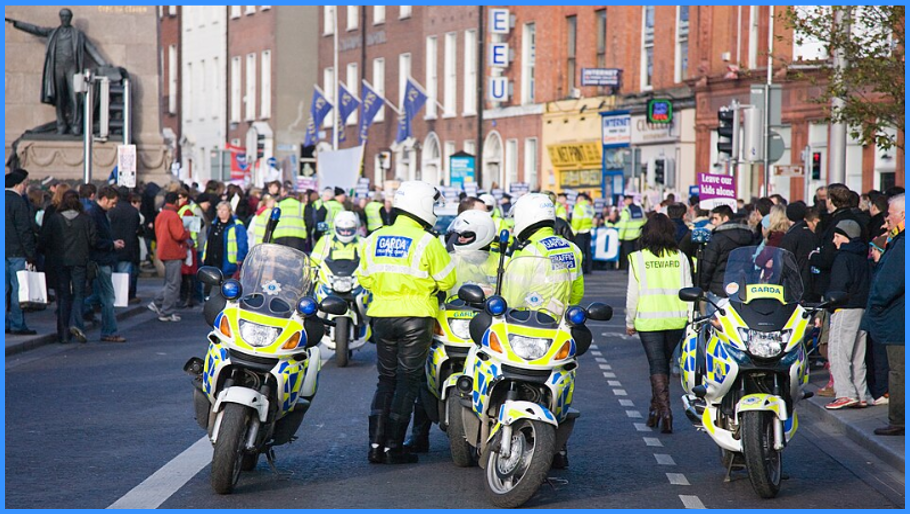
DUBLIN — Newly released figures have cast a stark light on the increasing dangers facing Ireland’s police force, revealing that more than 600 gardaí were injured in the line of duty during 2025. Data obtained under Freedom of Information legislation confirms an 11% increase in workplace injuries compared to the previous year, a trend that frontline representatives describe as a “deeply troubling” escalation of hostility toward officers.
The total number of reported injuries rose to 616 in 2025, up from 555 in 2024. This equates to approximately one in every 25 members of the 14,200-strong force sustaining harm while on duty.
The Anatomy of Risk: Assaults on the Rise
The primary driver behind the surge is a marked increase in physical violence. For the first time in recent years, assaults accounted for more than half of all reported injuries, highlighting a shift in the operational climate for frontline units.
- Assault Statistics: 344 officers (56% of the total) were injured as a result of an assault, with high-profile incidents including October’s unrest at the Citywest complex in Saggart.
- Secondary Causes: Slips, trips, and falls resulted in 87 injuries, while road traffic collisions accounted for 78.
- Severe Hazards: A smaller but significant number of cases involved contact with sharp objects or needles (10 cases) and animal bites (17 cases).
Regional Hotspots: The Geography of Danger
While the national injury rate stands at roughly 4%, the risk profile varies significantly across the country’s 21 Garda divisions.
| Division | Workforce | Injuries Reported | Injury Rate |
| Galway | 616 | 43 | 7% |
| Kerry | 348 | 25 | 7% |
| Wexford/Wicklow | 512 | 36 | 7% |
| Dublin East | 377 | 7 | 2% |
Galway recorded the highest volume of injuries in the country, with 36 of its 43 reported cases involving assaults on members. In contrast, the Dublin East region maintained one of the lowest injury rates, suggesting that geographical and environmental factors play a major role in officer safety.
Commissioner Response and Safety Measures
Garda Commissioner Justin Kelly, who took office in September 2025, has categorized officer safety as a matter of “utmost concern.” To combat the rising tide of violence, the force is accelerating the deployment of new defensive technologies.
- Body-Worn Cameras: A nationwide rollout is currently underway following successful pilot programs in Dublin, Limerick, and Waterford.
- Taser Pilot: Frontline staff in select divisions have begun training with Tasers on a trial basis to provide a non-lethal deterrent in high-stakes confrontations.
- Legislative Backing: These operational shifts are supported by 2023 legislation that increased the maximum sentence for assaulting an emergency worker from seven to 12 years.
The Bottom Line
The 2025 data serves as a sobering reminder of the “human cost” of policing. As the Garda Representative Association (GRA) continues to lobby for increased resources and better working conditions, the focus remains on whether these new technological safeguards—cameras and Tasers—can effectively reverse a multi-year trend of escalating frontline violence.
Gardai (Irish Police) Wikimedia Picture by William Murphy