In Brownsville, Texas, three members of the Galvan family died after a malfunctioning air conditioner left them exposed to extreme heat. Aged between 60 and 82, all three had chronic health conditions, including diabetes and heart disease. This makes it harder for the body to regulate temperature and increases vulnerability to heat stress.
Nobody arrived to check on them until days after they had died in their apartment in 2024. This isolation also increases risk of heat-related deaths.
Although the immediate trigger appears to have been equipment failure, a pathologist attributed the deaths to extreme heat linked to chronic illness. Deaths like these are classified as “heat-related” when ambient temperatures exceed what bodies can safely tolerate.
Climate change is a contributing factor. As heatwaves become more frequent, intense and prolonged, routine failures in cooling, power or housing infrastructure are more likely to turn existing vulnerability into fatal harm.
Around the world, climate-related deaths follow consistent social patterns. People who are older, already ill, economically disadvantaged, or working outdoors are most affected.
The Intergovernmental Panel on Climate Change (the UN’s climate science advisory group) concludes that roughly 3.3 billion to 3.6 billion people – nearly half of the world’s population – are highly vulnerable to climate risks, with limited capacity to cope. Here, vulnerability is not simply exposure to environmental hazards. Who is protected and who is left at risk depends on social and infrastructural conditions.
Research in climate science, public health and social sciences shows these patterns are clear. My own research spans ecosystem ecology and social science. I examine how climate knowledge is produced, interpreted and acted upon in times of ecological emergency.
The evidence points to an uncomfortable conclusion: much of this suffering is preventable.
The necropolitics of climate change
Cameroonian historian Achille Mbembe introduced the idea of “necropolitics” to explain how some lives come to be treated as more expendable than others. This does not imply intent to kill, but rather the routine political acceptance that some people will be exposed to harm.
From this perspective, the Galvans’ deaths were shaped not only by heat, but by structural inequalities and gaps in policy and infrastructure.
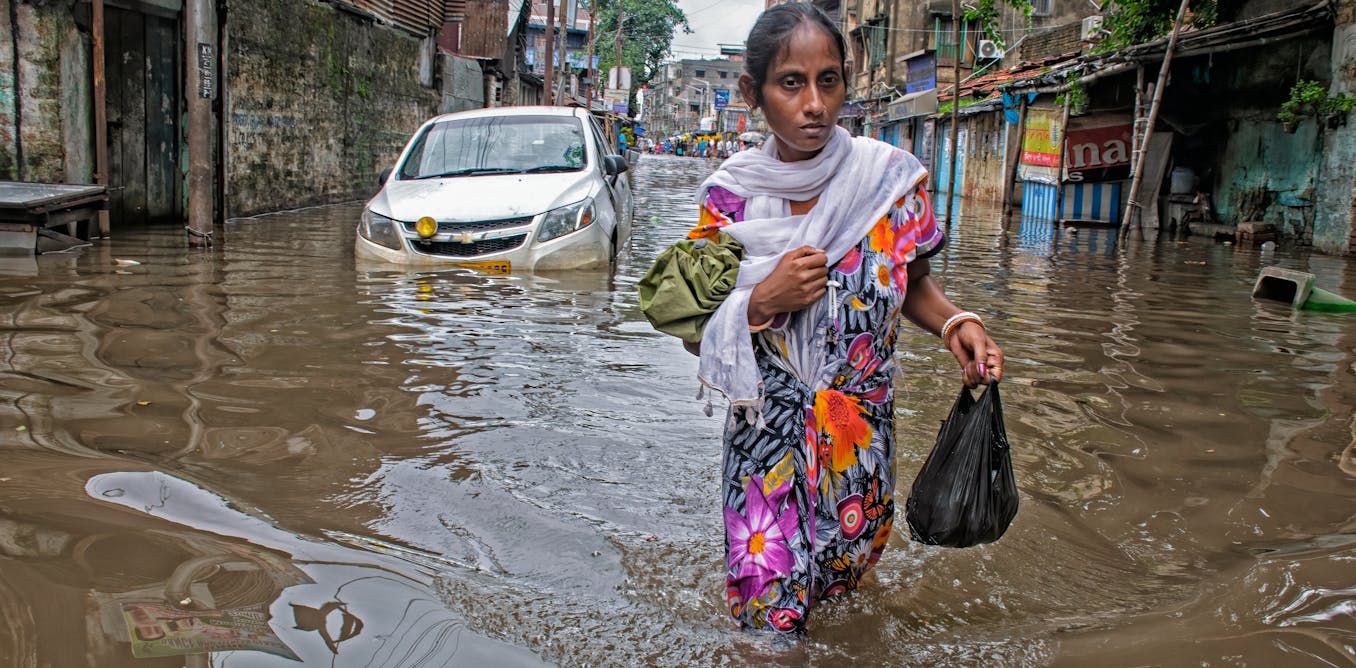
This logic is visible globally. In south Asia and the Middle East, heatwaves claim the lives of elderly people and outdoor workers. In sub-Saharan Africa, floods and droughts disproportionately affect subsistence farmers.
In the UK, air pollution is linked to roughly 30,000 deaths annually. People from ethnic minority and low-income communities are more likely to live in the most polluted areas. These deaths are not random. They follow recognisable social patterns.

amdadphoto/Shutterstock
Mbembe’s concept helps describe situations where political, economic or social arrangements leave some populations consistently exposed to harm. That includes climate-vulnerable communities, places where resources are being extracted through mining or areas where people are displaced from their homes. In the US, “Drill, baby, drill!” has re-emerged as shorthand for prioritising fossil fuel extraction over emissions reduction.
These political and economic choices create consistent patterns of vulnerability for environmental risks, from extreme heat to floods and air pollution. Structural neglect, not personal behaviour, underlies the distribution of harm.
Yet, vulnerability is not fate. Heat provides a clear example. With early warning systems, targeted outreach, and timely intervention, many such fatalities can be prevented. As epidemiologist Kristie Ebi notes: “Those deaths are preventable … people don’t need to die in the heat”.
The same is true across climate risks. Even with systemic neglect, deliberate and coordinated action can reduce risk. Connecting social, infrastructural, and institutional responses to climate hazards is a crucial step.
Slow violence as a climate process
Environmental humanist Rob Nixon uses the term “slow violence” to describe harms that accumulate gradually and often invisibly over time. Unlike sudden disasters, the effects of rising temperatures, drought and ecological degradation unfold quietly.
You cannot make a disaster movie out of slow violence. Its harm builds incrementally, striking those already most vulnerable. The deaths of the Galvans exemplify this slow burn, as do the lives lost to prolonged heat exposure, crop failure and environmental degradation worldwide.
People least responsible for emissions, primarily in developing countries, are most exposed to escalating climate harms. Viewed through a necropolitical lens, slow violence shows how neglect becomes lethal through the repeated failure to prevent known and predictable harms.
Feminist theorist Donna Haraway coined the term “Chthulucene”, from the Greek chthonic (“of the earth”), to describe an era defined by entangled relationships between humans, other species and the ecosystems they depend on.
Rather than treating environmental harm as separate from social life, this perspective emphasises how vulnerability emerges through the everyday connections between people, institutions and environments. As Haraway argues harm accumulates through these relationships, revealing how exposure to climate risks, political neglect and ecological stress reinforce one another over time.
This dynamic is visible in Vietnam’s Mekong Delta, one of the world’s most productive rice-growing regions. Here, saltwater intrusion is creeping inland, damaging vast areas of farmland and threatening millions of livelihoods.
Rising sea levels and shifting climate patterns could affect up to 45% of the delta’s farmland by 2030, destabilising both local communities and global food systems. Social and ecological harm cannot be separated.
Politics of life, not death
Political choices amplify any existing environmental threat. Neglect is not a neutral absence: it is a political condition that shapes who lives and who suffers.
Addressing this injustice requires a living politics of care. This means a political system that recognises vulnerability as socially produced and demands solidarity, equity and accountability. Through alliances between affected communities, researchers and advocates who expose neglect, plus decision-makers under pressure to act, care can become politically unavoidable.
Neglect is no longer allowed to remain invisible in some parts of the world. Cities like Ahmedabad, India, are expanding heat mitigation and early-warning systems. Communities in the Mekong Delta are working with Vietnamese and international researchers to experiment with salt-tolerant crops.
Globally, ecocide laws that make large-scale destruction of ecosystems illegal are being introduced. This helps embed responsibility for environmental protection into legal and political systems. Even in the face of political neglect, targeted action and emerging legal frameworks can reduce harm and foster a more caring form of politics.
Don’t have time to read about climate change as much as you’d like?
Get a weekly roundup in your inbox instead. Every Wednesday, The Conversation’s environment editor writes Imagine, a short email that goes a little deeper into just one climate issue. Join the 47,000+ readers who’ve subscribed so far.

Aaron Thierry receives funding from ESRC. He is affiliated with Scientists for Extinction Rebellion.