
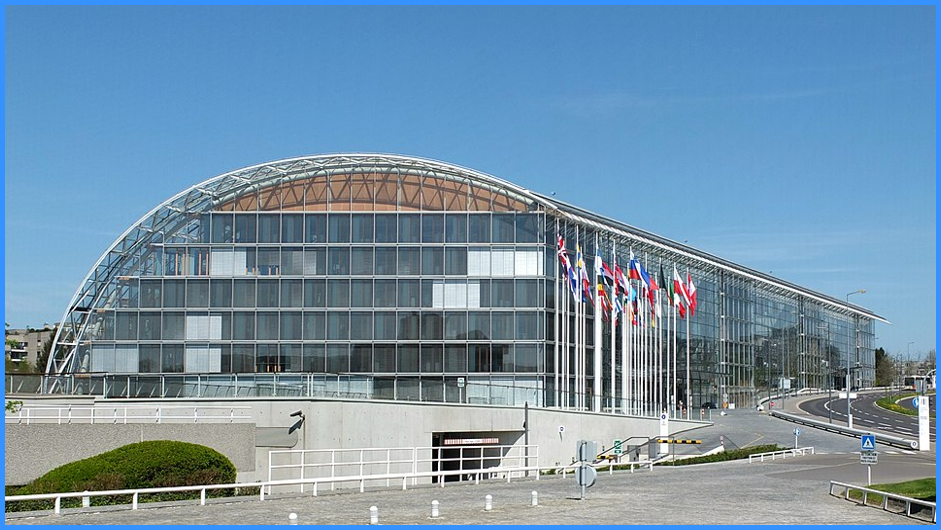
LUXEMBOURG — In a major move to bridge Africa’s energy divide, the European Investment Bank (EIB) has pledged over $1.1 billion (€1 billion) in new financing to accelerate renewable energy access across Sub-Saharan Africa. Announced on Wednesday, March 4, 2026, during the annual EIB Group Forum, the commitment serves as a cornerstone for Mission 300—a joint initiative with the World Bank and African Development Bank aimed at bringing electricity to 300 million people on the continent by 2030.
The pledge, delivered through the bank’s specialized development arm, EIB Global, targets the core bottlenecks of African energy infrastructure, shifting the focus from mere capacity to universal reliability.
The Mission 300 Catalyst
The $1.1 billion investment is designed to be a “catalytic” force, de-risking large-scale projects to attract private sector capital. Currently, nearly 600 million people in Sub-Saharan Africa live without reliable power, a deficit that EIB President Nadia Calviño described as “the single greatest barrier” to the continent’s economic potential.
- Diversified Portfolio: The funding will support a mix of hydropower, large-scale solar farms, wind energy, and critical grid interconnections.
- Decentralized Solutions: Beyond national grids, a significant portion of the capital is earmarked for “off-grid” and mini-grid technologies, which are essential for reaching isolated rural communities.
- Climate Resilience: By focusing exclusively on renewables, the EIB is aligning its African operations with the EU Global Gateway strategy, which aims to mobilize up to €300 billion in sustainable investments worldwide by 2027.
Strategic Regional Impact
While the pledge covers the entire Sub-Saharan region, early deployments are focusing on countries where energy poverty is most acute and renewable potential is highest.
- East African Wind & Solar: Building on successful projects like Kenya’s Lake Turkana Wind Power, the new funds will support the expansion of “hybrid” plants that combine solar generation with advanced battery storage.
- West African Integration: The EIB is prioritizing the West African Power Pool (WAPP), a project designed to integrate national power systems into a unified regional market, allowing countries with energy surpluses to supply those in deficit.
- The “Win-Win” Economy: President Calviño emphasized that this is “smart economics,” noting that every euro invested in African clean energy creates local jobs and helps diversify global supply chains for green technologies.
A New Era of Partnership
The 2026 commitment marks a shift in how the EIB operates outside Europe. By partnering directly with the World Trade Organization (WTO) and the African Development Bank, the EIB is now linking its financing to regulatory reforms. This integrated approach aims to cut red tape for renewable developers and ensure that new power projects are “investment-ready” from day one.
“When some are building walls, we are building bridges,” Calviño stated, reinforcing the EIB’s role as a primary diplomatic and financial link between Europe and Africa. As the global race for green energy intensifies, the $1.1 billion pledge ensures that Sub-Saharan Africa is not left in the dark.
European Investment Bank Luxembourg Picture by Palauenc05








